Abstract
From May to June 2012, a waterborne outbreak of 124 cases of cryptosporidiosis occurred in the plumbing systems of an older high-rise apartment complex in Seoul, Republic of Korea. The residents of this apartment complex had symptoms of watery diarrhea and vomiting. Tap water samples in the apartment complex and its adjacent buildings were collected and tested for 57 parameters under the Korean Drinking Water Standards and for additional 11 microbiological parameters. The microbiological parameters included total colony counts, Clostridium perfringens, Enterococcus, fecal streptococcus, Salmonella, Shigella, Pseudomonas aeruginosa, Cryptosporidium oocysts, Giardia cysts, total culturable viruses, and Norovirus. While the tap water samples of the adjacent buildings complied with the Korean Drinking Water Standards for all parameters, fecal bacteria and Cryptosporidium oocysts were detected in the tap water samples of the outbreak apartment complex. It turned out that the agent of the disease was Cryptosporidium parvum. The drinking water was polluted with sewage from a septic tank in the apartment complex. To remove C. parvum oocysts, we conducted physical processes of cleaning the water storage tanks, flushing the indoor pipes, and replacing old pipes with new ones. Finally we restored the clean drinking water to the apartment complex after identification of no oocysts.
-
Key words: Cryptosporidium parvum, oocyst, cryptosporidiosis, drinking water supply, plumbing system
INTRODUCTION
Cryptosporidium species are parasites causing waterborne diseases for humans and animals. There are 5 known species of
Cryptosporidium (
C. hominis,
C. parvum,
C. meleagridis,
C. felis, and
C. canis) which are capable for inducing human cryptosporidiosis [
1]. Among them, the majority of human cryptosporidiosis have been caused by either
C. parvum (45.9%) or
C. hominis (49.2%) [
2], and they are associated with most of waterborne, foodborne, and contact-associated outbreaks of cryptosporidiosis [
3]. These 2 species represent the highest risks to humans. Their oocysts can survive in the environment for a long time and are resistant to disinfectants including chlorine.
Cryptosporidium oocysts can pass through water treatment process because of their small size and resistance to disinfectants [
4-
8]. A low number of 10 oocysts were sufficient to cause infection in healthy adults [
9,
10]. Because of these characters, people can be infected with cryptosporidiosis when
Cryptosporidium oocysts enter into a water supply system.
Among waterborne disease outbreaks by parasitic protozoa,
Cryptosporidium spp. were the etiological agent in 60.3% of the outbreaks,
Giardia lamblia in 35.1%, and other protozoa in 4.5% during the time period between 2004 and 2010 [
11]. In Korea, IgG positive rate against
C. parvum were 22-40% (mean 34%) in patients' sera collected randomly from 4 local hospitals [
12]. The positive rates of
Cryptosporidium oocysts from human fecal samples were 0.4-57%, remarkably different between sites, and significantly higher in rural areas than in urban areas in Korea [
13-
19]. According to a report from Centers for Disease Control and Prevention (Korea),
Cryptosporidium oocysts were detected in 118 out of 19,137 stool samples (0.61%) of patients having diarrhea and the positive rates of
Cryptosporidium showed a yearly increase [
20]. However, precise modes of infection were not revealed except that direct contact with infected animals is likely to be an important transmission route because the areas of high prevalence of cryptosporidiosis in humans coincided with areas of high infection rates in the livestock [
19].
Considering the seroprevalence in Korea, waterborne cryptosporidiosis might occur quite commonly in Korea. However, there has been no much data supporting this. In order to prevent waterborne cryptosporidiosis, water treatment plants must achieve 99% removal of Cryptosporidium oocysts through the turbidity removal efforts according to the water treatment rule in Korea.
Recently a waterborne outbreak of cryptosporidiosis occurred in the plumbing systems of an old high-rise apartment complex in Seoul, Republic of Korea (=Korea). This report included detection of the pathogens and the action for removal of Cryptosporidium oocysts.
CASE RECORD
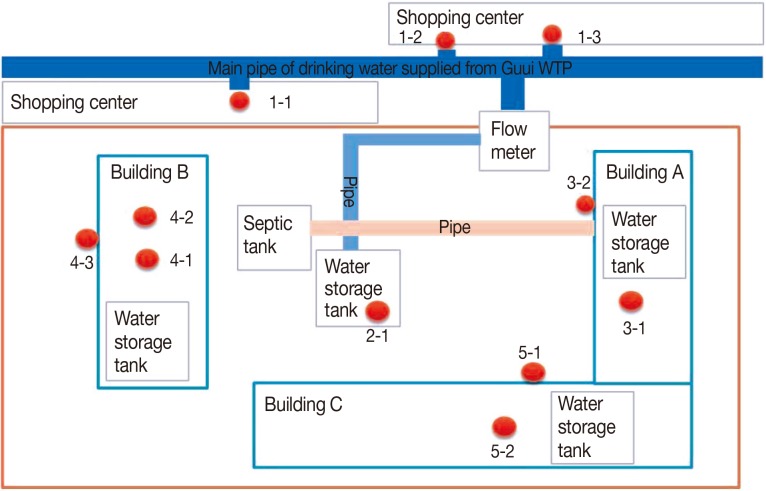
In May 2012, a waterborne outbreak of cryptosporidiosis involving 124 patients occurred in an old high-rise apartment complex in Seoul, Korea. This apartment complex was built in 1977 and consists of 3 buildings (A, B, and C) each with 12 stories. A total of 228 households live in this apartment. Guui Water Treatment Plant (WTP) supplied the drinking water to the plumbing systems in this apartment complex. The supplied water was provided to dwellers via 2-step plumbing systems of the apartment complex's own. It consisted of 1 underground drinking water storage tank (300 m
3) supplied from water main and next 3 drinking water storage tanks (30 m
3) located on the rooftop of each building (
Fig. 1). Septic tank of the apartment complex was close to the underground drinking water tank in a distance of 1 m. The inlet pipe of the septic tank was located just above the inlet pipe of the underground water tank. Both pipes were old and corroded.
The residents of the apartment complex conducted cleaning of the water storage tanks on 27 April 2012 before this outbreak. The residents said that the illness started to arise after cleaning of the water storage tanks. East District Waterworks (EDW) of Seoul Metropolitan Government received a call from a citizen requesting inspection for tap water quality on 23 May 2012. The citizen said that 227 residents of this apartment complex sufferred for diarrhea after drinking the tap water. EDW inspected fecal indicators for the tap water via water tank and directly supplied the tap water. Fecal material was not detected in directly supplied tap water. However, total coliforms and Escherichia coli were detected in the tap water supplied from the water storage tank. EDW advised to boil the water temporary on 24 May 2012. EDW requested the accurate inspection to the Waterworks Research Institute of Seoul Metropolitan Government on 24 May 2012.
When a report was received on 23 May, the symptoms of the early infected adults disappeared. However, illness was prolonged among children and aged people. New infections by the same pollutant or secondary infections by person-to-person were suspected. The common symptoms were watery diarrhea, vomiting, stomachache, nausea, and fever. There were 124 people who had experienced symptoms; however, including unanswered residents, it seems that more people may have experienced cryptosporidiosis. They took medicine to stop diarrhea but the symptoms restarted after they stopped taking antidiarrheal drugs.
Sample collection and water quality tests
We collected water samples from the apartment complex on 25 May 2012. The sampling sites were total 11 which included 3 sites for directly supplied drinking water from Guui WTP, 1 site for underground drinking water storage tank, and 7 sites for water supplied from under and roof drinking water storage tanks (
Fig. 1;
Table 1). We tested the first samples (sites 1-1, 2-1, 3-1, and 4-1) for 57 parameters of Korean Drinking Water Quality Standards (KDWQS) including total coliforms,
E. coli, total colony counts at 35℃ by the Korean standard methods for examination of drinking water [
21]. In addition, to inspect for the presence of specific infectious agents, we analyzed microbiological parameters including total colony counts at 21℃,
Clostridium perfringens,
Enterococcus, fecal
Streptococcus,
Salmonella,
Shigella, and
Pseudomonas aeruginosa by the Korean standard methods for examination of drinking water [
21], and also analyzed the total culturable viruses by culturing [
22],
Norovirus by genetic analysis [
23], and
Cryptosporidium and
Giardia by filtration/immunomagnetic separation and immunofluorescence assay [
24,
25]. For identification of
Cryptosporidium spp., we conducted PCR amplifications and DNA sequencing analysis. The primer sets were complementary to
Cryptosporidium 18S rRNA gene sequence with hypervariation area as reported by Jellison et al. [
26]. On 25 May 2012, we conducted the tests of all parameters. We collected only 2-3 samples for the test of parasitic protozoa and viruses because it took a long time to test. From 31 May to 25 June 2012, we collected water samples for the test of
Cryptosporidium oocysts,
Giardia cysts, and 11 bacteriological parameters.
The directly supplied tap water (site 1-1) complied with the KDWQS for all of the 57 parameters. However, the tap water samples from the plumbing systems in the apartment (sites 2-1, 3-1, and 4-1) did not meet the standard values for 3 parameters of bacteria (total coliforms, E. coli, and total colony counts at 35℃) but met standard values for other 54 parameters (data not shown).
Results of tests for microbiological parameters
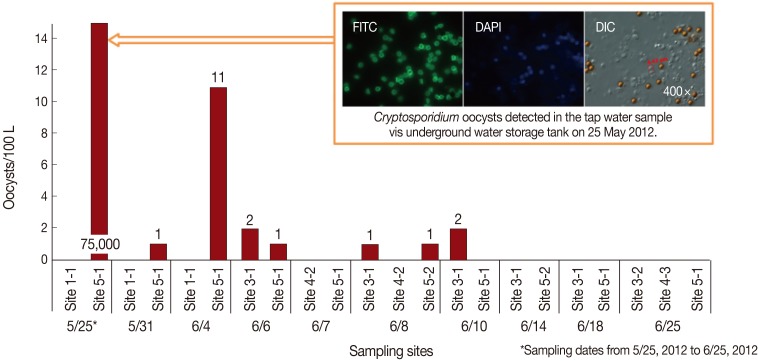
All samples from the directly supplied tap water were normal for all microbiological parameters from 25 May to 4 June 2012. However, the first samples collected on 25 May 2012 from the plumbing systems revealed positive results for 5 kinds of bacteria and
Cryptosporidium oocysts with high concentrations of 75,000 oocysts/100 L, although viruses were not detected (
Tables 2,
3;
Fig. 2). From 31 May to 25 June 2012, the bacteriological parameters became negative in all water samples from the plumbing systems; however,
Cryptosporidium oocysts were continuously detected in the samples collected from 31 May to 10 June 2012 except the samples collected on 7 June 2012.
After cleaning of the water storage tanks and replacement of corroded pipes, the level of oocysts were remarkably decreased. However, the oocyst concentration again slightly increased to 11 oocysts/100 L after flushing the pipes. It was suggested that oocysts were detached from the biofilms in the plumbing systems by flushing. But the oocyst numbers in the plumbing systems were reduced as the flushing had progressed (
Fig. 2). We finally identified that oocysts were not detected in the water samples from 14 June to 25 June 2012.
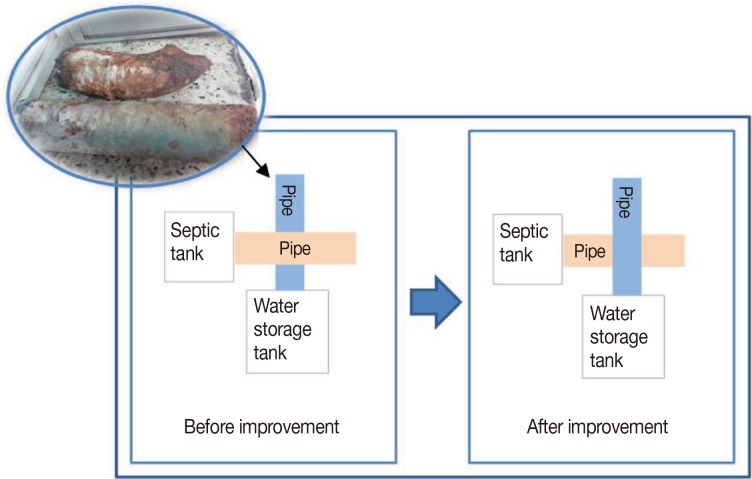
After first sampling, the residents of the apartment cleaned the underground water storage tank. When underground drinking water tank was empty for cleaning, it smelt bad. They found that the inlet pipe of the underground storage tank was corroded and located below the pipe of the septic tank (
Fig. 4). They saw that the soil materials around pipes were wet and smell bad. It was estimated that the wastewater of septic tank entered the underground drinking water tank. They replaced the corroded water pipe with new pipe partially and changed the position of the water pipe above the pipe of the septic tank from 26 to 27 May 2012 (
Fig. 2).
Korea Centers for Disease Control and Prevention (KCDC) decided to cut off the water supply after the report of detecting Cryptosporidium oocysts from Waterworks Research Institute, Seoul Metropolitan Government on 31 May 2012. The residents of the apartment then did not use the tap water at all. The office of the waterworks (EDW), Seoul Metropolitan Government provided the bottled water 'Arisu' for the residents and built the emergency feed-water system to mitigate inconvenience of residents until restarting the water supply. The office of EDW supplied drinking water by visiting from door to door in the apartment by using emergency water wagon until restarting the clean water supply.
EDW performed cleaning the water storage system using 10 mg/L of calcium hypochlorite and flushing the inlet pipes of drinking water storage tanks with pressurized water on 3 June 2012. The residents of the apartment performed draining of their indoor pipes from 4 June to 26 June 2012. They replaced the old pipes with new ones for all sections from flow meter to underground water storage tank on 6 June 2012. The drinking water storage tank systems were changed to new tanks from 13 June to 22 June 2012.
After Cryptosporidium oocysts were not detected continuously 3 times, the drinking water was supplied to the apartment complex in accordance with administrative order of KCDC on 27 June 2012.
Molecular identification of Cryptosporidium species
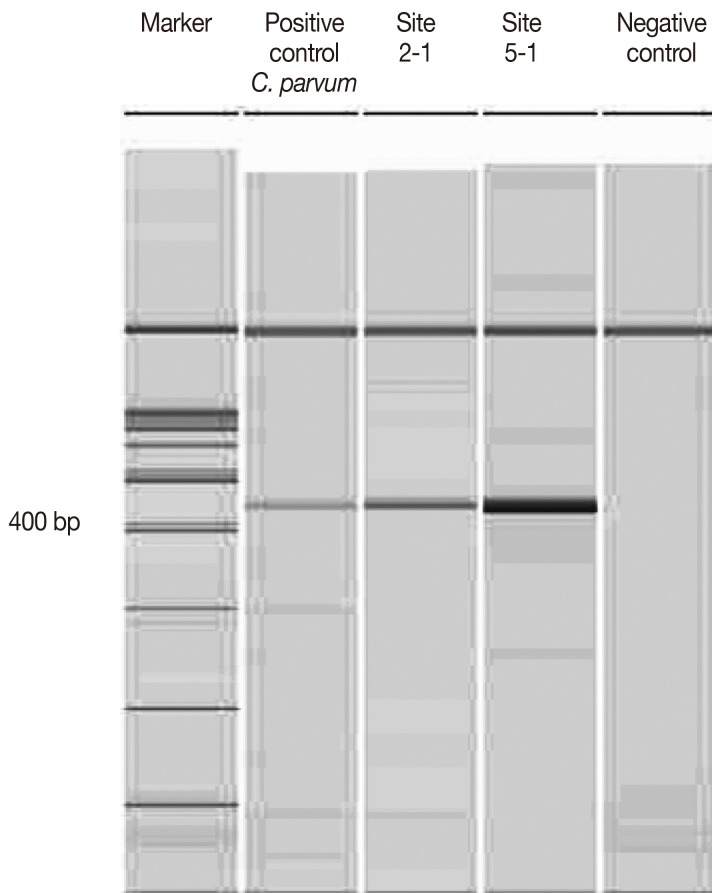
Both of the 2 water samples in the plumbing systems (sites 2-1 and 5-1) were positive for
Cryptosporidium by the results of nested PCR assay (
Fig. 3). In the sequence search by NCBI database, it was shown that water samples included
C. parvum with 99-100% identities. GenBank accession numbers on DNA sequences for 3 positive samples were JX914622-JX914624.
DISCUSSION
We detected a waterborne cryptosporidiosis outbreak involving 124 cases in the plumbing systems of an apartment complex which consists of about 900 residents from May to June 2012 in Seoul, Korea. The self-managed water plumbing system in the apartment was contaminated with C. parvum and fecal indicators (total coliforms, E. coli, Clostridium perfringens, Enterococcus, and fecal Streptococcus). C. parvum was identified as the causative agent of the outbreak since the tap water in the apartment was highly contaminated with as high as 75,000 oocysts/100 L, and C. parvum DNA was detected in the tap water samples with the genetic identity of 99-100% on the basis of the 18S rRNA gene sequences. There had been repeated infections by contamination within the apartment, as judged by the outbreak period lasted for 1 month against the incubation period of 3-14 days. The underground storage tank was found to be continually cross-contaminated through the corroded pipes of the septic and water tanks.
Those facilities of the apartment were as old as 35 years and the pipes were severely corroded. The inlet pipe of the septic tank had crossed above the water pipe to the underground water tank. There was soil between the pipes of the septic tank and the underground water storage tank; however, oocysts and bacteria muct have passed the soil as reported by some authors [
7,
27]. The cleaning work of the underground water tank just before the outbreak seems to have made the situation worse. Therefore, this case was caused by mismanagement practices within the own water plumbing system of the apartment complex.
A similar case was reported at Japan in 1994 [
28]. In that case,
Cryptosporidium oocysts were found in the tap water and other water samples from a receiving tank which was directly connected with the public waterworks, and an elevated tank on the roof, a wastewater pits, a soil pit, and artesian spring water tank. These tanks and pits except for the elevated tank were built adjacent to each other on an underground floor of the building. According to the declaration of the owner of the building; however, the wastewater pump was broken at the time of the outbreak [
28].
Protozoan pathogens in the tap water have been regularly monitored according to the criteria by Seoul Metropolitan government since 1999 in Seoul, Korea.
Cryptosporidium oocysts were detected in 22.5% of intake water samples and the means 0.65 oocysts/10 L (range 0-22 oocysts/10 L), though the oocysts were not detected in drinking water samples [31]. All of the 6 WTP in Seoul have been maintained in accordance with the water treatment rule for removal of
Cryptosporidium oocysts by the Ministry of Environment, Korea. They have been achieved low turbidity of 0.07-0.15 NTU [
29]. Therefore, the present outbreak represented much meaning that proper management of communal facilities within housing complexes is important to ensure the safety of the drinking water.
ACKNOWLEDGMENTS
The author thanks Office of Waterworks of Seoul Metropolitan Government, Seoul, Korea for efforts to solve this outbreak and Mr. Jung J. Choi and Mr. Gary Burlingame at the Philadelphia Water Department for their helpful advice and comments on this study.
References
- 1. Xiao L, Feng Y. Zoonotic cryptosporidiosis. FEMS Immunol Med Microbiol 2008;52:309-323.
- 2. Chalmers RM, Elwin K, Thomas AL, Guy EC, Mason B. Long-term Cryptosporidium typing reveals the etiology and species-specific epidemiology of human cryptosporidiosis in England and Wales, 2000 to 2003. Euro Surveill 2009;14:19086.
- 3. Xiao L, Ryan UM. Molecular epidemiology. In: Fayer R, Xiao L, editors. Cryptosporidium and Cryptosporidiosis. Boca Raton. CRC Press; 2008. p. 119-171.
- 4. Castro-Hermida JA, García-Presedo I, González-Warleta M, Mezo M. Cryptosporidium and Giardia detection in water bodies of Galicia, Spain. Water Res 2010;44:5887-5896.
- 5. Fayer R, Morgan U, Upton SJ. Epidemiology of Cryptosporidium: transmission, detection and identification. Int J Parasitol 2000;30:1305-1322.
- 6. Hashimoto A, Kunikane S, Hirata T. Prevalence of Cryptosporidium oocysts and Giardia cysts in the drinking water supply in Japan. Water Res 2002;36:519-526.
- 7. Petersen HH, Enemark HL, Olsen A, Amin MG, Dalsgaard A. Transport of Cryptosporidium parvum oocysts in soil columns following applications of raw and separated liquid slurries. Appl Environ Microbiol 2012;78:5994-6000.
- 8. Rose JB, Huffman DE, Gennaccaro A. Risk and control of waterborne cryptosporidiosis. FEMS Microbiol Rev 2002;26:113-123.
- 9. DuPont HL, Chappell CL, Sterling CR, Okhuysen PC, Rose JB, Jakubowski W. The infectivity of Cryptosporidium parvum in healthy volunteers. N Engl J Med 1995;332:855-859.
- 10. US Environmental Protection Agency. National primary drinking water regulations: long-term 2 enhanced surface water treatment rule. US EPA Federal Register 2006;71:660-662.
- 11. Baldursson S, Karanis P. Waterborne transmission of protozoan parasites: review of worldwide outbreaks - an update 2004-2010. Water Res 2011;45:6603-6614.
- 12. Lee JK, Han ET, Huh S, Park WY, Yu JR. A hospital-based serological survey of cryptosporidiosis in the Republic of Korea. Korean J Parasitol 2009;47:219-225.
- 13. Chai JY, Kim NY, Guk SM, Park YK, Seo M, Han ET, Lee SH. High prevalence and seasonality of cryptosporidiosis in a small rural village occupied predominantly by aged people in the Republic of Korea. Am J Trop Med Hyg 2001;65:518-522.
- 14. Chai JY, Lee SH, Guk SM, Lee SH. An epidemiological survey of Cryptosporidium parvum infection in randomly selected inhabitants of Seoul and Chollanam-do. Korean J Parasitol 1996;34:113-119.
- 15. Cheun HI, Cho SH, Lim YY, Lee BC, Kim JY, Ju JW, Na BK, Kimata I, Yu JR, Kim TS. Cryptosporidium parvum in Korea: prevalence in individuals residing in three major river valleys and genetic characteristics of the isolates. J Vet Med Sci 2010;72:167-172.
- 16. Cho MH, Kim AK, Im K. Detection of Cryptosporidium oocysts from out-patients of the Severance Hospital, Korea. Korean J Parasitol 1993;31:193-199.
- 17. Lee JK, Song HJ, Yu JR. Prevalence of diarrhea caused by Cryptosporidium parvum in non-HIV patients in Jeollanam-do, Korea. Korean J Parasitol 2005;43:111-114.
- 18. Seo M, Huh S, Chai JY, Yu JR. An epidemiological survey on Cryptosporidium parvum infection of inhabitants in Chorwon-gun, Kangwon-do. Korean J Parasitol 2001;39:201-203.
- 19. Yu JR, Lee JK, Seo M, Kim SI, Sohn WM, Huh S, Choi HY, Kim TS. Prevalence of cryptosporidiosis among the villagers and domestic animals in several rural areas of Korea. Korean J Parasitol 2004;42:1-6.
- 20. Centers for Disease Control and Prevention (Korea). Prevalence of infection of diarrheal outpatients with gastrointestinal protozoa in Korea. Weekly J Health Dis 2011;37-43.
- 21. Ministry of Environment. Korean standard methods for the examination of drinking water. Notice 2011-21 Ministry of Environment 2011 (in Korean).
- 22. National Institute of Environmental Research. Korean standard methods for total culturable viruses. Regulation of NIER 2010; 446-459. (in Korean).
- 23. National Institute of Environmental Research. Manual for norovirus management in groundwater. Regulation of NIER 2010; 67-88. (in Korean).
- 24. National Institute of Environmental Research. Korean standard methods for Cryptosporidium and Giardia. Regulation of NIER 2010; 483-494. (in Korean).
- 25. US Environmental Protection Agency. Method 1623 Cryptosporidium and Giardia in water by filtration/IMS/FA. USEPA 2005;1-68.
- 26. Jellison KL, Hemond HF, Schauer DB. Sources and species of Cryptosporidium oocysts in the Wachusett Reservoir Watershed. Appl Environ Microbiol 2002;68:569-575.
- 27. Schinner T, Letzner A, Liedtke S, Castro FD, Eydelnant IA, Tufenkji N. Transport of selected bacterial pathogens in agricultural soil and quartz sand. Water Res 2010;1182-1192.
- 28. Kuroki T, Watanabe Y, Asai Y, Yamai S, Endo T, Uni S, Kimata I, Iseki M. An outbreak of waterborne cryptosporidiosis in Kanagawa, Japan. Kansenshogaku Zasshi 1996;70:132-140.
- 29. Lee MY, Cho EJ, Lee JH, Han SH, Park YS. A survey of Cryptosporidium oocysts in water supplies during a 10-year period (2000-2009) in Seoul. Korean J Parasitol 2010;48:219-224.
Fig. 1Sampling sites of the apartment complex. Orange dots and numbers (red) indicate sampling sites.

Fig. 2Concentrations of Cryptosporidium oocysts for samples via plumbing systems. Detection of Cryptosporidium oocysts based on the results of immunofluorescence assay using anti-Cryptosporidium specific antibody (FITC; fluorescein isothiocyanate), 4',6-diamidino-2-phenylindole (DAPI) staining results, and differential interference contrast (DIC) microscopy (right upper photographs).
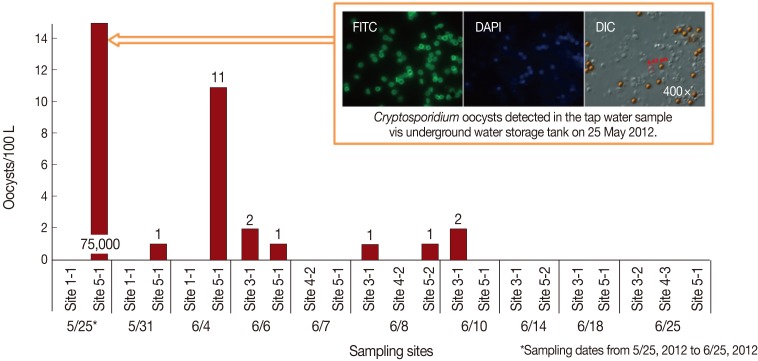
Fig. 3Results of the nested PCR amplification for Cryptosporidium.
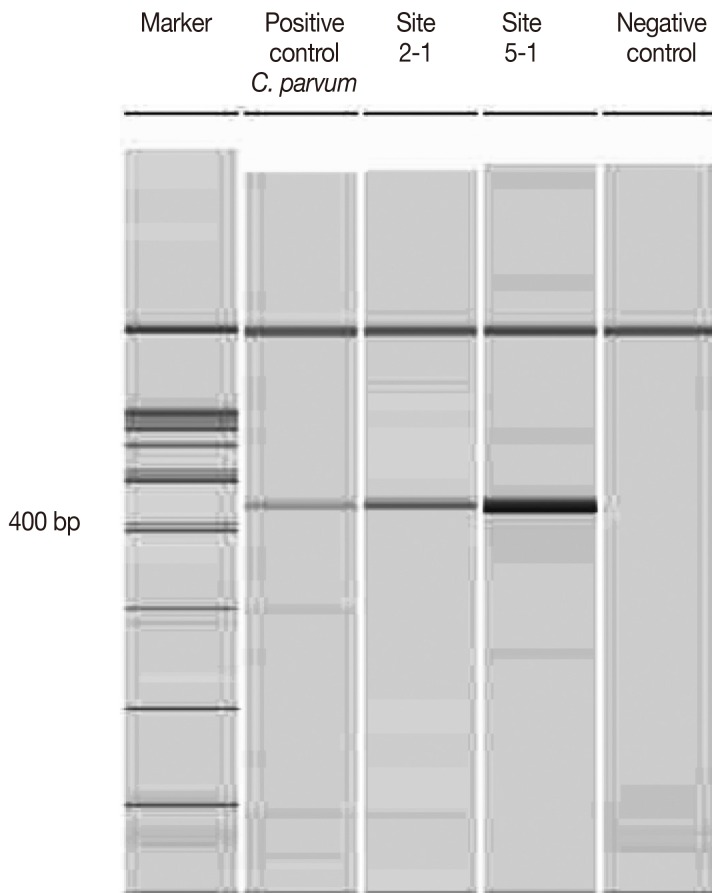
Fig. 4Improvement in location of pipes between water storage tank and septic tank. The diagram indicates that the corroded inlet pipe (left upper photo) of underground water storage tank was replaced partially by a new pipe above the pipe of the septic tank.
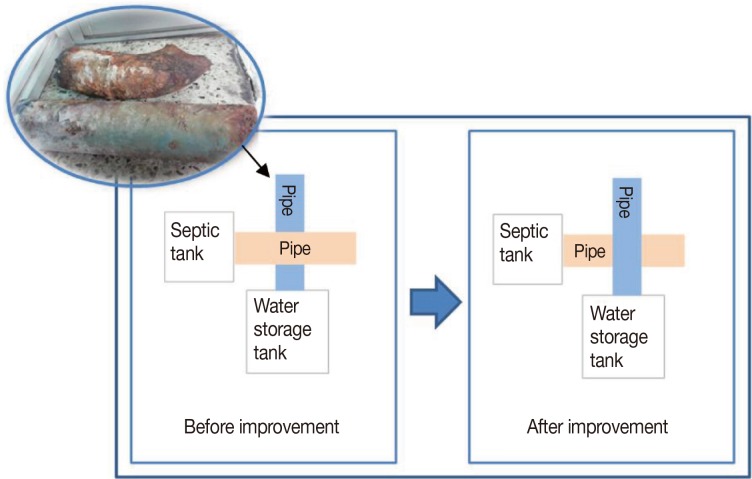
Table 1.Supply systems on sampling sites
Table 1.
|
Sites |
Supply systems |
Notes |
|
Site 1-1 |
Drinking water supplied directly from Guui WTP |
A tap in shopping center |
|
Site 1-2 |
Drinking water supplied directly from Guui WTP |
A tap in shopping center |
|
Site 1-3 |
Drinking water supplied directly from Guui WTP |
A tap in shopping center |
|
Site 2-1 |
Drinking water of an underground water storage tank |
A tap of underground water storage tank |
|
Site 3-1 |
Drinking water via under & roof water storage tanks |
A House in Building A |
|
Site 3-2 |
Drinking water via under & roof water storage tanks |
An outdoor tap attached Building A |
|
Site 4-1 |
Drinking water via under & roof water storage tanks |
A House in Building B |
|
Site 4-2 |
Drinking water via under & roof water storage tanks |
A House in Building B |
|
Site 4-3 |
Drinking water via under & roof water storage tanks |
An outdoor tap attached Building B |
|
Site 5-1 |
Drinking water via under & roof water storage tanks |
An outdoor tap attached Building C |
|
Site 5-2 |
Drinking water via under & roof water storage tanks |
A House in Building C |
Table 2.Results of test on bacteriological items for the first samples
Table 2.
|
Parameters |
Site 1-2 |
Site 2-1 |
Site 3-1 |
Site 4-1 |
|
Total Coliforms (/100 ml) |
- |
+ |
+ |
+ |
|
E. coli (/100 ml) |
- |
+ |
+ |
+ |
|
Total colony counts in 35°C (/ml) |
0 |
360 |
920 |
1,000 |
|
Total colony counts in 21°C (/ml) |
0 |
1,000 |
840 |
1,100 |
|
Fecal streptococcus (/250 ml) |
- |
+ |
+ |
+ |
|
Enterococcus (/100 ml) |
- |
+ |
+ |
+ |
|
Salmonella (/250 ml) |
- |
- |
- |
- |
|
Shigella (/250 ml) |
- |
- |
- |
- |
|
Clostridium perfringens (/50 ml) |
- |
+ |
+ |
+ |
|
Pseudomans aeruginosa (/250 ml) |
- |
+ |
+ |
+ |
Table 3.Results of test on protozoa and viruses for the first samples
Table 3.
|
Parameters |
Site 1-1 |
Site 5-1 |
|
Cryptosporidium oocysts |
0/100 L |
7.5 × 10⁴/100 L |
|
Giardia cysts |
0/100 L |
0/100 L |
|
Total culturable viruses |
Not detected /100 L |
Not detected /100 L |
|
Noroviruses |
Not detected /100 L |
Not detected /100 L |