Abstract
Clonorchis sinensis is currently the most important parasite affecting public health problems in the Republic of Korea. We investigated the prevalence of C. sinensis infection among residents living along 5 major rivers in Korea. A total of 42,562 individual stool samples were collected from 37 localities and examined using the formalin-ether sedimentation technique. Helminth eggs were detected in 4,052 (9.5%) residents and 3,586 (8.4%) were infected with C. sinensis. The egg positive rate of C. sinensis in Nakdong, Seomjin, Geum, Yeongsan, and Han River was 11.7%, 9.9%, 6.5%, 3.1%, and 1.0%, respectively. The overall prevalence of clonorchiasis by sex was 11.2% in males and 6.2% in females. The age-prevalence was the highest in the 50-59 years band. It has been reconfirmed that the endemicity of clonorchiasis is higher in southern areas of Korea, especially along Nakdong and Seomjin Rivers. A combination of continuous control programs with health education initiatives is urgently required in these highly endemic areas of clonorchiasis in Korea.
-
Key words: Clonorchis sinensis, clonorchiasis, prevalence, riverside resident, 5 major rivers, Korea
Until the 1970s in the Republic of Korea (Korea), parasitic infections with soil-transmitted intestinal nematodes, such as
Ascaris lumbricoides,
Trichuris trichiura, and hookworms, were highly prevalent [
1,
2]. Since 1971, nationwide surveys have been conducted every 5-7 years in order to estimate the infection status of intestinal helminth parasites until 2004 [
3]. In the first 1971 survey, the overall prevalence was 84.3%, and by 2004, the rate had dramatically decreased to 3.7%. The rapid decrease in the overall prevalence of intestinal parasites over the past several decades has been attributed mainly to nationwide control programs and health education initiatives undertaken by the Korean government along with improvements in the living conditions and quality of life in Korea [
4]. Despite the remarkable decrease of soil-transmitted nematode infections, the prevalence of fish-borne trematode infections such as clonorchiasis and metagonimiasis has still remained to be relatively high [
5].
The liver fluke,
C. sinensis, is the most important helminth in Korea these days, and clonorchiasis has been known as the cause of biliary pathogenesis, i.e., inflammation, dilatation, wall thickening, mucosal hyperplasia, liver cirrhosis, and even cholangiocarcinoma [
6-
8]. Among human diseases caused by parasites, clonorchiasis is ranked at the first due to its social, economic, and public health impacts in Korea. Clonorchiasis is endemic in most of the major river basins of Korea [
9]. In 1981, the egg positive rates of people living in those river basins differed considerably; 40.2% in Nakdong River, 30.8% in Yeongsan River, 17.3% in Seomjin River, 15.7% in Han River, 15.9% in Tamjin River, and 12.0% in Geum River [
10]. However, in 2007, the positive rates of
C. sinensis in Nakdong, Seomjin, Yeongsan, Geum, and Han Rivers were 12.2%, 9.5%, 3.3%, 3.0%, and 1.0%, respectively [
11]. Although the infection rates of
C. sinensis in these major rivers decreased considerably over the past 20 years, clonorchiasis continues to persist and is currently considered as the most important helminthiasis in Korea.
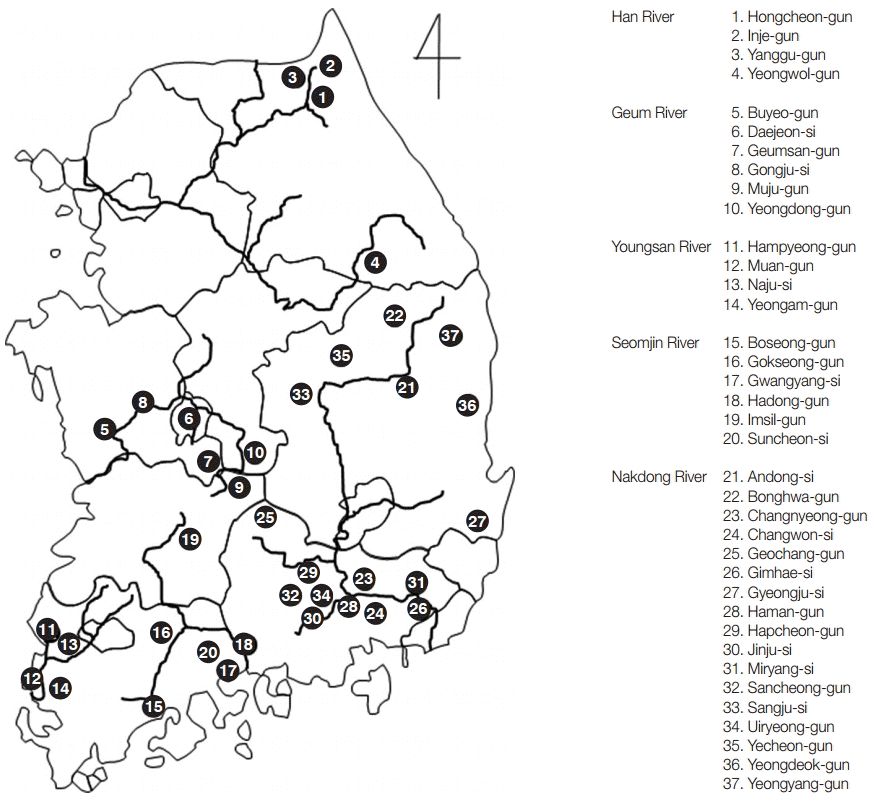
In this study, we investigated the infection status of populations identified to be at risk of clonorchiasis, notably among residents living along 5 major rivers. The surveyed areas consisted of 37 counties, which are located in the vicinity of the Han, Geum, Yeongsan, Seomjin, and Nakdong Rivers, Korea. A total of 42,562 fecal specimens were collected from residents of these regions using a random household sampling method from February to November 2008 (
Fig. 1). Stool specimens in plastic containers (1/person) collected in individual survey areas were transferred to the laboratory of National Institute of Health, and then examined by means of the formalin-ether sedimentation technique. Microscopic examinations were performed twice by well-trained technicians. The egg positive rate was estimated by arithmetic means. The egg positive individuals were treated with either praziquantel or other appropriate anti-parasitic drugs at the end of the study.
More than 10 species of helminth eggs were detected in 4,052 (9.5%) stool samples (
Table 1). Eggs of
C. sinensis were found in 3,586 (8.4%) fecal specimens of residents. The prevalence of clonorchiasis was highest in residents of Nakdong River (11.7%), followed by Seomjin River (9.9%), Geum River (6.5%), Yeongsan River (3.1%), and Han River (1.0%). Especially, Gyeongju-si (city) had the highest rate of 25.9%, followed by Hadong-gun of 21.9%, which were located in the mid- or downstream of Nakdong and Seomjin Rivers, respectively. Egg positive rates by surveyed areas are shown in
Table 2.
The overall prevalence of clonorchiasis by sex was 11.2% in males and 6.2% in females (
Table 3). The egg positive rate by age group was highest in the 50-59 age band, followed by the forties (8.9%), sixties (8.8%), seventies (7.8%), thirties (5.7%), over 80 (5.2%), twenties (2.2%), and below 19 (1.0%) (
Table 4).
The present study provided the prevalence of
C. sinensis infection among residents living along 5 major rivers of Korea and confirmed the high endemicity of
C. sinensis infection in southern localities. Although the prevalence of clonorchiasis along the major rivers appears to decline over the past decade, we identified that Nakdong and Seomjin Rivers are still highly endemic regions in common with previous studies; a national survey undertaken in 1981 reported that the egg positive rates of people living along these major river basins were 40.2% in Nakdong River, 30.8% in Yeongsan River, 17.3% in Seomjin River, 15.7% in Han River, 15.9% in Tamjin River, and 12.0% in Geum River [
10]. Also, in 2006, the egg positive rates of
C. sinensis observed in the river basins of Nakdong, Seomjin, Yeongsan, and Geum were 17.1%, 11.2%, 5.5%, and 4.6%, respectively [
9]. In addition, our results showed that the positive rates of overall intestinal parasites and
C. sinensis in residents along 5 major rivers was 9.5% and 8.4%, respectively. The 9.5% prevalence of overall intestinal parasites is 2-fold higher than the national intestinal helminth prevalence of 3.7% in 2004 [
3].
The infection status of C. sinensis according to age groups appears to be a typical pattern for C. sinensis infection, reaching a peak at the age groups of 40-49 and 50-59 years. These results suggest that the eating habit of raw fishes containing C. sinensis metacercariae is a deeply rooted traditional custom among residents living in rural and riverside areas. As well, the higher prevalence in males than in females may be caused by frequent alcohol consumption and raw freshwater fish intake with increasing activities such as fishing that are mostly carried out by men.
While not conceptually new, our results provided the basic data and important information regarding the prevalence of clonorchiasis in high risk regions in Korea and are valuable for providing control strategies and medication of clonorchiasis patients in these areas.
Notes
-
We have no conflict of interest related to this work.
This study was supported by parasitic disease surveillance and control program of the National Institute of Health, Ministry of Health and Welfare, Republic of Korea (NIH-4800-4847-311).
Fig. 1.Surveyed areas along 5 major rivers, the Republic of Korea.
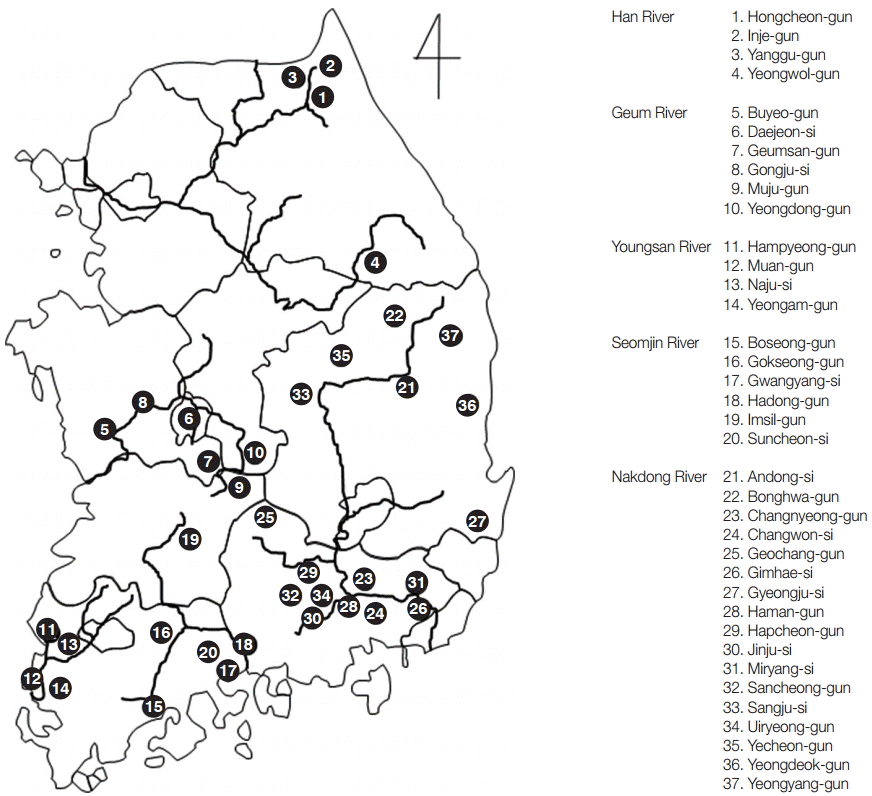
Table 1.Positive rates of parasite eggs by fecal examination in residents along 5 major rivers
Table 1.
|
Parasite species |
No. positive cases (%) |
|
Overall intestinal parasites |
4,052 (9.5) |
|
Helminths |
|
|
Clonorchis sinensis
|
3,586 (8.4) |
|
Metagonimus spp. |
411 (1.0) |
|
Trichuris trichiura
|
63 (0.1) |
|
Echinostoma spp. |
12 (0.03) |
|
Hookworm |
5 (0.01) |
|
Ascaris lumbricoides
|
4 (0.01) |
|
Gymnophalloides seoi
|
4 (0.01) |
|
Strongyloides stercolalis
|
4 (0.01) |
|
Trichostrongylus orientalis
|
1 (0.002) |
|
Diphyllobothrium sp. |
1 (0.002) |
|
Co-infection |
|
|
C. sinensis+Metagonimus spp. |
78 (0.18) |
|
C. sinensis+Echinostoma spp. |
7 (0.02) |
|
C. sinensis+T. trichiura
|
5 (0.01) |
Table 2.Prevalence of overall intestinal parasites and C. sinensis according to localities and river basins
Table 2.
|
River basins |
Locality |
No. of examination |
No. of positive (%) |
No. of cumulative positive (%) |
C. sinensis (%) |
|
Han river |
Hongcheon-gun |
1,016 |
22 (2.2) |
22 (2.2) |
16 (1.6) |
|
Inje-gun |
1,265 |
15 (1.2) |
15 (1.2) |
8 (0.6) |
|
Yanggu-gun |
1,025 |
9 (0.9) |
9 (0.9) |
4 (0.4) |
|
Yeongwol-gun |
1,349 |
35 (2.6) |
37 (2.7) |
19 (1.4) |
|
Subtotal |
4,655 |
81 (1.7) |
83 (1.8) |
47 (1.0) |
|
Geum river |
Buyeo-gun |
1,433 |
47 (3.3) |
47 (3.3) |
40 (2.8) |
|
Daejeon-si |
1,075 |
42 (3.9) |
42 (3.9) |
40 (3.7) |
|
Geumsan-gun |
1,209 |
61 (5.0) |
62 (5.1) |
53 (4.4) |
|
Gongju-si |
1,016 |
48 (4.7) |
48 (4.7) |
47 (4.6) |
|
Muju-gun |
1,708 |
204 (11.9) |
208 (12.2) |
190 (11.1) |
|
Yeongdong-gun |
287 |
74 (25.8) |
78 (27.2) |
68 (23.7) |
|
Subtotal |
6,728 |
476 (7.1) |
485 (7.2) |
438 (6.5) |
|
Yeongsan river |
Hampyeong-gun |
1,144 |
47 (4.1) |
52 (4.5) |
29 (2.5) |
|
Muan-gun |
1,267 |
83 (6.6) |
83 (6.6) |
32 (2.5) |
|
Naju-si |
1,271 |
54 (4.2) |
54 (4.2) |
45 (3.5) |
|
Yeongam-gun |
1,041 |
48 (4.6) |
48 (4.6) |
40 (3.8) |
|
Subtotal |
4,723 |
232 (4.9) |
237 (5.0) |
146 (3.1) |
|
Seomjin river |
Boseong-gun |
1,200 |
141 (11.8) |
148 (12.3) |
123 (10.3) |
|
Gokseong-gun |
1,650 |
169 (10.2) |
178 (10.8) |
137 (8.3) |
|
Gwangyang-si |
1,394 |
148 (10.6) |
149 (10.7) |
86 (6.2) |
|
Hadong-gun |
1,065 |
281 (26.4) |
306 (28.7) |
233 (21.9) |
|
Imsil-gun |
1,074 |
66 (6.1) |
68 (6.3) |
57 (5.3) |
|
Suncheon-si |
1,162 |
136 (11.7) |
144 (12.4) |
112 (9.6) |
|
Subtotal |
7,545 |
941 (12.5) |
993 (13.2) |
748 (9.9) |
|
Nakdong river |
Andong-si |
1,932 |
258 (13.4) |
261 (13.5) |
242 (12.5) |
|
Bonghwa-gun |
936 |
20 (2.1) |
20 (2.1) |
16 (1.7) |
|
Changnyeong-gun |
1,044 |
147 (14.1) |
149 (14.3) |
141 (13.5) |
|
Changwon-si |
851 |
58 (6.8) |
58 (6.8) |
56 (6.6) |
|
Geochang-gun |
1,256 |
63 (5.0) |
64 (5.1) |
61 (4.9) |
|
Gimhae-si |
184 |
6 (3.3) |
6 (3.3) |
6 (3.3) |
|
Gyeongju-si |
710 |
185 (26.1) |
185 (26.1) |
184 (25.9) |
|
Haman-gun |
1,142 |
121 (10.6) |
122 (10.7) |
111 (9.7) |
|
Hapcheon-gun |
1,142 |
184 (16.1) |
189 (16.5) |
180 (15.8) |
|
Jinju-si |
1,020 |
137 (13.4) |
140 (13.7) |
134 (13.1) |
|
Miryang-si |
1,603 |
291 (18.2) |
294 (18.3) |
268 (16.7) |
|
Sancheong-gun |
1,365 |
226 (16.6) |
228 (16.7) |
222 (16.3) |
|
Sangju-si |
1,067 |
91 (8.5) |
92 (8.6) |
86 (8.1) |
|
Uiryeong-gun |
955 |
115 (12.0) |
115 (12.0) |
112 (11.7) |
|
Yecheon-gun |
1,314 |
152 (11.6) |
152 (11.6) |
151 (11.5) |
|
Yeongdeok-gun |
1,253 |
154 (12.3) |
162 (12.9) |
125 (10.0) |
|
Yeongyang-gun |
1,137 |
114 (10.0) |
114 (10.0) |
112 (9.9) |
|
Subtotal |
18,911 |
2,322 (12.3) |
2,351 (12.4) |
2,207 (11.7) |
|
Total |
|
42,562 |
4,052 (9.5) |
4,149 (9.7) |
3,586 (8.4) |
Table 3.Positive rate of C. sinensis according to gender and river basins
Table 3.
|
River basins |
No. of positive / No. examined (%)
|
|
Male |
Female |
Total |
|
Han river |
32/2,518 (1.3) |
15/2,137 (0.7) |
47/4,655 (1.0) |
|
Geum river |
307/3,076 (10.0) |
131/3,628 (3.6) |
438/6,728 (6.5) |
|
Yeongsan river |
84/1,915 (4.4) |
62/2,808 (2.2) |
146/4,723 (3.1) |
|
Seomjin river |
422/3,221 (13.1) |
326/4,324 (7.5) |
748/7,545 (9.9) |
|
Nakdong river |
1,306/8,555 (15.3) |
901/10,327 (8.7) |
2,207/18,911 (11.7) |
|
Total |
2,151/19,285 (11.2) |
1,435/23,224 (6.2) |
3,586/42,562 (8.4) |
Table 4.Prevalence of C. sinensis eggs according to age groups and river basins
Table 4.
|
River basins |
No. of positive / No. of examined (%)
|
|
Total |
1-19 |
20-29 |
30-39 |
40-49 |
50-59 |
60-69 |
70-79 |
80- |
|
Han river |
47/4,655 |
1/242 |
7/719 |
3/327 |
11/652 |
17/965 |
4/917 |
4/706 |
0/115 |
|
(1.0) |
(0.4) |
(1.0) |
(0.9) |
(1.7) |
(1.8) |
(0.4) |
(0.6) |
(0.0) |
|
Geum river |
438/6,728 |
2/302 |
5/163 |
7/342 |
48/738 |
127/1,330 |
122/1,746 |
107/1,638 |
15/390 |
|
(6.5) |
(0.7) |
(3.1) |
(2.0) |
(6.5) |
(9.5) |
(7.0) |
(6.5) |
(3.8) |
|
Yeongsan river |
146/4,723 |
0/56 |
0/56 |
3/103 |
18/378 |
37/893 |
48/1,531 |
35/1,428 |
4/261 |
|
(3.1) |
(0.0) |
(0.0) |
(2.9) |
(4.8) |
(4.1) |
(3.1) |
(2.5) |
(1.5) |
|
Seomjin river |
748/7,545 |
6/225 |
11/116 |
29/276 |
77/642 |
152/1,097 |
203/2,073 |
187/2,265 |
34/626 |
|
(9.9) |
(2.7) |
(9.5) |
(10.5) |
(12.0) |
(13.9) |
(9.8) |
(8.3) |
(5.4) |
|
Nakdong river |
2,207/18,911 |
3/377 |
6/235 |
49/558 |
224/1,815 |
534/3,773 |
666/5,523 |
517/4,880 |
69/938 |
|
(11.7) |
(0.8) |
(2.6) |
(8.8) |
(12.3) |
(14.2) |
(12.1) |
(10.6) |
(7.4) |
|
Total |
3,586/42,562 |
12/1,202 |
29/1,289 |
91/1,606 |
378/4,225 |
867/8,058 |
1,043/11,790 |
850/10,917 |
122/2,330 |
|
(8.4) |
(1.0) |
(2.2) |
(5.7) |
(8.9) |
(10.8) |
(8.8) |
(7.8) |
(5.2) |
References
- 1. Seo BS, Rim HJ, Loh IK, Lee SH, Cho SY, Park SC, Bae JW, Kim JH, Lee JS, Koo BY, Kim KS. Study on the status of helminthic infections in Koreans. Korean J Parasitol 1969;7:53-70.
- 2. Kim CH, Park CH, Kim HJ, Chun HB, Min HK, Koh TY, Soh CT. Prevalence of intestinal parasites in Korea. Korean J Parasitol 1971;9:25-38.
- 3. Kim TS, Cho SH, Huh S, Kong Y, Sohn WM, Hwang SS, Chai JY, Lee SH, Park YK, Oh DK, Lee JK. A nationwide survey on the prevalence of intestinal parasitic infections in the Republic of Korea, 2004. Korean J Parasitol 2009;47:37-47.
- 4. Hong ST, Chai JY, Choi MH, Huh S, Rim HJ, Lee SH. A successful experience of soil-transmitted helminth control in the Republic of Korea. Korean J Parasitol 2006;44:177-185.
- 5. Shin EH, Guk SM, Kim HJ, Lee SH, Chai JY. Trends in parasitic diseases in the Republic of Korea. Trends Parasitol 2008;24:143-150.
- 6. Hong ST, Fang Y. Clonorchis sinensis and clonorchiasis, an update. Parasitol Int 2012;61:17-24.
- 7. Shin HR, Oh JK, Masuyer E, Curado MP, Bouvard V, Fang YY, Wiangnon S, Sripa B, Hong ST. Epidemiology of cholangiocarcinoma: an update focusing on risk factors. Cancer Sci 2010;101:579-585.
- 8. Choi BI, Han JK, Hong ST, Lee KH. Clonorchiasis and cholangiocarcinoma: etiologic relationship and imaging diagnosis. Clin Microbiol Rev 2004;17:540-552.
- 9. Cho SH, Lee KY, Lee BC, Cho PY, Cheun HI, Hong ST, Sohn WM, Kim TS. Prevalence of clonorchiasis in southern endemic areas of Korea in 2006. Korean J Parasitol 2008;46:133-137.
- 10. Seo BS, Lee SH, Cho SY, Chai JY, Hong ST, Han IS, Sohn JS, Cho BH, Ahn SR, Lee SK, Chung SC, Kang KS, Shim HS, Hwang IS. An epidemiologic study on clonorchiasis and metagonimiasis in riverside areas in Korea. Korean J Parasitol 1981;19:137-150.
- 11. Kim HK, Cheun HI, Cheun BS, Lee KY, Kim TS, Lee SE, Lee WJ, Cho SH. Prevalence of Clonorchis sinensis infections along the five major rivers in Republic of Korea, 2007. Osong Public Health Res Perspect 2010;1:43-49.
Citations
Citations to this article as recorded by

- Epidemiology and genomic features of biliary tract cancer and its unique features in Korea
Seonjeong Woo, Youngun Kim, Sohyun Hwang, Hong Jae Chon
Journal of Liver Cancer.2025; 25(1): 41. CrossRef - Carcinogenic parasites: insights into the epidemiology and possible mechanisms of cancer
Shabir Ahmad Rather, Zahoor Ahmad Wani, Rashaid Ali Mustafa, Pooja Bharti, Rukhsana Kousar, Mohammad Vikas Ashraf, Shoeb Ahmad, A A Shah, M A Hannan Khan
Mutagenesis.2025; 40(3): 465. CrossRef - High sensitivity detection of Clonorchis sinensis and Gymnophalloides seoi in food by new real-time gene amplification method
Min Ji Hong, Mi-Gyeong Kim, Doo Won Seo, Hyun Mi Jung, Hyun-Ja Han, Seung Hwan Kim, Insun Joo
Food Science and Biotechnology.2025; 34(14): 3417. CrossRef - Ivermectin Identified Using a High-Throughput Screening System Exhibits Anti-Clonorchis sinensis Activity in Rats
Soon-Ok Lee, Hyeryon Lee, Ki Back Chu, Jianhua Li, Sung-Jong Hong, Sung Soo Kim, Joo Hwan No, Fu-Shi Quan
Antibiotics.2025; 14(8): 837. CrossRef - Assessing trends in clonorchiasis incidence via prescription data analysis in South Korea
Taeksang Lee, Jun Hyun Lee, Hanna Jin, Yun Kyung Lee, Hyun Beom Song
BMC Public Health.2025;[Epub] CrossRef - Alterations in the gut microbiota of alcoholic cirrhosis patients infected with Clonorchis sinensis in the Pearl River Delta region of China
Aijun Huang, Minxuan Su, Shebin Zhang, Chanjing Zhao, Yanfen Luo, Yifei Long, Dongling Lin, Song Li, Cong Shen, Qiwei Li, Yimei Cai, Lina Wang, Jianping Liu, Cha Chen, Maria Y Pakharukova
PLOS One.2025; 20(10): e0334311. CrossRef - Clonorchiasis and opisthorchiasis: epidemiology, transmission, clinical features, morbidity, diagnosis, treatment, and control
Men-Bao Qian, Jennifer Keiser, Jürg Utzinger, Xiao-Nong Zhou, Graeme N. Forrest
Clinical Microbiology Reviews.2024;[Epub] CrossRef - Infection characteristics of Metagonimus species (Digenea: Heterophyidae) metacercariae in fish from major rivers of Korea
Woon-Mok Sohn
Parasites, Hosts and Diseases.2024; 62(1): 1. CrossRef - FATP5 Is Indispensable for the Growth of Intrahepatic Cholangiocarcinoma
Diyala Shihadih, Xue Wang, Peter-James H. Zushin, Pavlo Khodakivskyi, Hyo Min Park, Emily Tso, Jena Shiblak, Angela Misic, Sharon M. Louie, Catherine Ward, Marc Hellerstein, Daniel K. Nomura, Elena Goun, Francesco Urigo, Diego F. Calvisi, Xin Chen, Andrea
Molecular Cancer Research.2024; 22(6): 585. CrossRef - 2023년 국내 장내기생충 감염 조사
명노 이, 정원 주, 선옥 백, 영주 이, 은솔 이, 희일 이
Public Health Weekly Report.2024; 17(28): 1227. CrossRef - A novel kit for enrichment of fecal helminth eggs
Eunsol Lee, Seon-Ok Back, Young-Ju Lee, Jung-Won Ju, Hee-Il Lee, Myoung-Ro Lee
Parasites, Hosts and Diseases.2024; 62(3): 323. CrossRef - Risk factors for Clonorchis sinensis infections and control measures reinforced with focused interviews
Soon-Ok Lee, Fuhong Dai, Eun Joo Park, Yun Pyo Hong, Fu-Shi Quan, Jin-Ho Song, Sung-Jong Hong
Parasitology Research.2024;[Epub] CrossRef - Multilayer omics reveals the molecular mechanism of early infection of Clonorchis sinensis juvenile
Yuhong Wu, Xueling Deng, Zhanshuai Wu, Dengyu Liu, Xiaoyin Fu, Lili Tang, Shanshan He, Jiahui Lv, Jilong Wang, Qing Li, Tingzheng Zhan, Zeli Tang
Parasites & Vectors.2023;[Epub] CrossRef - The spatial-temporal risk profiling of Clonorchis sinensis infection over 50 years implies the effectiveness of control programs in South Korea: a geostatistical modeling study
Hai-Yan Xiao, Jong-Yil Chai, Yue-Yi Fang, Ying-Si Lai
The Lancet Regional Health - Western Pacific.2023; 33: 100697. CrossRef - Global prevalence of 4 neglected foodborne trematodes targeted for control by WHO: A scoping review to highlight the gaps
Rachel Tidman, Kaushi S. T. Kanankege, Mathieu Bangert, Bernadette Abela-Ridder, Paul R. Torgerson
PLOS Neglected Tropical Diseases.2023; 17(3): e0011073. CrossRef - Relationship between Clonorchis sinensis Infection and Cholangiocarcinoma in Korea
Hwa Sun Kim, Ho-Woo Nam, Hye-Jin Ahn, Dongjae Kim, Yeong Hoon Kim
The Korean Journal of Parasitology.2022; 60(4): 261. CrossRef - Epidemiological characterization of Clonorchis sinensis infection in humans and freshwater fish in Guangxi, China
Yihong Xie, Kaushi S. T. Kanankege, Zhihua Jiang, Shun Liu, Yichao Yang, Xiaoling Wan, Andres M. Perez
BMC Infectious Diseases.2022;[Epub] CrossRef - Up-to-Date Pathologic Classification and Molecular Characteristics of Intrahepatic Cholangiocarcinoma
Taek Chung, Young Nyun Park
Frontiers in Medicine.2022;[Epub] CrossRef - Infection Characteristics of Clonorchis sinensis Metacercariae in Fish from Republic of Korea
Woon-Mok Sohn
The Korean Journal of Parasitology.2022; 60(2): 79. CrossRef - Status of Helminthic Infections in Residents around River Basins in the Republic of Korea for 10 Years (2011-2020)
Myoung-Ro Lee, Hee-Eun Shin, Seon-Ok Back, Young-Ju Lee, Hee-Il Lee, Jung-Won Ju
The Korean Journal of Parasitology.2022; 60(3): 187. CrossRef - Epidemiology and determinants of clonorchiasis in school children in southeastern China
Men-Bao Qian, Shi-Feng Zhuang, Shi-Qiao Zhu, Xiao-Mao Deng, Zheng-Xiang Li, Xiao-Nong Zhou
Acta Tropica.2021; 216: 105752. CrossRef - Utility of an Automatic Vision-Based Examination System (AVE-562) for the Detection of Clonorchis sinensis Eggs in Stool
Yu Jeong Lee, Eun Jeong Won, Young-Chang Cho, Soo Hyun Kim, Myung Geun Shin, Jong Hee Shin
Annals of Laboratory Medicine.2021; 41(2): 221. CrossRef - Severe hepatobiliary morbidity is associated with Clonorchis sinensis infection: The evidence from a cross-sectional community study
Men-Bao Qian, Hong-Mei Li, Zhi-Hua Jiang, Yi-Chao Yang, Ming-Fei Lu, Kang Wei, Si-Liang Wei, Yu Chen, Chang-Hai Zhou, Ying-Dan Chen, Xiao-Nong Zhou, Maria Angeles Gómez-Morales
PLOS Neglected Tropical Diseases.2021; 15(1): e0009116. CrossRef - Survey of Zoonotic Trematode Metacercariae in Fish from Water Systems of Geum-gang (River) in Republic of Korea
Woon-Mok Sohn, Byoung-Kuk Na, Shin-Hyeong Cho, Cheon-Hyeon Kim, Min-Ah Hwang, Kyeong-Woo No, Jai-Dong Kim
The Korean Journal of Parasitology.2021; 59(1): 23. CrossRef - High Endemicity with Clonorchis sinensis Metacercariae in Fish from Yongjeon-cheon (Stream) in Cheongsong-gun, Gyeongsangbuk-do, Korea
Woon-Mok Sohn, Byoung-Kuk Na, Shin-Hyeong Cho, Hee Il Lee, Myoung-Ro Lee, Jung-Won Ju, Gou Ok Kim
The Korean Journal of Parasitology.2021; 59(1): 97. CrossRef - Risk Factors for Clonorchis sinensis Infection in Residents of Binyang, Guangxi: A Cross-Sectional and Logistic Analysis Study
Meng Xu, Yanyan Jiang, Jianhai Yin, Shengkui Cao, Yujuan Shen, Jianping Cao
Frontiers in Public Health.2021;[Epub] CrossRef - Prevalence and Infection Intensity of Zoonotic Trematode Metacercariae in Fish from Soyang-cheon (Stream), in Wanju-gun, Jeollabuk-do, Korea
Woon-Mok Sohn, Byoung-Kuk Na, Shin-Hyeong Cho, Jung-Won Ju, Cheon-Hyeon Kim, Min-Ah Hwang, Kyeong-Woo No, Jong-Ho Park
The Korean Journal of Parasitology.2021; 59(3): 265. CrossRef - Novel mechanism of hepatobiliary system damage and immunoglobulin G4 elevation caused by Clonorchis sinensis infection
Xin-He Zhang, Die Huang, Yi-Ling Li, Bing Chang
World Journal of Clinical Cases.2021; 9(23): 6639. CrossRef - Survey of Zoonotic Trematode Metacercariae in Fish from Irrigation Canal of Togyo-jeosuji (Reservoir) in Cheorwon-gun, Gangwon-do, Republic of Korea
Woon-Mok Sohn, Byoung-Kuk Na, Shin-Hyeong Cho, Hee Il Lee, Jung-Won Ju, Myoung-Ro Lee, Eun-Joo Lim, Sung Yong Son, Eunmi Ko, Jaeseok Choi
The Korean Journal of Parasitology.2021; 59(4): 427. CrossRef - Endemicity of Zoonotic Trematode Metacercariae in Fish from Deokcheon-gang (River) in Sancheong-gun, Gyeongsangnam-do, Republic of Korea
Woon-Mok Sohn, Byoung-Kuk Na, Shin-Hyeong Cho, Hee Il Lee, Jung-Won Ju, Myoung-Ro Lee, Jeong-Gil Park, Jihee Ahn
The Korean Journal of Parasitology.2021; 59(5): 523. CrossRef - Spatial epidemiologic analysis of the liver cancer and gallbladder cancer incidence and its determinants in South Korea
Jieun Jang, Dae-Sung Yoo, Byung Chul Chun
BMC Public Health.2021;[Epub] CrossRef - Gadolinium ethoxybenzyl diethylenetriamine pentaacetic acid-enhanced T1 mapping to evaluate liver damage caused by Clonorchis sinensis
Yanhan Xiang, Ningqin Li, Zhongyang Zhou, Jing Fang, Jinyuan Liao
Radiology of Infectious Diseases.2021; 8(3): 108. CrossRef - Effectiveness of health education in improving knowledge, practice and belief related to clonorchiasis in children
Men-Bao Qian, Xiao-Qin Gan, Jia-Guang Zhao, Wei-Jie Zheng, Wei Li, Zhi-Hua Jiang, Ting-Jun Zhu, Xiao-Nong Zhou
Acta Tropica.2020; 207: 105436. CrossRef - Familial assimilation in transmission of raw-freshwater fish-eating practice leading to clonorchiasis
Men-Bao Qian, Zhi-Hua Jiang, Chang-Hai Zhou, Tao Ge, Xin Wang, Xiao-Nong Zhou, jong-Yil Chai
PLOS Neglected Tropical Diseases.2020; 14(4): e0008263. CrossRef - Prevalence of Clonorchis sinensis infection in fish in South‐East Asia: A systematic review and meta‐analysis
Ying Zhang, Qing‐Long Gong, Qing‐Bo Lv, Yang‐Yuan Qiu, Yan‐Chun Wang, Hong‐Yu Qiu, Xin‐Rui Guo, Jun‐Feng Gao, Qiao‐Cheng Chang, Chun‐Ren Wang
Journal of Fish Diseases.2020; 43(11): 1409. CrossRef - A retrospective administrative database analysis of the association between clonorchiasis or helminthiasis and the development of cholelithiasis
Chien-Hua Chen, Cheng-Li Lin, Chung Y. Hsu, Chia-Hung Kao
Current Medical Research and Opinion.2019; 35(3): 489. CrossRef - Incidence and Overall Survival of Biliary Tract Cancers in South Korea from 2006 to 2015: Using the National Health Information Database
Byung-Woo Kim, Chang-Mo Oh, Hwa Young Choi, Joong-Won Park, Hyunsoon Cho, Moran Ki
Gut and Liver.2019; 13(1): 104. CrossRef - Clonorchis sinensis Infection Presenting as Acute Cholangitis and Acute Cholecystitis
Yu Mi Yang, Hanlim Choi, Dong Hee Ryu, Chang Gok Woo, Joung-Ho Han, Seon Mee Park
The Korean Journal of Pancreas and Biliary Tract.2019; 24(2): 79. CrossRef - Cytochrome C Oxidase Subunit 1, Internal Transcribed Spacer 1, Nicotinamide Adenine Dinucleotide Hydrogen Dehydrogenase Subunits 2 and 5 of Clonorchis sinensis Ancient DNA Retrieved from Joseon Dynasty Mummy Specimens
Jong Ha Hong, Chang Seok Oh, Jong-Yil Chai, Min Seo, Dong Hoon Shin
Journal of Korean Medical Science.2019;[Epub] CrossRef - Infection Status with Clonorchis sinensis Metacercariae in Fish from Yangcheon (Stream) in Sancheong-gun, Gyeongsangnam-do, Korea
Woon-Mok Sohn, Byoung-Kuk Na, Shin-Hyeong Cho, Jung-Won Ju
The Korean Journal of Parasitology.2019; 57(2): 145. CrossRef - A Clonorchiasis Case of a Leopard Cat, Prionailurus bengalensis euptilurus, Diagnosed by Ultrasonography and Egg Detection in Republic of Korea
Seongjun Choe, Dong-Hyuk Jeong, Jeong-Jin Yang, Jeongho Kim, Ki-Jeong Na, Dongmin Lee, Hansol Park, Hyeong-Kyu Jeon, Keeseon S. Eom
The Korean Journal of Parasitology.2019; 57(3): 299. CrossRef - Improving diagnostic performance of the Kato-Katz method for Clonorchis sinensis infection through multiple samples
Men-Bao Qian, Shi-Feng Zhuang, Shi-Qiao Zhu, Xiao-Mao Deng, Zheng-Xiang Li, Xiao-Nong Zhou
Parasites & Vectors.2019;[Epub] CrossRef - Infection Status with Digenetic Trematode Metacercariae in Fishes from Coastal Lakes in Gangwon-do, Republic of Korea
Woon-Mok Sohn, Byoung-Kuk Na, Shin-Hyeong Cho, Soon-Won Lee
The Korean Journal of Parasitology.2019; 57(6): 681. CrossRef - Prevalence and Intensity of Clonorchis sinensis Metacercariae in Freshwater Fish from Wicheon Stream in Gunwi-gun, Gyeongsangbuk-do, Korea
Woon-Mok Sohn, Byoung-Kuk Na, Shin-Hyeong Cho, Jung-Won Ju, Dong-Chul Son
The Korean Journal of Parasitology.2018; 56(1): 41. CrossRef - Relationship between blood parameters and Clonorchis sinensis infection: A retrospective single center study
Huaping Chen, Siyuan Chen, Zhili Huang, Lingxi Kong, Zuojian Hu, Shanzi Qin, Xue Qin, Shan Li
International Immunopharmacology.2018; 59: 120. CrossRef - Infection Status with Clonorchis sinensis Metacercariae in Fish from Tamjin-gang (River) in Jeollanam-do, Republic of Korea
Ki-Bok Yoon, Hyun-Cheol Lim, Doo Young Jeon, Sook Park, Shin-Hyeong Cho, Jung-Won Ju, Sung-Shik Shin, Byoung-Kuk Na, Woon-Mok Sohn
The Korean Journal of Parasitology.2018; 56(2): 183. CrossRef - Incidence and Prognosis of Subsequent Cholangiocarcinoma in Patients with Hepatic Resection for Bile Duct Stones
Hyun Jung Kim, Tae Uk Kang, Heather Swan, Min Ji Kang, Nayoung Kim, Hyeong Sik Ahn, Seon Mee Park
Digestive Diseases and Sciences.2018; 63(12): 3465. CrossRef - A 21.6 kDa tegumental protein of Clonorchis sinensis induces a Th1/Th2 mixed immune response in mice
EunJoo Chung, Yu Jung Kim, Myoung‐Ro Lee, Shin‐Hyeong Cho, Jung‐Won Ju
Immunity, Inflammation and Disease.2018; 6(4): 435. CrossRef - Geographical Variations and Trends in Major Cancer Incidences throughout Korea during 1999-2013
Young-Joo Won, Kyu-Won Jung, Chang-Mo Oh, Eun-Hye Park, Hyun-Joo Kong, Duk Hyoung Lee, Kang Hyun Lee
Cancer Research and Treatment.2018; 50(4): 1281. CrossRef - Infections with Digenean Trematode Metacercariae in Two Invasive Alien Fish, Micropterus salmoides and Lepomis macrochirus, in Two Rivers in Chungcheongbuk-do, Republic of Korea
Seongjun Choe, Hansol Park, Dongmin Lee, Yeseul Kang, Hyeong-Kyu Jeon, Keeseon S. Eom
The Korean Journal of Parasitology.2018; 56(5): 509. CrossRef - Significance of Serology by Multi-Antigen ELISA for Tissue Helminthiases in Korea
Yan Jin, Eun-Min Kim, Min-Ho Choi, Myoung-don Oh, Sung-Tae Hong
Journal of Korean Medical Science.2017; 32(7): 1118. CrossRef - Prevalence of Clonorchis sinensis Metacercariae in Fish from Water Systems of Seomjin-gang (River)
Woon-Mok Sohn, Byoung-Kuk Na, Shin-Hyeong Cho, Mi-Yeoun Park, Cheon-Hyeon Kim, Min-Ah Hwang, Kyeong-Woo No, Ki-Bok Yoon, Hyun-Cheol Lim
The Korean Journal of Parasitology.2017; 55(3): 305. CrossRef - Identifying Helminth Infections via Routine Fecal Parasitological Examinations in Korea
Goh Eun Chung, Changhyun Lee, Jong In Yang, Seung Ho Choi, Joo Sung Kim, Jeong Yoon Yim, Hae Yeon Kang, Su Jin Chung, Min-Sun Kwak
The American Journal of Tropical Medicine and Hygiene.2017; 97(3): 888. CrossRef - Clonorchis sinensis, an oriental liver fluke, as a human biological agent of cholangiocarcinoma: a brief review
Tong-Soo Kim, Jhang Ho Pak, Jong-Bo Kim, Young Yil Bahk
BMB Reports.2016; 49(11): 590. CrossRef