Abstract
Acanthamoeba keratitis (AK) is a rare ocular disease, but it is a painful and sight-threatening infectious disease. Early diagnosis and adequate treatment are necessary to prevent serious complications. While AK is frequently diagnosis via several PCR assays or Acanthamoeba-specific antibodies, a more specific and effective diagnostic method is required. This study described the production of a polyclonal peptide antibody against the periplasmic binding protein (PBP) of A. castellanii and investigated its diagnostic potential. Western blot analysis showed that the PBP antibody specifically reacted with the cell lysates of A. castellanii. However, the PBP antibody did not interact with human corneal epithelial (HCE) cells and the other 3 major causative agents of keratitis. Immunocytochemistry (ICC) results revealed the specific detection of A. castellanii trophozoites and cysts by PBP antibodies when A. castellanii were co-cultured with HCE cells. PBP antibody specificity was further confirmed by co-culture of A. castellanii trophozoites with F. solani, S. aureus, and P. aeruginosa via ICC. The PBP antibody specifically reacted with the trophozoites and cysts of A. polyphaga, A. hatchetti, A. culbertsoni, A. royreba, and A. healyi, thus demonstrated its genus-specific nature. These results showed that the PBP polyclonal peptide antibody of A. castellanii could specifically detect several species of Acanthamoeba, contributing to the development of an effective antibody-based AK diagnostics.
-
Key words: Acanthamoeba keratitis, periplasmic binding protein, peptide antibody, species specificity
Acanthamoeba spp. are widely distributed in the environment, and they are causative agents of several amoebic diseases such as granulomatous amebic encephalitis (GAE) and amoebic keratitis [
1,
2].
Acanthamoeba keratitis (AK) is a rare but painful and severe corneal infection found in contact lens wearers [
1–
3]. Unfortunately, diagnosis of AK is difficult and often delayed. For successful AK treatment, rapid and accurate diagnostic modalities are highly required.
Most cases of AK have been diagnosed by corneal scraping, polymerase chain reaction (PCR), in vivo confocal microscopy, and impression cytology [
4]. Corneal scraping culture to confirm the presence of
Acanthamoeba is currently the standard for AK diagnosis, but it takes several days to acquire a positive result [
4]. To enable rapid and accurate diagnosis of AK, new PCR-based methods [
5–
8] and
Acanthamoeba-specific antibody-based diagnosis [
9–
13] have been studied. AK is often reported as a mixed infection with viral, bacterial, or fungal pathogens [
14,
15]. Since the initial signs and symptoms of AK are similar to those of other corneal pathogens, mixed infections should be considered for accurate AK diagnosis [
4]. There is an urgent need to search the differential diagnosis of AK in the mixed infection state.
In a previous study, periplasmic binding protein (PBP) was upregulated in the pathogenic
A. castellanii strain than in the non-pathogenic
A. castellanii strain [
16]. PBP is a protein involved in cellular uptake and chemotaxis, which are found in various members of the domains, Bacteria and Archaea [
17], but its role in
Acanthamoeba is not clear. PBP has recently been investigated as a new class of biorecognition elements in a competitive enzyme-linked immunosorbent assay [
18]. PBP-based magnetic beads were used to isolate and detect thiamine from complex biological matrices of fish eggs [
19]. To specifically distinguish
Acanthamoeba spp. from multiple etiologies of keratitis, we produced an
Acanthamoeba-specific polyclonal peptide antibody against PBP of
A. castellanii and evaluated its diagnostic potential.
Human corneal epithelial (HCE) cells (ATCC PCS-700–010) were cultured at 37°C with 5% CO2 atmosphere in endothelial cell growth medium kits (KGM BulletKit) (Lonza, Portsmouth, New Hampshire, USA). A. castellanii (ATCC 30868) trophozoites were cultured in Peptone-Yeast-Glucose (PYG) media at 25°C with cysts being induced in encystment media at 25°C. A. polyphaga, A. hatchetii, A. culbertsoni, A. royreba, and A. healyi were kindly provided by Prof. Ho-Joon Shin (Ajou University, Suwon, Korea). Fusarium solani (NCCP 32678) was cultured in Sabouraud Dextrose (SD) media at 25°C, while Pseudomonas aeruginosa (NCCP 16091) and Staphylococcus aureus (NCCP 15920) were cultured in Brain Heart Infusion (BHI) media at 37°C.
The PBP of
A. castellanii consists of 1,761 bp and encodes 586 amino acids with a calculated mass of 64.46 kDa (GeneBank accession No. MW683235.1). To design a peptide antigen with optimal antigenicity, amino acid sequences of PBP of
A. castellanii were compared with that of
F. albosuccineum (Fa_PBP, KAF4442825.1),
S. aureus (Sa_PBP, BBA23260.1), and
P. aeruginosa (Pa_PBP, KJJ10303.1) (
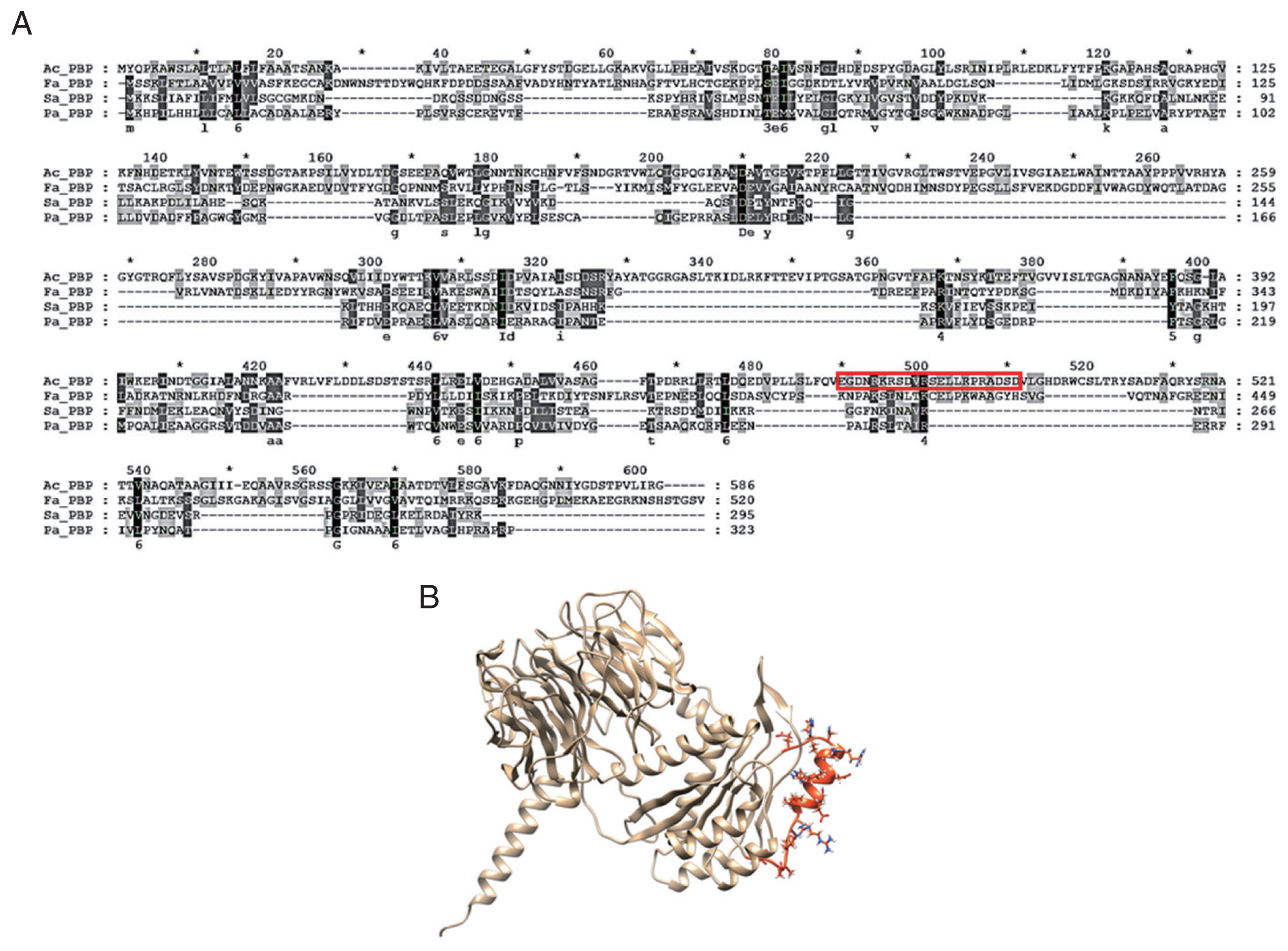
Fig. 1A). Amino acid sequence homology results revealed that PBP of
A. castellanii had 21.5%, 20.3%, and 26.4% similarity with that of
F. albosuccineum,
S. aureus, and
P. aeruginosa, respectively. The amino acids in the boxed area in
Fig. 1A were selected for peptide antibody production using the peptide prediction software (AbFRONTIER, Seoul, Korea). We used RoseTTAFold to generate a 3-dimensional model for conserved domains from the protein [
20]. The RoseTTAFold predicted the entire structure of the PBP, and the amino acid sequence corresponding to the epitope portion is highlighted in red (
Fig. 1B). Based on this illustration, we speculate that this antigenic site would serve as a good antigenic epitope as it is easily exposed to the outer surface.
The peptide sequence of PBP (C-EGDNRKRSDVRSELLRPRADSD) used as the immunogen and the antibody raised against the peptide were purchased from AbFRONTIER [
13]. To investigate the specificity of the PBP antibody, western blotting was conducted using 20 μg of HCE cells,
A. castellanii,
F. solani,
S. aureus, and
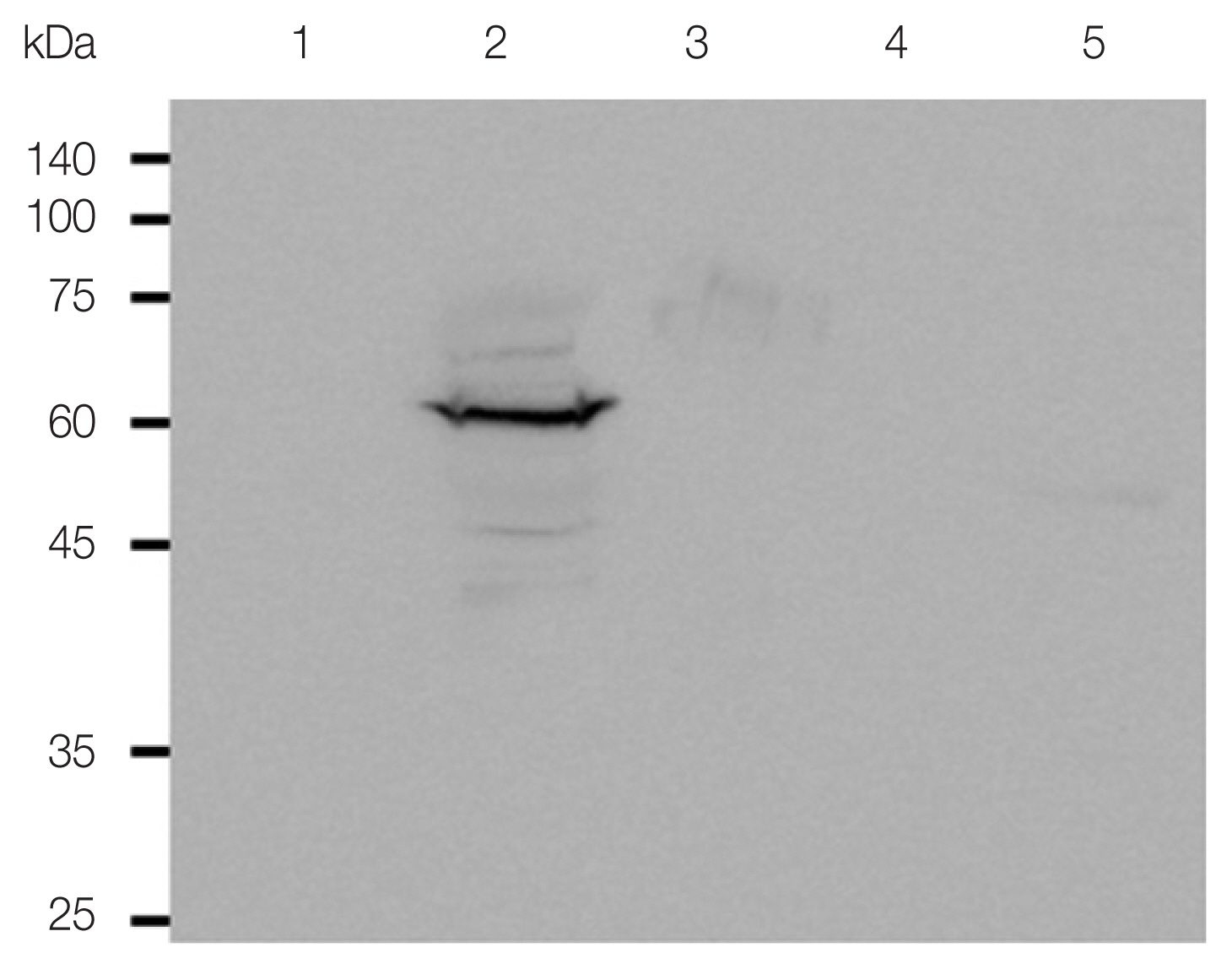
P. aeruginosa lysates. Cell lysates were resolved on 10% SDS-PAGE and transferred to a nitrocellulose membrane. The membrane was blocked with 5% skim milk in Tris buffered saline containing 0.05% Tween 20 (TBST) for 2 h and incubated overnight at 4°C with the PBP antibody (1: 1,000 dilutions in 5% skim milk). The membrane was incubated with HRP-conjugated anti-rabbit IgG (Sigma-Aldrich, St. Louis, Missouri, USA) (1:5,000 dilutions) for 1 h at room temperature (RT). Reactive bands were developed using Clarity Enhanced Chemiluminescence reagent (Thermo Fisher, Waltham, Massachusetts, USA). As shown in
Fig. 2, the PBP antibody showed a strong reactive signal with
A. castellanii, while immunoreactions were not observed with HCE cells and other causative agents of keratitis.
To confirm the specificity of the PBP antibody, immunocytochemical staining was performed using
A. castellanii trophozoites and cysts co-cultured with HCE cells. HCE cells (3×10
5 cells) were cultured on sterile cover glass in a 6-well plate. The following day, they were co-cultured with
Acanthamoeba trophozoites (5×10
5 cells) and cysts (5×10
5 cells) for 5 h at 37°C in a 5% CO
2 incubator. The cells were fixed with 100% methanol for 5 min and subsequently permeabilized with PBST for 10 min at RT. The cells were subsequently blocked using blocking buffer (1% bovine serum albumin and 22.52 mg/ml glycine in PBST) for 30 min at RT. The cells were incubated overnight at 4°C with 1:200 diluted PBP antibody in blocking buffer and probed with CFL-488 fluorophore-conjugated anti-rabbit IgG antibody (1:400 dilutions) (Sigma-Aldrich) for 1 h at RT. After washing, cells were stained with VECTASHIELD mounting medium with 4′6-diamidino-2-phenylindole (DAPI) (Abcam, Burlingame, California, USA) and observed under a fluorescent microscope (Leica DMi8, Wetzlar, Germany).
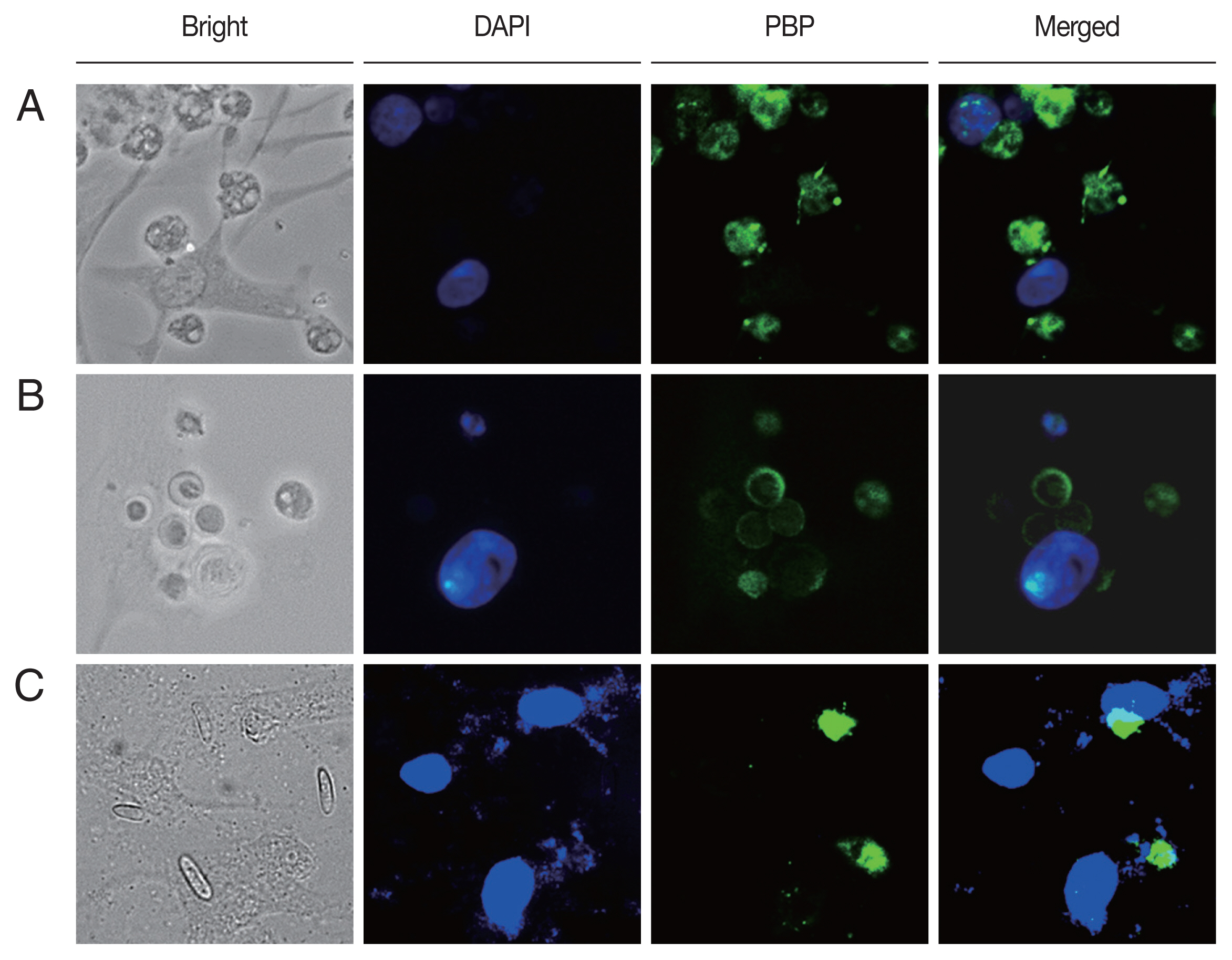
A. castellanii trophozoites (
Fig. 3A) and cysts (
Fig. 3B) showed strong immunoreactive signal with the PBP antibody (green). However, HCE cells did not show any reactive signal with the PBP antibody while the HCE cell nuclei were counterstained with DAPI (
Fig. 3A, B). Additionally, a specific reaction of PBP antibody for
A. castellanii was observed from the co-cultured cells of
F. solani,
S. aureus, and
P. aeruginosa. HCE cells and trophozoites of
A. castellanii were co-cultured with
F. solani,
S. aureus, and
P. aeruginosa for 1 h. PBP antibody did not react with
F. solani,
S. aureus,
P. aeruginosa, and HCE cells, whereas strong interaction of the PBP antibody was observed only with
A. castellanii (
Fig. 3C). These results demonstrated that the PBP antibody of
A. castellanii specifically detected the
A. castellanii trophozoites and cysts, which showed the potential for differential diagnosis for AK in mixed infection states.
To verify the cross-reactivity of the PBP antibody, ICC assay was performed using 5 different species of
Acanthamoeba belonging to the morphological group II (
A. polyphaga and
A. hatchetti) and III (
A. culbertsoni,
A. royreba, and
A. healyi). The trophozoites and cysts of the 5
Acanthamoeba species were detected by PBP antibody. However,
A. polyphaga showed a weak reaction with the PBP antibody (
Table 1).
Up to date, over 20 unique species of
Acanthamoeba have been identified and 8 of them, which included
A. castellanii,
A. polyphaga,
A. royreba,
A. cubertsoni,
A. hatchetti,
A. griffin,
A. quiana, and
A. lugdunensis have been reported to cause keratitis [
21]. In this study, the PBP peptide antibody detected trophozoites and cysts of 6
Acanthamoeba species associated with AK (
Fig. 3;
Table 1). Interestingly, the PBP antibody was able to detect
A. healyi (
Table 1) that can cause GAE [
22]. These results showed that the PBP antibody could detect several species of
Acanthamoeba trophozoites and cysts causing keratitis and GAE.
In conclusion, our study demonstrated the ability of the PBP polyclonal peptide antibody of A. castellanii to recognize various species of Acanthamoeba, as well as the potential for differential diagnosis of AK. Further validation of findings presented here using human clinical samples is warranted. The PBP antibody may enhance sensitivity of antibody-based diagnostic methods for Acanthamoeba-associated diseases.
Notes
-
The authors declare no conflict of interest related to this study.
ACKNOWLEDGMENT
This work was supported by the National Research Foundation of Korea (NRF) grant funded by Korea government (MIST) (No. 2020R1A2C1005345).
Fig. 1Analysis of amino acid sequence and 3-dimensional conformation of periplasmic binding protein (PBP). (A) Multiple amino acid sequence alignment was produced using the CLUSTAL_X version 2.1. Aligned PBP amino acid sequences of A. castellanii (Ac_PBP, QVH35977.1), F. albosuccineum (Fa_PBP, KAF4442825.1), S. aureus (Sa_PBP, BBA23260.1), and P. aeruginosa (Pa_PBP, KJJ10303.1) were compared. Conserved regions were denoted with black shading and the boxed sequence was used to raise the anti-PBP polyclonal peptide antibody. (B) The 3-dimensional structure of PBP was predicted by RoseTTAFold software.

Fig. 2Specificity of the anti-periplasmic binding protein (PBP) of A. castellanii was determined by western blot analysis using cell lysates from different organisms. Lane 1; HCE cells, Lane 2; A. castellanii, Lane 3; F. solani, Lane 4; S. aureus, Lane 5; P. aeruginosa.

Fig. 3Immunocytochemical staining using anti-PBP antibodies. Human corneal epithelial (HCE) cells and A. castellanii trophozoites (A) and cysts (B) were co-cultured. F. solani, S. aureus, and P. aeruginosa were inoculated into the cultures (A. castellanii trophozoites and HCE cells) and incubated for 1 h (C). The co-cultured cells were observed under a fluorescent microscope. Bright-field, DAPI staining (blue), PBP antibody combined with CFL488-conjugated secondary antibody (green), and merged images were acquired at 400× magnification.

Table 1Specific detection of five reference Acanthamoeba spp. by immunocytochemistry assay
Table 1
|
Acanthamoeba spp. |
Morphological types |
Amoebic disease |
Immunocytochemistry |
|
Trophozoites |
Cysts |
|
A. polyphaga
|
Group II |
AK |
± |
± |
|
A. hatchetti
|
Group II |
AK |
+ |
+ |
|
A. culbertsoni
|
Group III |
AK, GAE |
+ |
+ |
|
A. royreba
|
Group III |
AK |
+ |
+ |
|
A. healyi
|
Group III |
GAE |
+ |
+ |
References
- 1. Marciano-Cabral F, Cabral G. Acanthamoeba spp. as agents of disease in humans. Clin Microbiol Rev 2003;16:273-307. https://doi.org/10.1128/CMR.16.2.273-307.2003
- 2. Schuster FL, Visvesvara GS. Free-living amoebae as opportunistic and non-opportunistic pathogens of humans and animals. Int J Parasitol 2004;34:1001-1027. https://doi.org/10.1016/j.ijpara.2004.06.004
- 3. Page MA, Mathers WD. Acanthamoeba keratitis: a 12-year experience covering a wide spectrum of presentations, diagnoses, and outcomes. J Ophthalmol 2013;2013:670242. https://doi.org/10.1155/2013/670242
- 4. Fanselow N, Sirajuddin N, Yin XT, Huang AJW, Stuart PM. Acanthamoeba keratitis, pathology, diagnosis and treatment. Pathogens 2021;10:323. https://doi.org/10.3390/pathogens10030323
- 5. Yera H, Ok V, Lee Koy Kuet F, Dahane N, Ariey F, Hasseine L, Delaunay P, Martiano D, Marty P, Bourges JL. PCR and culture for diagnosis of Acanthamoeba keratitis. Br J Ophthalmol 2021;105:1302-1306. http://dx.doi.org/10.1136/bjophthalmol-2020-316730
- 6. Rasheed AK, Siddiqui R, Ahmed SMK, Gabriel S, Jalal MZ, John A, Khan NA. hBN nanoparticle-assisted rapid thermal cycling for the detection of Acanthamoeba. Pathogens 2020;9:824. https://doi.org/10.3390/pathogens9100824
- 7. Maubon D, Dubosson M, Chiquet C, Yera H, Brenier-Pinchart MP, Cornet M, Savy O, Renard E, Pelloux H. A one-step multiplex PCR for acanthamoeba keratitis diagnosis and quality samples control. Invest Ophthalmol Vis Sci 2012;53:2866-2872. https://doi.org/10.1167/iovs.11-8587
- 8. Laummaunwai P, Ruangjirachuporn W, Boonmars T. A simple PCR condition for detection of a single cyst of Acanthamoeba species. Parasitol Res 2012;110:1569-1572.
- 9. Turner ML, Cockerell EJ, Brereton HM, Badenoch PR, Tea M, Coster DJ, Williams KA. Antigens of selected Acanthamoeba species detected with monoclonal antibodies. Int J Parasitol 2005;35:981-990. https://doi.org/10.1016/j.ijpara.2005.03.015
- 10. Weber-Lima MM, Prado-Costa B, Becker-Finco A, Costa AO, Billilad P, Furst C, de Moura JF, Alvarenga LM. Acanthamoeba spp. monoclonal antibody against a CPA2 transporter: a promising molecular tool for acanthamoebiasis diagnosis and encystment study. Parasitology 2020;147:1678-1688. https://doi.org/10.1017/S0031182020001778
- 11. Kang AY, Park AY, Shin HJ, Khan NA, Maciver SK, Jung SY. Production of a monoclonal antibody against a mannose-binding protein of Acanthamoeba culbertsoni and its localization. Exp Parasitol 2018;192:19-24. https://doi.org/10.1016/j.exppara.2018.07.009
- 12. Park SM, Lee HA, Chu KB, Quan FS, Kim SJ, Moon EK. Production of a polyclonal antibody against inosine-uridine preferring nucleoside hydrolase of Acanthamoeba castellanii and its access to diagnosis of Acanthamoeba keratitis. PLoS One 2020;15:e0239867. https://doi.org/10.1371/journal.pone.0239867
- 13. Lee HA, Chu KB, Kim MJ, Quan FS, Kong HH, Moon EK. Chorismate mutase peptide antibody enables specific detection of Acanthamoeba. PLoS One 2021;16:e0250342. https://doi.org/10.1371/journal.pone.0250342
- 14. Singh A, Sahu SK, Sharma S, Das S. Acanthamoeba keratitis versus mixed acanthamoeba and bacterial keratitis: comparison of clinical and microbiological profiles. Cornea 2020;39:1112-1116. https://doi.org/10.1097/ICO.0000000000002337
- 15. Raghavan A, Baidwal S, Venkatapathy N, Rammohan R. The Acanthamoeba-fungal keratitis study. Am J Ophthalmol 2019;201:31-36. https://doi.org/10.1016/j.ajo.2019.01.024
- 16. Moon EK, Choi HS, Park SM, Kong HH, Quan FS. Comparison of proteins secreted into extracellular space of pathogenic and non-pathogenic Acanthamoeba castellanii. Korean J Parasitol 2018;56:553-558. https://doi.org/10.3347/kjp.2018.56.6.553
- 17. Ko W, Kim S, Lee HS. Engineering a periplasmic binding protein for amino acid sensors with improved binding properties. Org Biomol Chem 2017;15:8761-8769. https://doi.org/10.1039/C7OB02165H
- 18. Edwards KA, Baeumner AJ. Periplasmic binding protein-based detection of maltose using liposomes: a new class of biorecognition elements in competitive assays. Anal Chem 2013;85:2770-2778. https://doi.org/10.1021/ac303258n
- 19. Edwards KA, Randall EA, Tu-Maung N, Sannino DR, Feder S, Angert ER, Kraft CE. Periplasmic binding protein-based magnetic isolation and detection of thiamine in complex biological matrices. Talanta 2019;205:120168. https://doi.org/10.1016/j.talanta.2019.120168
- 20. Baek M, DiMaio F, Anishchenko I, Dauparas J, Ovchinnikov S, Lee GR, Wang J, Cong Q, Kinch LN, Schaeffer RD, Millán C, Park H, Adams C, Glassman CR, DeGiovanni A, Pereira JH, Rodrigues AV, van Dijk AA, Ebrecht AC, Opperman DJ, Sagmeister T, Buhlheller C, Pavkov-Keller T, Rathinaswamy MK, Dalwadi U, Yip CK, Burke JE, Garcia KC, Grishin NV, Adams PD, Read RJ, Baker D. Accurate prediction of protein structures and interactions using a three-track neural network. Science 2021;373:871-876. https://doi.org/10.1126/science.abj8754
- 21. Maycock NJ, Jayaswal R. Update on Acanthamoeba keratitis: diagnosis, treatment, and outcomes. Cornea 2016;35:713-720. https://doi.org/10.1097/ICO.0000000000000804
- 22. Moon EK, Xuan YH, Kong HH. Microarray and KOG analysis of Acanthamoeba healyi genes up-regulated by mouse-brain passage. Exp Parasitol 2014;143:69-73. https://doi.org/10.1016/j.exppara.2014.05.012