Abstract
Baseline genetic characterization of malaria vector populations provides critical data for evidence-based surveillance in persistent transmission foci. This pilot study generated preliminary genetic baseline data for Anopheles populations in the Menoreh Hills border region between Central Java and Yogyakarta provinces, Indonesia, addressing a key geographic gap in regional vector research. Adult female mosquitoes were collected from 3 houses with reported malaria cases in Ngadirejo Village using standardized entomological methods, including human landing, animal landing, and resting collections. Specimens were morphologically identified and molecularly characterized via ITS2 gene sequencing. Phylogenetic analyses were assessed using maximum likelihood methods, and genetic diversity indices were calculated to examine population structure. A total of 62 specimens representing 3 species were collected exclusively through animal landing collections: Anopheles vagus (48 specimens, 77.4%), Anopheles maculatus (9 specimens, 14.5%), and Anopheles kochi (5 specimens, 8.1%). An. kochi exhibited high haplotype diversity (Hd=0.709) with low nucleotide diversity (π=0.004), while An. maculatus showed lower haplotype diversity (Hd=0.480) and higher nucleotide diversity (π=0.026). Phylogenetic analysis revealed Purworejo specimens clustered with regional populations: An. kochi grouped within Clade I with Indonesian isolates; An. maculatus distributed across multiple clades; An. vagus formed a cohesive unit with other Indonesian populations. The exclusive success of animal landing collections in the Menoreh Hills highlands provides key methodological insights. This study offers essential baseline reference data, validates cost-effective genetic surveillance approaches, and supports future large-scale population connectivity studies across the Menoreh Hills malaria transmission complex.
-
Key words: Anopheles, mosquito vectors, malaria, Indonesia, genetic diversity, ITS2, phylogeny, baseline study, vector surveillance
Introduction
Malaria elimination strategies in Southeast Asia require a comprehensive understanding of vector population genetics to inform evidence-based surveillance, particularly in persistent transmission foci where conventional approaches remain inadequate [
1]. Indonesia’s goal of achieving malaria elimination by 2030 underscores the need for enhanced vector surveillance that incorporates molecular genetic analyses to characterize local vector populations [
2]. Central Java Province is a key region where highland malaria transmission persists despite ongoing control efforts, highlighting the necessity for systematic genetic characterization to guide targeted interventions [
3].
The Menoreh Hills region, which spans the administrative boundary between Central Java and Yogyakarta, offers a compelling case for genetic investigation due to documented persistent transmission [
4]. However, molecular genetic data on vector populations in this highland ecological zone are largely lacking in the scientific literature, resulting in knowledge gaps that hinder the development of effective surveillance strategies [
5]. Highland transmission zones pose distinct ecological challenges, as vector behavior and population structure may differ markedly from those of better-studied lowland populations.
Molecular genetic approaches have revolutionized vector surveillance by uncovering cryptic diversity within species complexes and clarifying patterns of population connectivity [
6]. The internal transcribed spacer 2 (ITS2) region of ribosomal DNA is widely used for species-level discrimination due to its reliability and technical accessibility, making it well-suited for preliminary genetic characterization [
7]. Recent molecular taxonomic studies across Southeast Asia have increasingly identified morphologically cryptic species complexes within the
Anopheles genus, emphasizing the need for molecular confirmation in vector identification and baseline genetic assessments [
8].
Population genetic metrics derived from ITS2 analysis provide insights into demographic history and evolutionary dynamics, including evidence of population expansion and genetic structuring [
9]. Haplotype diversity, nucleotide diversity, and neutrality tests offer quantitative frameworks for evaluating population dynamics and establishing reference baselines [
10]. Such preliminary genetic characterizations are particularly valuable when integrated into regional research contexts, where individual studies contribute to a broader understanding of vector population structure and behavior.
The strategic importance of establishing baseline genetic data in highland border regions lies in its potential to inform coordinated surveillance frameworks essential for malaria elimination efforts [
11]. However, developing appropriate methodological approaches requires preliminary validation to optimize collection strategies and implement cost-effective protocols for genetic characterization, particularly in resource-limited highland settings.
This pilot study aims to generate preliminary baseline genetic data for Anopheles populations in the Menoreh Hills region using ITS2 sequence analysis, thereby providing essential foundational knowledge for expanded regional surveillance programs. The specific objectives include documenting Anopheles species present in this highland border zone, assessing initial genetic diversity through ITS2 sequences, and offering methodological guidance for future investigations. These findings are expected to inform the design of larger-scale genetic studies and contribute critical reference data for vector surveillance research in comparable highland transmission areas.
Materials and Methods
Ethics statement
This study involved human participants in adult mosquito collection protocols and received ethical approval from the Health Research Ethics Committee of the National Research and Innovation Agency (BRIN), Indonesia (approval No. 002/KE.03/AMD/01/2024). All participating households provided written informed consent prior to the entomological surveillance and retained the right to withdraw from the study at any time without consequence.
Study sites
The study was conducted in Ngadirejo Village, Kaligesing Sub-district, Purworejo District, Central Java Province, Indonesia, an area with persistent malaria transmission documented through 2023. Ngadirejo Village is strategically located within the Menoreh Hills region, near the administrative boundary between Loano Sub-district (Purworejo Regency, Central Java) and Samigaluh Sub-district (Kulonprogo Regency, Special Region of Yogyakarta). Situated at an elevation of 358 meters above sea level, the site features topographical characteristics that create optimal ecological conditions for
Anopheles mosquito breeding. The village experiences a wet tropical climate, with mean daily temperatures ranging from 22°C to 31°C and relative humidity levels between 65% and 95%. The landscape comprises a heterogeneous mosaic of potential
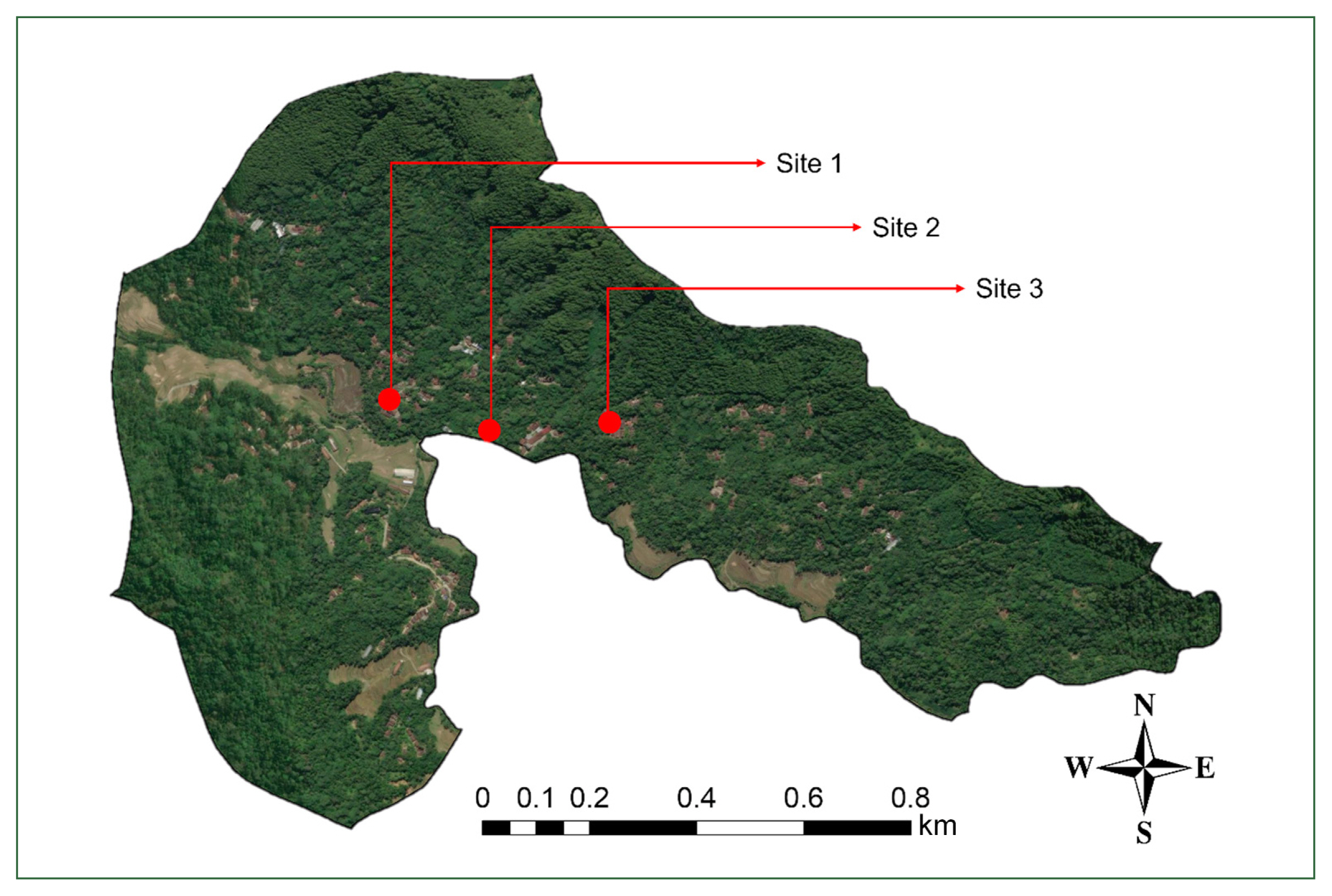
Anopheles larval habitats, including both perennial and ephemeral water bodies (e.g., rivers, springs), agricultural ecosystems (e.g., cultivated fields), and anthropogenic environments (e.g., plantations, livestock enclosures) (
Fig. 1). The local population primarily relies on agriculture and animal husbandry, with common practices involving the rearing of cattle, buffalo, goats, and poultry.
Adult female mosquitoes were collected in February 2024 during the rainy season from 3 houses with reported malaria cases, where residents had provided consent to participate in the study. Sampling was carried out using standardized entomological methods [
12]. Each sampling site (i.e., each house) involved 2 surveyors: one stationed indoors and the other outdoors. The collection protocol included 3 sequential components: (1) human landing collections (HLC), conducted simultaneously indoors and outdoors in 40 min intervals; (2) resting collections (RC), performed in the same locations for 10 min intervals; and (3) a final 10 min period during which both surveyors jointly conducted animal landing collections (ALC) from nearby livestock enclosures. This sampling regimen was implemented throughout the 12 h nocturnal period (18:00–06:00 local time) to capture the full biting cycle of
Anopheles species. Captured mosquitoes were euthanized using diethyl ether (Sigma-Aldrich, St. Louis, MO, USA) and morphologically identified to species level using taxonomic keys under a stereomicroscope [
13]. Individual mosquitoes were then placed in 1.5 ml microcentrifuge tubes and stored in a freezer at −20°C for subsequent molecular analysis.
DNA was extracted from the whole bodies of mosquitoes using the QIAamp DNA Mini Kit (Qiagen, Hilden, Germany). The ITS2 region was amplified by PCR using primers ITS2a (5′-TGTGAACTGCAGGACACAT-3′) and ITS2b (5′-TATGCTTAAATTCAGGGGG-T-3′) [
14]. PCR reactions were performed using GoTaq Green Master Mix (Promega, Madison, WI, USA). Thermocycling conditions for ITS2 amplification were as follows: initial denaturation at 94°C for 10 min, followed by 40 cycles of denaturation at 94°C for 1 min, annealing at 56°C for 45 sec, and extension at 72°C for 1 min; with a final extension at 72°C for 10 min. Amplified PCR products were separated by 1.5% agarose gel electrophoresis in 1× TBE buffer using agarose, LE, Analytical Grade (Promega), and TBE buffer, 10×, Molecular Biology Grade (Promega), and visualized using SYBR Safe DNA Gel Stain (Invitrogen, Carlsbad, CA, USA). A 100 bp DNA ladder (Promega) was used to determine the size of the PCR products. PCR products showing clear positive bands and representing each species were selected for sequencing by Sanger sequencing.
The trace files and chromatograms of ITS2 sequences were manually edited using MEGA version 12 [
15]. Sequence alignment was carried out using ClustalW [
16]. Following alignment, species identification was confirmed by comparing the ITS2 sequences of
Anopheles samples with those available in GenBank using the Basic Local Alignment Search Tool via the National Center for Biotechnology Information interface (
https://blast.ncbi.nlm.nih.gov/Blast.cgi). Specimens were classified as
Anopheles if they exhibited ≥98% nucleotide sequence identity with reference sequences in the database.
Phylogenetic trees were constructed in MEGA version 12 [
15] using the Tamura-Nei distance model, the maximum likelihood method, and 1,000 bootstrap replicates, with an outgroup included to root the tree. To elucidate phylogeographic patterns among
Anopheles populations, ITS2 sequences from specimens collected in Purworejo were compared with homologous sequences from across Asia retrieved from the GenBank database. These sequences, representing populations from mainland Asia, were aligned and analyzed using the same phylogenetic reconstruction parameters.
The number of polymorphic (segregating) sites (S), number of haplotypes (h), average number of nucleotide differences (k), genetic diversity indices (haplotype diversity (Hd) and nucleotide diversity (π)), and neutrality tests (Tajima’s D, Fu and Li’s D, Fu and Li’s F, and Fu’s Fs), based on the ITS2 region, were calculated using DNA sequence polymorphism software version 5.10.01 to assess the genetic diversity of
Anopheles mosquitoes within each species. Additionally, haplotype networks for each
Anopheles species were constructed using the median-joining network method [
17] in PopART version 1.7 [
18] to visualize the spatial distribution of ITS2 haplotypes across species.
Results
Distribution of Anopheles species
According to the morphological identification, the mosquitoes collected from Ngadirejo Village belonged to 3
Anopheles species:
Anopheles kochi,
Anopheles maculatus, and
Anopheles vagus. A total of 62 mosquitoes were obtained, with
An. vagus being the most prevalent species (48 specimens, 77.4%), followed by
An. maculatus (9 specimens, 14.5%) and
An. kochi (5 specimens, 8.1%). The collection results indicated that ALC was the only effective sampling method in this highland setting, offering valuable insights into local vector host-seeking behavior. No mosquitoes were captured using indoor HLC, outdoor HLC, or RC methods (
Table 1). The temporal activity pattern revealed that
An. Vagus was active throughout the sampling period, with the highest densities recorded during the early evening (13 specimens between 18:00–20:00, 10 specimens between 20:00–22:00), followed by a gradual decline toward dawn (3 specimens from 04:00–06:00).
An. maculatus displayed mid-to-late night activity, with individuals collected between 20:00 and 04:00, reaching peak densities during the 22:00–24:00 and 24:00–02:00 intervals (3 specimens each). In contrast,
An. kochi showed a low-density presence, with one specimen recorded in each of 5 consecutive intervals (from 18:00–20:00 to 24:00–02:00) (
Table 1).
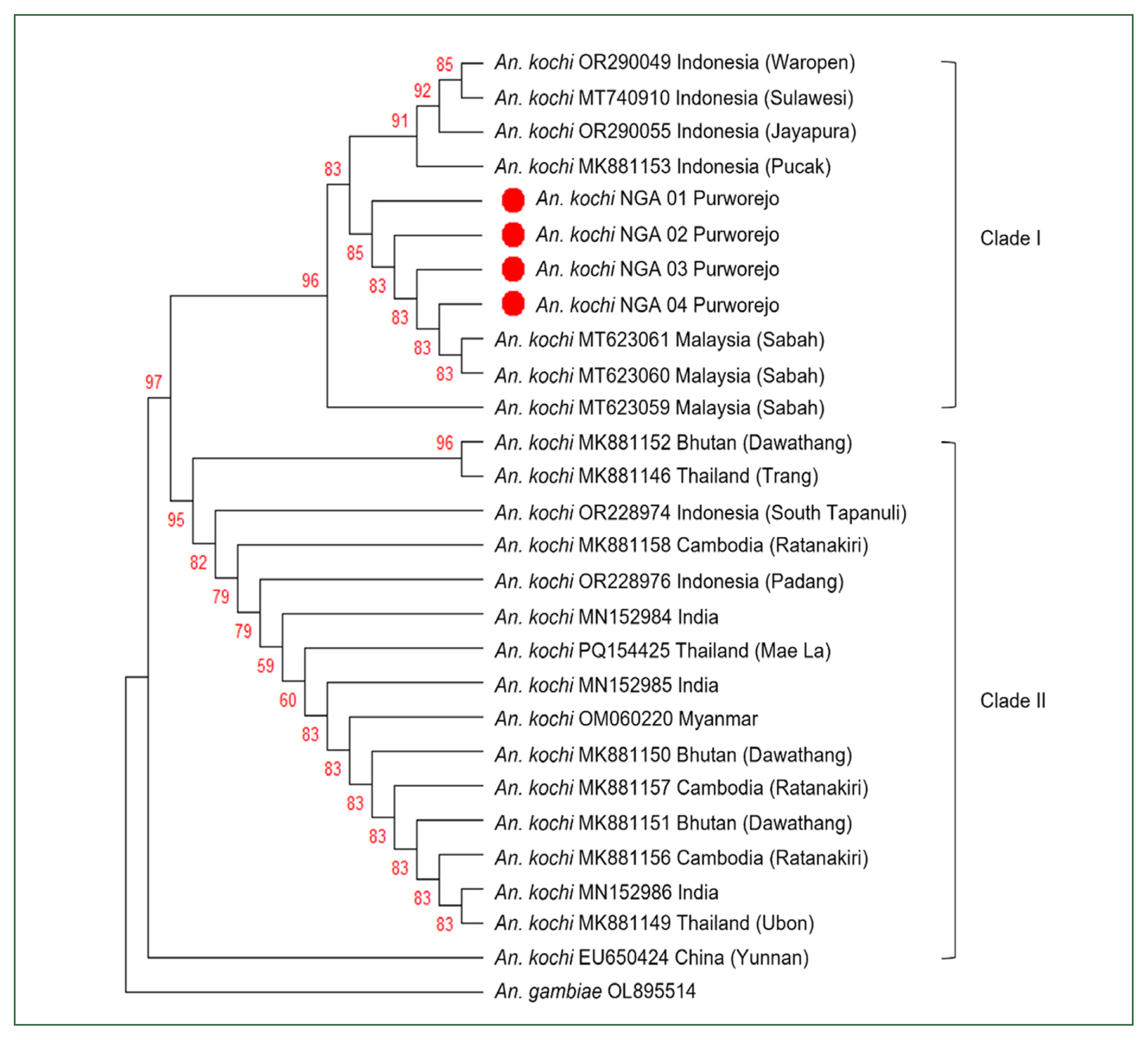
Phylogenetic analysis of ITS2 rDNA gene sequences reveals that
An. kochi populations segregate into 2 distinct clades with strong bootstrap support (97) (
Fig. 2). Clade I includes specimens from Indonesia (Waropen, Sulawesi, Jayapura, Pucak, and Purworejo) and Malaysia (Sabah), with the 4 sequenced Purworejo specimens clustering tightly together and supported by a high nodal value (83). Clade II exhibits greater geographic diversity, comprising specimens from Bhutan, Thailand, Indonesia (South Tapanuli, Padang), Cambodia, India, and Myanmar, with varying bootstrap support ranging from 59 to 96.
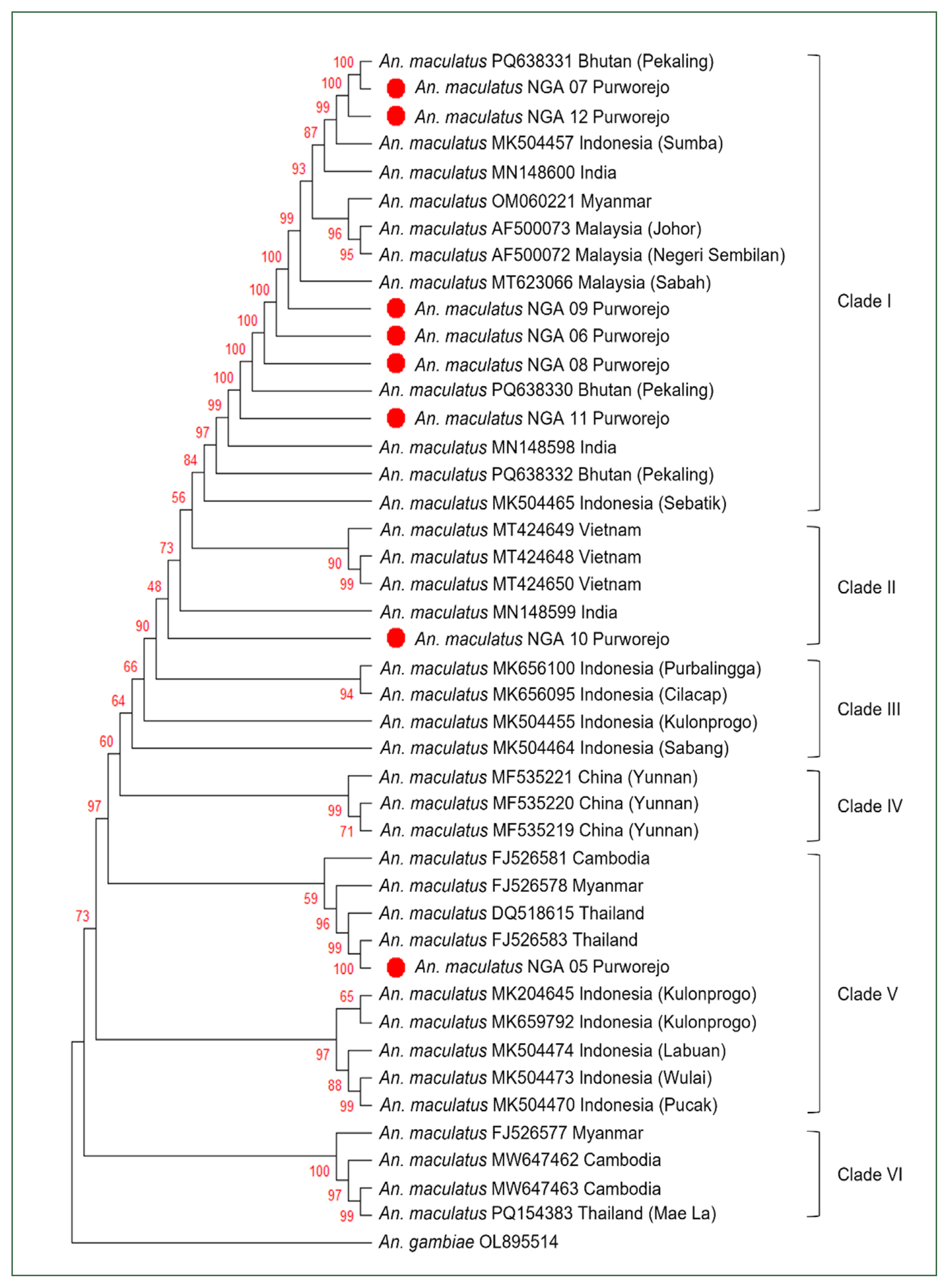
The phylogenetic analysis of
An. maculatus reveals genetic structuring across Asia, with specimens forming 6 distinct Clades (I–VI), each supported by strong bootstrap values (
Fig. 3). Clade I includes specimens from mainland Asia (Bhutan, India) and Southeast Asia (Malaysia, Myanmar, and Indonesia), along with several isolates from Purworejo. Indonesian populations show considerable genetic heterogeneity, distributed across multiple Clades (I, III, and V), with Purworejo samples appearing in Clades I, II, and V. Clade V comprises specimens from Kulon Progo, other Indonesian localities, and Thailand, whereas Clade III consists specifically of Indonesian samples from Purbalingga, Cilacap, Kulon Progo, and Sabang. Clade IV represents a distinct cluster of specimens from China, while Clade IV includes Cambodian samples grouped with those from Thailand and Myanmar, further highlighting regional genetic differentiation.
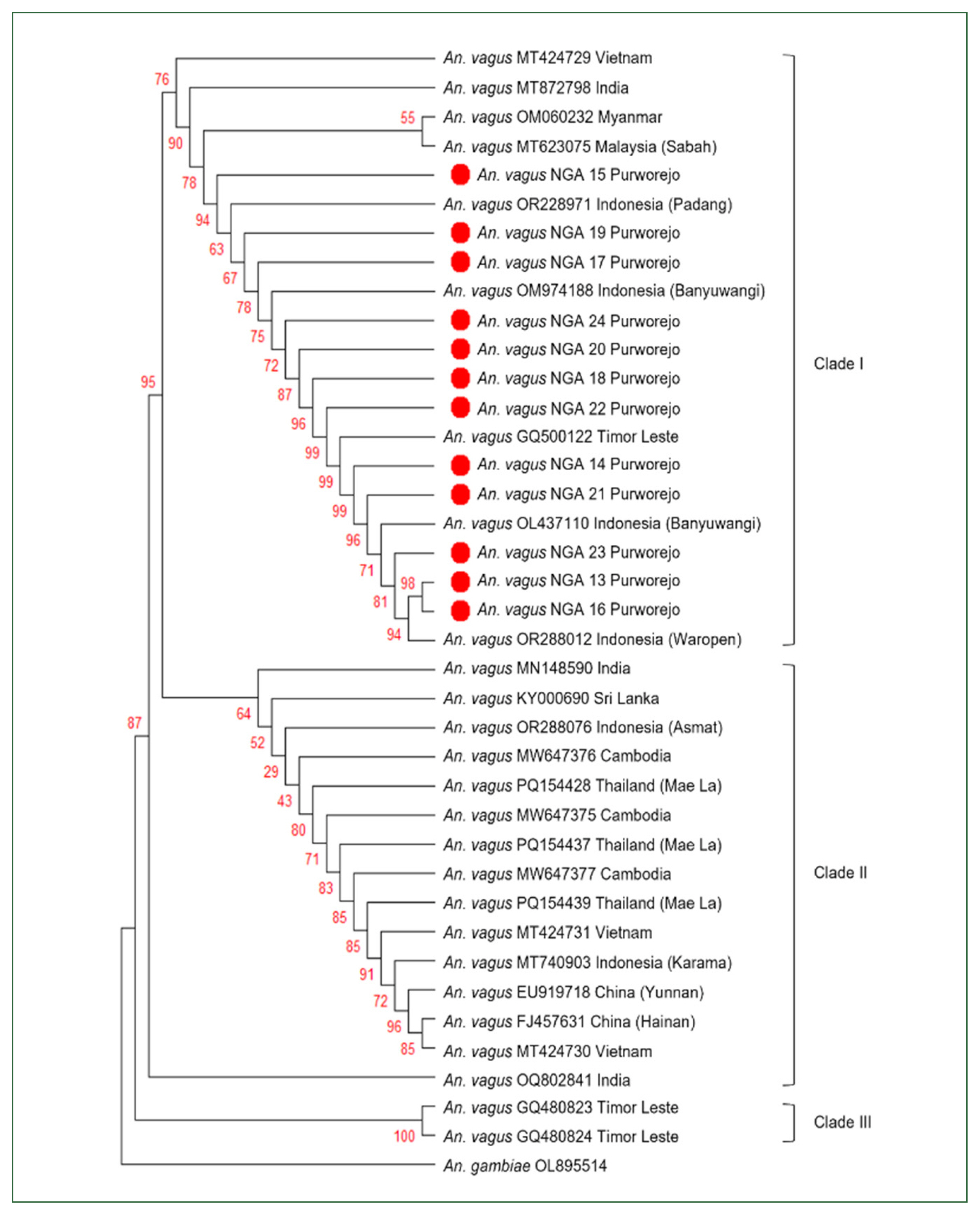
The phylogenetic analysis of ITS2 rDNA sequences reveals clear evolutionary relationships among
An. vagus populations across Asia. The maximum likelihood tree displays 3 major clades, each supported by strong bootstrap values (
Fig. 4). Clade I contains all 12
An. vagus specimens from Purworejo (NGA 13–24, where NGA refers to specimens collected from Ngadirejo Village), which form a well-supported monophyletic group with bootstrap values ranging from 71 to 99. These Purworejo samples cluster closely with other Indonesian populations from Banyuwangi, Padang, and Waropen, as well as with specimens from Timor Leste, Vietnam, Malaysia, Myanmar, and parts of South Asia (India), indicating a shared genetic lineage within a broader Asian context. Clade II includes specimens from Southeast Asia (Cambodia, Thailand, and Vietnam), East Asia (China), South Asia (India and Sri Lanka), and Indonesia (Karama and Asmat). In contrast, Clade III is composed exclusively of
An. vagus specimens from Timor Leste, suggesting a geographically distinct lineage.
The genetic diversity analysis of 3
Anopheles species reveals distinct patterns in their population structures (
Table 2).
An. kochi exhibited the highest haplotype diversity (Hd= 0.709±0.070) but the lowest nucleotide diversity (π=0.004±0.001). In contrast,
An. maculatus displayed the lowest haplotype diversity (Hd=0.480±0.093) yet showed the highest nucleotide diversity (π=0.026±0.006) and the greatest average number of nucleotide differences (k=8.285).
An. vagus presented intermediate values for both diversity metrics (Hd=0.606±0.047; π=0.011±0.005) (
Table 2). Neutrality test results for
An. kochi showed negative values across all indices, including Tajima’s D (−1.41332), Fu and Li’s D (−1.95942), Fu and Li’s F (−2.09480), and Fu’s Fs (−1.271), suggesting potential population expansion or purifying selection. For
An. maculatus, Tajima’s D was slightly negative (−0.28083), whereas Fu and Li’s D (1.46770,
P<0.05), Fu and Li’s F (1.01587), and Fu’s Fs (5.372) were all positive, indicating a more complex demographic history. In the case of
An. vagus, Tajima’s D was negative (−1.66325), while Fu and Li’s D (0.93358), Fu and Li’s F (0.08802), and Fu’s Fs (2.118) yielded positive values (
Table 2), reflecting mixed evolutionary signals.
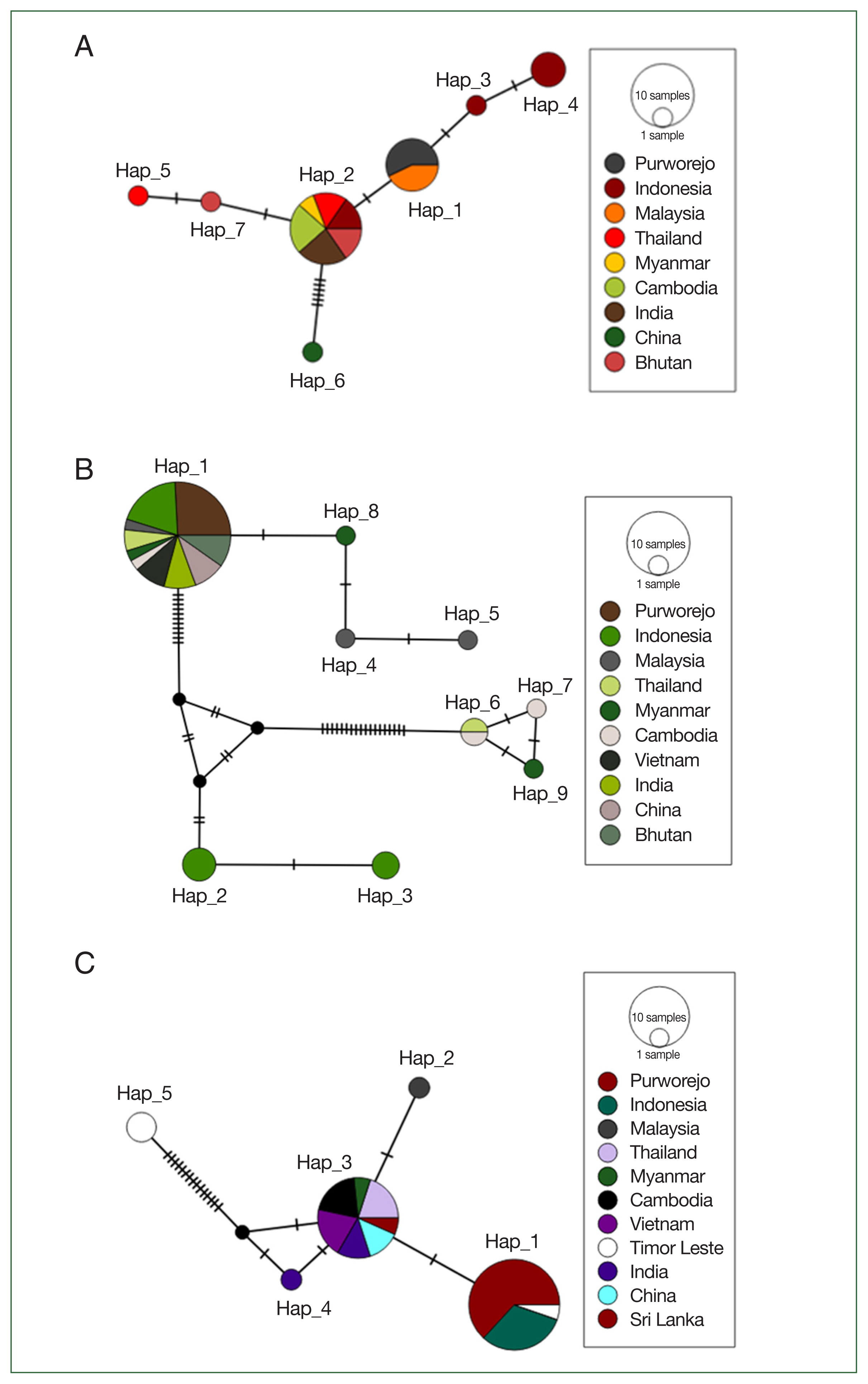
The haplotype network analysis of 3
Anopheles species reveals distinct population genetic structures with clear regional patterns (
Fig. 5). For
An. kochi, the Purworejo specimens (NGA 01–04) cluster exclusively within Hap_1, sharing genetic identity with Malaysian sequences while diverging from other Indonesian samples, which are distributed across Hap_2 to Hap_4. Similarly, all
An. maculatus samples from Purworejo (NGA 05–12) are grouped within the predominant Hap_1, which exhibits notable genetic homogeneity across a wide geographic range, including Indonesia, Malaysia, Thailand, Vietnam, Cambodia, Myanmar, China, India, and Bhutan. The
An. vagus specimens from Purworejo (NGA 13–24) also form a cohesive genetic group within Hap_1, clustering with other Indonesian samples and a single Timor Leste sequence, while showing clear genetic divergence from Southeast and South Asian populations grouped in Hap_3. The observed mutation patterns in the network diagrams further illustrate evolutionary relationships among haplotypes, highlighting varying levels of genetic distance that separate regional populations.
Discussion
This pilot investigation provides essential baseline genetic data and demonstrates effective methodological approaches for expanded studies of
Anopheles populations in the Menoreh Hills region. The strategic importance of this regional focus becomes evident in light of recent spatiotemporal analysis by Rejeki et al. [
19], which documented persistent malaria transmission across the Menoreh Hills cross-border areas. That study reported over 3,800 cases between 2005 and 2015, with cross-border zones contributing 39%–47% of regional malaria cases during 2011–2015, establishing this transboundary region as the largest contributor of malaria cases in Java despite ongoing control efforts. Recent molecular discoveries of novel
Anopheles species in neighboring Central Java areas [
14,
20] highlight the presence of cryptic diversity within the regional vector complex, reinforcing the strategic significance of the present genetic characterization in updating regional surveillance frameworks. The exclusive clustering of
An. maculatus specimens from Purworejo within Hap_1 mirrors patterns observed in adjacent Kulon Progo populations [
14], suggesting regional genetic connectivity across the Menoreh Hills ecological zone. The predominance of
An. Vagus, alongside the presence of
An. maculatus [
21] and
An. kochi [
22], recognized as primary and secondary malaria vectors, respectively, further supports the need for systematic genetic baseline data, especially given the documented cryptic diversity within the maculatus complex in neighboring regions.
The genetic diversity patterns reveal distinct demographic signatures among the 3
Anopheles species, establishing crucial baselines for regional population monitoring.
An. kochi populations exhibit a classic signature of recent demographic expansion, characterized by substantial haplotype diversity alongside minimal sequence divergence. Although species-specific demographic studies of
An. kochi remain limited, this pattern is consistent with theoretical models of demographic expansion observed in population genetic analyses of related Southeast Asian
Anopheles species [
23,
24], suggesting historical bottleneck events followed by rapid population growth [
25]. The monophyletic clustering of Purworejo specimens with Malaysian isolates likely reflects ancient biogeographic connections, when lowered Pleistocene sea levels unified the Sunda Shelf landmasses [
26]. Chaiphongpachara et al. [
27] proposed that such genetic patterns signify expansion events far enough in the past to allow haplotype diversification via mutation, yet recent enough to limit nucleotide divergence. In contrast,
An. maculatus exhibits a more complex population structure, marked by restricted haplotype diversity and elevated nucleotide divergence [
20,
28]. The presence of Purworejo specimens in 3 distinct phylogenetic clades suggests either multiple independent colonization events or ongoing gene flow between this site and distant regions [
14]. This genetic complexity has important epidemiological implications, as cryptic subpopulations may exhibit differences in vector competence [
29], host preferences [
30], and insecticide susceptibility [
31].
An. vagus demonstrates intermediate diversity indices, with genetic clustering patterns consistent with other Indonesian populations [
32,
33], contributing to the establishment of regional genetic signatures critical for future connectivity analyses.
To address regional surveillance needs and establish efficient baseline characterization protocols, this pilot investigation applies a focused methodological design that maximizes scientific value through resource-efficient genetic screening. The intensive genetic characterization of available specimens, achieved through strategically targeted single-day collection protocols, demonstrates proof-of-concept efficiency for preliminary population assessment while validating methodologies for broader-scale investigations. The exclusive success of ALC in this highland environment sets an important methodological precedent for optimizing vector surveillance in similar ecological contexts. This collection pattern offers 2 key analytical insights. First, it suggests that vector host-seeking behavior in highland regions differs markedly from that in lowland areas, necessitating specialized collection strategies for effective surveillance. Second, the single-day protocol provides a resource-efficient approach for initial population assessments in settings with limited capacity. These methodological findings help address critical knowledge gaps in highland vector surveillance, where standardized lowland protocols often underperform. As such, they offer evidence-based guidance for optimizing surveillance strategies across Indonesia’s ecologically diverse highland malaria transmission zones.
The evolutionary forces shaping these vector populations appear to differ markedly across species, offering valuable insights into regional population dynamics that inform surveillance and control strategies. The neutrality indices for
An. kochi collectively indicate recent demographic expansion or purifying selection [
24,
25], while the contrasting pattern observed in
An. maculatus, particularly the positive Fu and Li’s D value, suggests balancing selection may be maintaining genetic diversity [
34]. This type of selection is often advantageous in variable environments, where heterogeneous selection pressures favor the retention of diverse genetic variants [
35]. In
An. Vagus, the mixed signals from neutrality tests point to a complex evolutionary scenario, potentially involving both demographic fluctuations and selective pressures. Haplotype network topology adds further insight into dispersal patterns and barriers to gene flow. Notably, the wide geographic distribution of the predominant
An. maculatus haplotype, spanning Southeast, East, and South Asia [
28], stands in contrast to the more geographically restricted distribution of
An. vagus haplotypes. This disparity may reflect differences in dispersal capacity, ecological specialization, or historical range expansion trajectories [
14,
26]. The tight clustering of Purworejo
An. vagus specimens with other Indonesian samples, distinct from mainland Southeast Asian populations, suggests regional genetic structuring consistent with established biogeographic boundaries [
32,
33].
These genetic characterizations establish foundational reference data critical for expanding regional surveillance programs aligned with Indonesia’s 2030 malaria elimination targets. They also provide a validated methodological framework for systematic genetic monitoring across highland transmission foci. The observed genetic relationships among Anopheles populations in the Menoreh Hills generate essential baseline signatures for future studies on population connectivity and for the development of evidence-based surveillance strategies. The validated collection protocols, established genetic baselines, and demonstrated analytical approaches form a robust methodological foundation for larger-scale studies currently in development, aimed at systematic genetic characterization across the broader Menoreh Hills transmission complex. The resource efficiency achieved in this pilot study establishes a scalable model for rapid genetic assessment in Indonesia’s diverse highland transmission zones, delivering essential genetic data through focused, intensive sampling. Future multi-site investigations incorporating additional genetic markers will expand upon these baseline signatures to examine patterns of regional connectivity, adaptive genetic variation, and their implications for targeted, evidence-based vector control. Overall, these findings provide essential reference data for designing regional genetic surveillance frameworks, particularly for coordinated monitoring across highland transmission zones in the Menoreh Hills, where understanding vector population dynamics is critical for achieving malaria elimination.
Notes
-
Author contributions
Conceptualization: Jeon BY, Muh F
Data curation: Hitipeuw D, Han JH, Jeon BY, Garjito TA, Muh F
Formal analysis: Hitipeuw D, Nuranindita R, Prasetyo AS
Funding acquisition: Muh F
Investigation: Hitipeuw D, Prasetyo AS, Jun H, Garjito TA
Methodology: Nuranindita R, Prasetyo AS, Han JH, Jun H, Jeon BY, Garjito TA, Muh F
Resources: Hitipeuw D, Prasetyo AS, Rohmadi R, Muh F
Software: Hitipeuw D, Han JH
Supervision: Nuranindita R, Han JH, Jun H, Jeon BY, Garjito TA, Muh F
Validation: Hitipeuw D, Nuranindita R, Han JH, Garjito TA, Muh F
Visualization: Hitipeuw D, Jun H, Muh F
Writing – original draft: Hitipeuw D, Muh F
Writing – review & editing: Hitipeuw D, Nuranindita R, Prasetyo AS, Han JH, Jun H, Jeon BY, Garjito TA, Rohmadi R, Muh F
-
Conflict of interest
Jin-Hee Han serves as an editor of Parasites, Hosts and Diseases but had no involvement in the decision to publish this article. No other potential conflicts of interest relevant to this study were reported.
-
Acknowledgments
This research was supported by Program Riset dan Inovasi untuk Indonesia Maju and The National Research and Innovation Agency, Indonesia (BRIN) (No. 37/II.7/HK/2023); and the Korea Disease Control and Prevention Agency Division of Vector & Parasitic Diseases Grant Program 2024 (No. 6332-305-340-01).
In addition, the authors would like to express their sincere gratitude to the Health Office of Purworejo District and the villagers for their invaluable support and assistance in the implementation of this study. Their cooperation, provision of resources, and facilitation throughout the research process were instrumental to the successful completion of this work.
Fig. 1Map of the sampling sites in Ngadirejo Village. Each site is indicated by a red dot. Ngadirejo Village features hilly terrain intersected by seasonal waterways. The predominant land cover comprises mixed cultivation areas and shrubland, which reach peak fertility during the rainy season.

Fig. 2Phylogenetic tree based on ITS2 rDNA gene sequences of Anopheles kochi. Sequences marked with red dots represent those obtained in this study; all others are from GenBank. GenBank accession numbers are shown after each isolate’s name. The tree was constructed using the maximum likelihood method and the Tamura-Nei model in MEGA version 12. Bootstrap support was assessed with 1,000 replicates. Anopheles gambiae (OL895514) was used as the outgroup.

Fig. 3Phylogenetic tree based on ITS2 rDNA gene sequences of Anopheles maculatus. Sequences marked with red dots represent those obtained in this study; all others are from GenBank. GenBank accession numbers are shown after each isolate’s name. The tree was constructed using the maximum likelihood method and the Tamura-Nei model in MEGA version 12. Bootstrap support was assessed with 1,000 replicates. Anopheles gambiae (OL895514) was used as the outgroup.

Fig. 4Phylogenetic tree based on ITS2 rDNA gene sequences of Anopheles vagus. Sequences marked with red dots represent those obtained in this study; all others are from GenBank. GenBank accession numbers are shown after each isolate’s name. The tree was constructed using the maximum likelihood method and the Tamura-Nei model in MEGA version 12. Bootstrap support was assessed with 1,000 replicates. Anopheles gambiae (OL895514) was used as the outgroup.

Fig. 5Haplotype networks based on ITS2 rDNA gene sequences for 3 Anopheles species. (A) Anopheles kochi, (B) Anopheles maculatus, and (C) Anopheles vagus. Each colored circle represents a distinct haplotype, with the size of the circle proportional to the number of sequences sharing that haplotype. Networks were generated using PopART version 1.7. The number of mutations separating haplotypes is indicated by dashes along the connecting lines. Geographic origins are color-coded.

Table 1Number of Anopheles species collected by collection methods and time of capture
Table 1
|
Species |
Methods |
No. of mosquitoes collected by time of capture |
Total |
|
|
18:00–20:00 |
20:00–22:00 |
22:00–24:00 |
24:00–2:00 |
2:00–4:00 |
4:00–6:00 |
|
Anopheles kochi
|
IHLC |
- |
- |
- |
- |
- |
- |
- |
|
OHLC |
- |
- |
- |
- |
- |
- |
- |
|
RC |
- |
- |
- |
- |
- |
- |
- |
|
ALC |
1 |
1 |
1 |
1 |
1 |
- |
5 |
|
|
Anopheles maculatus
|
IHLC |
- |
- |
- |
- |
- |
- |
- |
|
OHLC |
- |
- |
- |
- |
- |
- |
- |
|
RC |
- |
- |
- |
- |
- |
- |
- |
|
ALC |
- |
1 |
3 |
3 |
2 |
- |
9 |
|
|
Anopheles vagus
|
IHLC |
- |
- |
- |
- |
- |
- |
- |
|
OHLC |
- |
- |
- |
- |
- |
- |
- |
|
RC |
- |
- |
- |
- |
- |
- |
- |
|
ALC |
13 |
10 |
8 |
7 |
7 |
3 |
48 |
Table 2Genetic diversity indices and neutrality test values of 3 Anopheles species based on ITS2 sequences
Table 2
|
Species |
n
|
S |
h |
Diversity±SD |
k |
Neutrality tests |
|
Haplotype (Hd) |
Nucleotide (π) |
Tajima’s D |
Fu and Li’s D |
Fu and Li’s F |
Fu’s Fs |
|
Anopheles kochi
|
27 |
11 |
7 |
0.709±0.070 |
0.004±0.001 |
1.630 |
−1.41332 |
−1.95942 |
−2.09480 |
−1.271 |
|
Anopheles maculatus
|
43 |
35 |
9 |
0.480±0.093 |
0.026±0.006 |
8.285 |
−0.28083 |
1.46770*
|
1.01587 |
5.372 |
|
Anopheles vagus
|
38 |
18 |
5 |
0.606±0.047 |
0.011±0.005 |
2.255 |
−1.66325 |
0.93358 |
0.08802 |
2.118 |
References
- 1. Dalmat R, Naughton B, Kwan-Gett TS, Slyker J, Stuckey EM. Use cases for genetic epidemiology in malaria elimination. Malar J 2019;18(1):163. https://doi.org/10.1186/s12936-019-2784-0
- 2. Sitohang V, Sariwati E, Fajariyani SB, Hwang D, Kurnia B, et al. Malaria elimination in Indonesia: halfway there. Lancet Glob Health 2018;6(6):e604-e606. https://doi.org/10.1016/s2214-109x(18)30198-0
- 3. Murhandarwati EE, Fuad A, Sulistyawati, Wijayanti MA, Bia MB, et al. Change of strategy is required for malaria elimination: a case study in Purworejo District, Central Java Province, Indonesia. Malar J 2015;14:318. https://doi.org/10.1186/s12936-015-0828-7
- 4. Ahmad RA, Ferdiana A, Surendra H, Sy TR, Herbianto D, et al. A participatory approach to address within-country cross-border malaria: the case of Menoreh Hills in Java, Indonesia. Malar J 2021;20(1):137. https://doi.org/10.1186/s12936-021-03673-7
- 5. Hancock PA, Lynd A, Wiebe A, Devine M, Essandoh J, et al. Modelling spatiotemporal trends in the frequency of genetic mutations conferring insecticide target-site resistance in African mosquito malaria vector species. BMC Biol 2022;20(1):46. https://doi.org/10.1186/s12915-022-01242-1
- 6. Fišer C, Robinson CT, Malard F. Cryptic species as a window into the paradigm shift of the species concept. Mol Ecol 2018;27(3):613-635. https://doi.org/10.1111/mec.14486
- 7. Singh OP, Nanda N, Chandra D, Jha D, Adak T, et al. Modified PCR-based assay for the differentiation of members of Anopheles fluviatilis complex in consequence of the discovery of a new cryptic species (species V). Malar J 2020;19(1):96. https://doi.org/10.1186/s12936-020-03172-1
- 8. Takano KT, Nguyen NT, Nguyen BT, Sunahara T, Yasunami M, et al. Partial mitochondrial DNA sequences suggest the existence of a cryptic species within the Leucosphyrus group of the genus Anopheles (Diptera: Culicidae), forest malaria vectors, in northern Vietnam. Parasit Vectors 2010;3:41. https://doi.org/10.1186/1756-3305-3-41
- 9. Khazal RM, Flaih MH, Kadhim MK, Hussein KR. Genetic diversity of Leishmania major isolated from different dermal lesions using ITS2 region. Acta Parasitol 2024;69(1):831-838. https://doi.org/10.1007/s11686-024-00817-y
- 10. Pool JE, Hellmann I, Jensen JD, Nielsen R. Population genetic inference from genomic sequence variation. Genome Res 2010;20(3):291-300. https://doi.org/10.1101/gr.079509.108
- 11. Tessema S, Wesolowski A, Chen A, Murphy M, Wilheim J, et al. Using parasite genetic and human mobility data to infer local and cross-border malaria connectivity in Southern Africa. Elife 2019;8:e43510. https://doi.org/10.7554/eLife.43510
- 12. World Health Organization. Malaria Entomology and Vector Control. World Health Organization; Geneva, Switzerland. 2013. p. 24-32.
- 13. O’Connor CT, Soepanto A. Illustrated Key to Female Anophelines of Indonesia. Directorate of Communicable Disease, Ministry of Health of the Republic of Indonesia; Jakarta, Indonesia. 1979. p. 5-17.
- 14. Garjito TA, Widiastuti U, Mujiyono M, Prihatin MT, Widiarti W, et al. Genetic homogeneity of Anopheles maculatus in Indonesia and origin of a novel species present in Central Java. Parasit Vectors 2019;12(1):351. https://doi.org/10.1186/s13071-019-3598-1
- 15. Kumar S, Stecher G, Suleski M, Sanderford M, Sharma S, et al. MEGA12: molecular evolutionary genetic analysis version 12 for adaptive and green computing. Mol Biol Evol; 2024 41(12):msae263 https://doi.org/10.1093/molbev/msae263
- 16. Thompson JD, Higgins DG, Gibson TJ. CLUSTAL W: improving the sensitivity of progressive multiple sequence alignment through sequence weighting, position-specific gap penalties and weight matrix choice. Nucleic Acids Res 1994;22(22):4673-4680. https://doi.org/10.1093/nar/22.22.4673
- 17. Bandelt HJ, Forster P, Röhl A. Median-joining networks for inferring intraspecific phylogenies. Mol Biol Evol 1999;16(1):37-48. https://doi.org/10.1093/oxfordjournals.molbev.a026036
- 18. Leigh JW, Bryant D. Popart: full-feature software for haplotype network construction. Methods Ecol Evol 2015;6(9):1110-1116. https://doi.org/10.1111/2041-210X.12410
- 19. Rejeki DSS, Fuad A, Widartono BS, Murhandarwati EEH, Kusnanto H. Spatiotemporal patterns of malaria at cross-boundaries area in Menoreh Hills, Java, Indonesia. Malar J 2019;18(1):80. https://doi.org/10.1186/s12936-019-2717-y
- 20. Ali RSM, Wahid I, Saeung A, Wannasan A, Harbach RE, et al. Genetic and morphological evidence for a new species of the Maculatus Group of Anopheles subgenus Cellia (Diptera: Culicidae) in Java, Indonesia. Parasit Vectors 2019;12(1):107. https://doi.org/10.1186/s13071-019-3358-2
- 21. Ndoen E, Wild C, Dale P, Sipe N, Dale M. Relationships between anopheline mosquitoes and topography in West Timor and Java, Indonesia. Malar J 2010;9:242. https://doi.org/10.1186/1475-2875-9-242
- 22. Elyazar IR, Sinka ME, Gething PW, Tarmidzi SN, Surya A, et al. The distribution and bionomics of Anopheles malaria vector mosquitoes in Indonesia. Adv Parasitol 2013;83:173-266. https://doi.org/10.1016/b978-0-12-407705-8.00003-3
- 23. Walton C, Handley JM, Tun-Lin W, Collins FH, Harbach RE, et al. Population structure and population history of Anopheles dirus mosquitoes in Southeast Asia. Mol Biol Evol 2000;17(6):962-974. https://doi.org/10.1093/oxfordjournals.molbev.a026377
- 24. Bunmee K, Thaenkham U, Saralamba N, Ponlawat A, Zhong D, et al. Population genetic structure of the malaria vector Anopheles minimus in Thailand based on mitochondrial DNA markers. Parasit Vectors 2021;14(1):496. https://doi.org/10.1186/s13071-021-04998-7
- 25. Sarma DK, Prakash A, O’Loughlin SM, Bhattacharyya DR, Mohapatra PK, et al. Genetic population structure of the malaria vector Anopheles baimaii in north-east India using mitochondrial DNA. Malar J 2012;11:76. https://doi.org/10.1186/1475-2875-11-76
- 26. Morgan K, O’Loughlin SM, Chen B, Linton YM, Thongwat D, et al. Comparative phylogeography reveals a shared impact of pleistocene environmental change in shaping genetic diversity within nine Anopheles mosquito species across the Indo-Burma biodiversity hotspot. Mol Ecol 2011;20(21):4533-4549. https://doi.org/10.1111/j.1365-294X.2011.05268.x
- 27. Chaiphongpachara T, Laojun S, Changbunjong T, Sumruayphol S, Suwandittakul N, et al. Genetic diversity, haplotype relationships, and kdr mutation of malaria Anopheles vectors in the most Plasmodium knowlesi-endemic area of Thailand. Trop Med Infect Dis 2022;7(12):412. https://doi.org/10.3390/tropicalmed7120412
- 28. Walton C, Somboon P, O’Loughlin SM, Zhang S, Harbach RE, et al. Genetic diversity and molecular identification of mosquito species in the Anopheles maculatus group using the ITS2 region of rDNA. Infect Genet Evol 2007;7(1):93-102. https://doi.org/10.1016/j.meegid.2006.05.001
- 29. Harris C, Morlais I, Churcher TS, Awono-Ambene P, Gouagna LC, et al. Plasmodium falciparum produce lower infection intensities in local versus foreign Anopheles gambiae populations. PLoS One 2012;7(1):e30849. https://doi.org/10.1371/journal.pone.0030849
- 30. Main BJ, Lee Y, Ferguson HM, Kreppel KS, Kihonda A, et al. The genetic basis of host preference and resting behavior in the major African malaria vector, Anopheles arabiensis. PLoS Genet 2016;12(9):e1006303. https://doi.org/10.1371/journal.pgen.1006303
- 31. Djogbénou L, Chandre F, Berthomieu A, Dabiré R, Koffi A, et al. Evidence of introgression of the ace-1(R) mutation and of the ace-1 duplication in West African Anopheles gambiae s. s. PLoS One 2008;3(5):e2172. https://doi.org/10.1371/journal.pone.0002172
- 32. Weeraratne TC, Surendran SN, Walton C, Karunaratne SHPP. Genetic diversity and population structure of malaria vector mosquitoes Anopheles subpictus, Anopheles peditaeniatus, and Anopheles vagus in five districts of Sri Lanka. Malar J 2018;17(1):271. https://doi.org/10.1186/s12936-018-2419-x
- 33. Davidson JR, Wahid I, Sudirman R, Small ST, Hendershot AL, et al. Molecular analysis reveals a high diversity of Anopheles species in Karama, West Sulawesi, Indonesia. Parasit Vectors 2020;13(1):379. https://doi.org/10.1186/s13071-020-04252-6
- 34. Chen B, Harbach RE, Walton C, He Z, Zhong D, et al. Population genetics of the malaria vector Anopheles aconitus in China and Southeast Asia. Infect Genet Evol 2012;12(8):1958-1967. https://doi.org/10.1016/j.meegid.2012.08.007
- 35. Liebman KA, Pinto J, Valle J, Palomino M, Vizcaino L, et al. Novel mutations on the ace-1 gene of the malaria vector Anopheles albimanus provide evidence for balancing selection in an area of high insecticide resistance in Peru. Malar J 2015;14:74. https://doi.org/10.1186/s12936-015-0599-1


 , Raisha Nuranindita2,3