Abstract
Feline heartworm (Dirofilaria immitis) infection is an uncommon but clinically significant disease in Korea. A retrospective review of electronic medical records from a secondary referral animal hospital in Ulsan, Korea, identified 2 antigen-positive (1.5%) cases among 130 stray cats tested between 2019 and 2023, while no infections were detected in 298 client-owned cats. As antigen testing may yield false-negative results in cats with male-only infections, the true prevalence is likely underestimated. This report describes the clinical and echocardiographic findings of 2 infected stray cats. Case 1 involved successful long-term management of heartworm-associated respiratory disease, with the cat remaining healthy for 4 years following diagnosis. Case 2 demonstrated persistent evidence of adult heartworms and sudden death after an asymptomatic period of 1 year. Echocardiography in Case 2 revealed multiple hyperechoic double lines within the pulmonary arteries, consistent with intraluminal adult worms. These cases illustrate the diagnostic challenges and variable clinical outcomes of feline heartworm infection, emphasizing the need for increased awareness in Korea.
-
Key words: Feline heartworm, Dirofilaria immitis, echocardiography, heartworm-associated respiratory disease, Ulsan
Introduction
Heartworm (
Dirofilaria immitis) is a parasitic disease that occurs worldwide, and its prevalence has been reported among stray cats in Korea [
1,
2]. With climate change and growing pet populations, the risk of infection is increasing, highlighting the importance of heartworm prevention in domestic pets [
3,
4]. Although cats are susceptible hosts, they are more resistant to adult
D. immitis infection than dogs [
5,
6]. Most adult heartworm infections in cats are comparatively mild, typically involving fewer than 6 worms [
7,
8]. The true prevalence of heartworm infection in cats is likely underestimated because of diagnostic limitations, transient clinical signs, and sudden death without diagnostic confirmation [
9,
10].
In Korea, limited epidemiological data are available, particularly in cats. In a retrospective review of electronic medical records from a secondary referral animal hospital in Ulsan, Korea, we identified 428 cats that underwent heartworm antigen testing using a commercial ELISA kit (SNAP Feline Triple Test, IDEXX Laboratories) between January 2019 and December 2023. Testing was performed randomly and was not limited to cats with specific clinical conditions. Of the cats tested, 130 were strays and 298 were client-owned pets. Two stray cats (1.5%) tested positive, whereas no infections were detected in the client-owned population.
The present case report describes 2 clinical cases of heartworm infection in stray cats in Korea: one involving successful long-term management of heartworm-associated respiratory disease (HARD) with complete clinical recovery, and the other demonstrating echocardiographic visualization of multiple adult heartworms. This finding is exceptionally rare and, to our knowledge, has not been previously documented in cats in Korea.
The authors declare that no institutional animal care and use committee or other ethical approval was required, as this study was a retrospective analysis of electronic medical records.
Case Report
Case 1
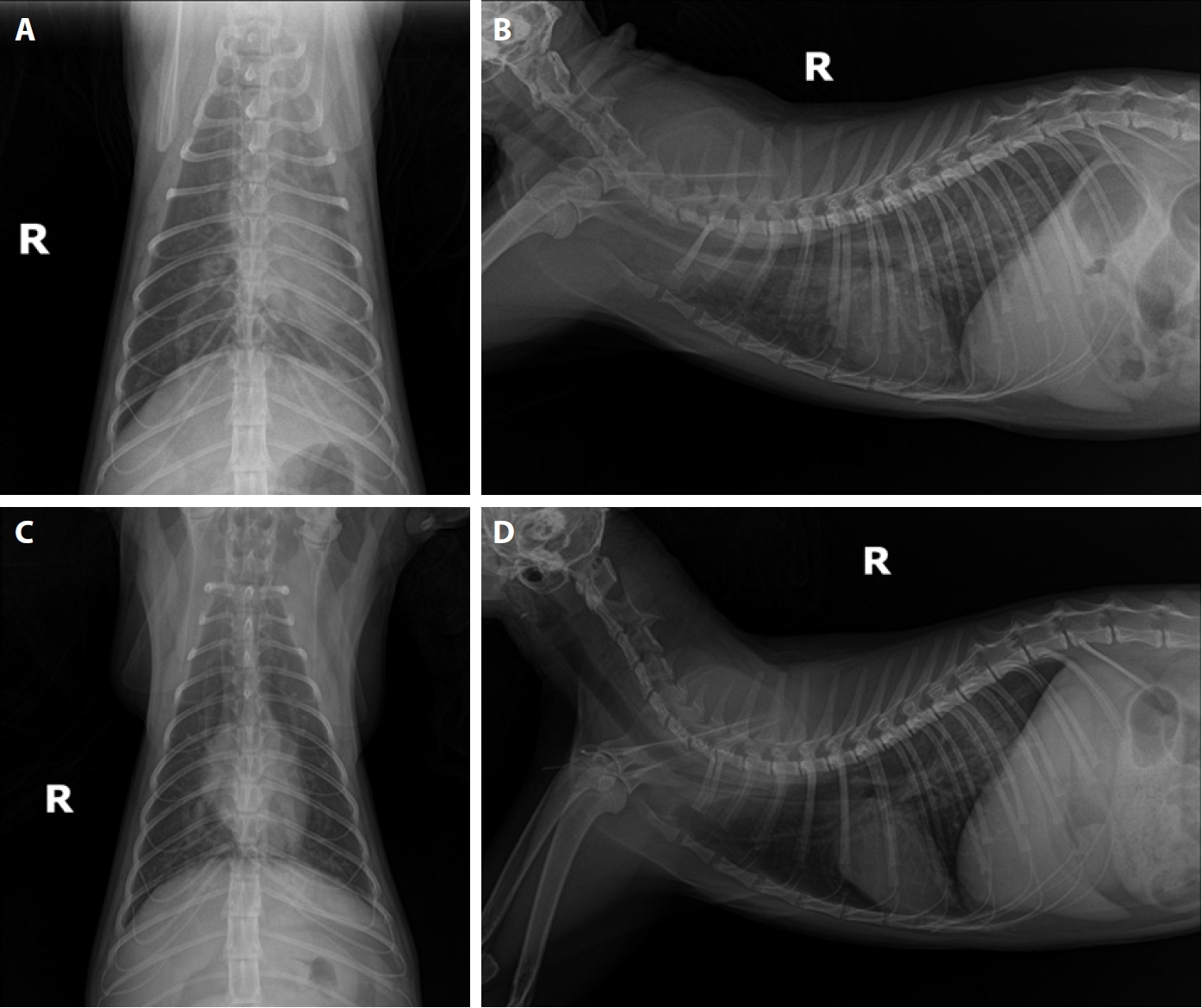
A 2-year-old female stray cat presented with cough, vomiting, and diarrhea in April 2021. Physical examination revealed tachypnea, crackling lung sounds, and ear mites. Complete blood count (CBC), serum chemistry, electrolyte analysis, pro-brain natriuretic peptide (proBNP) measurement, feline leukemia virus (FeLV) testing, feline immunodeficiency virus (FIV) testing, heartworm antigen testing using an ELISA kit (SNAP Feline Triple test, IDEXX Laboratories), antibody testing (Heska Corporation, an Antech company), thoracic and abdominal radiography, and abdominal ultrasonography were performed. Results for CBC, serum chemistry, electrolyte levels, proBNP, FeLV testing, and FIV testing were all within reference ranges; however, the heartworm antigen and antibody tests were both positive. Thoracic radiography revealed pulmonary artery enlargement extending to the right caudal lung lobe, interstitial infiltration of the pulmonary field, and multiple fissure lines. Abdominal ultrasonography revealed a mild increase in mucosal echogenicity in specific small intestinal segments, as well as a small amount of fluid stasis, indicating mild enteritis and localized hypomotility. Cardiac ultrasonography could not be performed because of severe respiratory distress, representing a limitation in confirming the presence of adult worms. The diagnosis of HARD was therefore based on compatible clinical signs, thoracic radiographic findings, and concurrent antigen and antibody positivity.
The cat was treated with oxygen supplementation, maintenance fluid therapy, prednisone [1 mg/kg orally (PO) twice daily (BID)], doxycycline (5 mg/kg PO BID), acetylcysteine (10 mg/kg PO BID), pheniramine (1 mg/kg PO BID), and metronidazole (10 mg/kg intravenously BID). Daily thoracic radiographs were obtained to monitor lung condition (
Fig. 1). On hospitalization day 5, thoracic radiographs showed normalization of pulmonary fields. At discharge, prednisone (1 mg/kg PO BID), doxycycline (5 mg/kg PO BID), acetylcysteine (10 mg/kg PO BID), and pheniramine (1 mg/kg PO BID) were prescribed for an additional week to manage HARD [
11]. Revolution (selamectin, Zoetis) was applied topically once a month as a preventive macrocyclic lactone to avoid reinfection and target potential immature stages [
12]. Thoracic radiographs showed no significant changes upon reevaluation after 1 week. The same medications were continued, except prednisone, which was tapered to 0.5 mg/kg PO every other day for 2 weeks. Subsequent follow-up radiographs revealed no significant changes, and a medication-free period was initiated.
On day 56 of the medication-free period, the cat developed coughing, and thoracic radiographs revealed progression of interstitial infiltration in the pulmonary fields. The cat was readministered prednisone at 1 mg/kg PO BID. After 2 weeks of clinical improvement, the dose was tapered to 0.5 mg/kg PO every other day for another 2 weeks before discontinuation.
At 6, 12, and 18 months after the initial diagnosis, both heartworm antigen and antibody tests yielded negative results, indicating serologic conversion and the likely resolution of infection. No recurrent antigen or antibody positivity was detected during subsequent follow-up assessments. Currently, 4 years after the initial diagnosis, the cat remains asymptomatic and in good health, suggesting successful long-term management.
Case 2
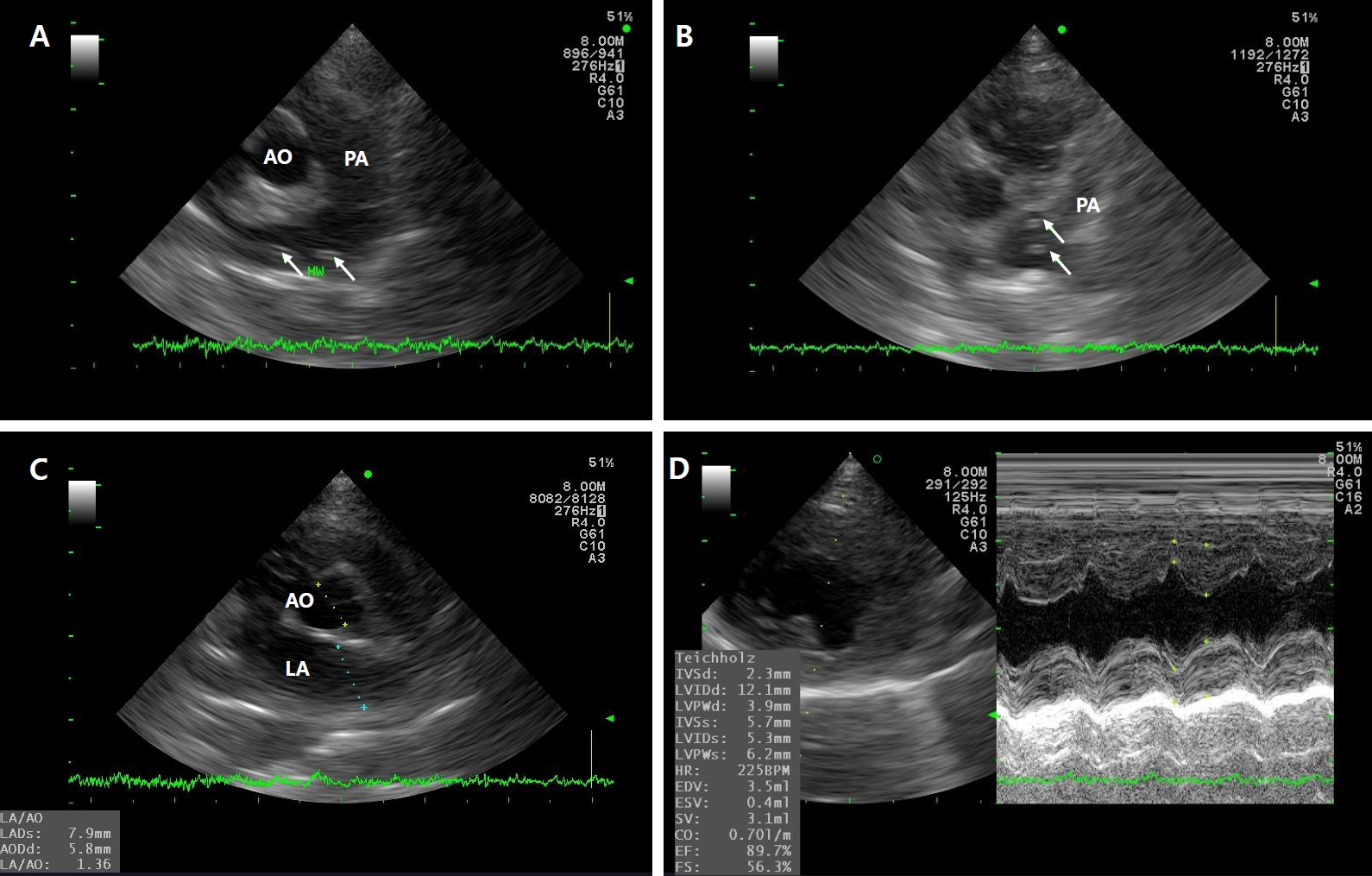
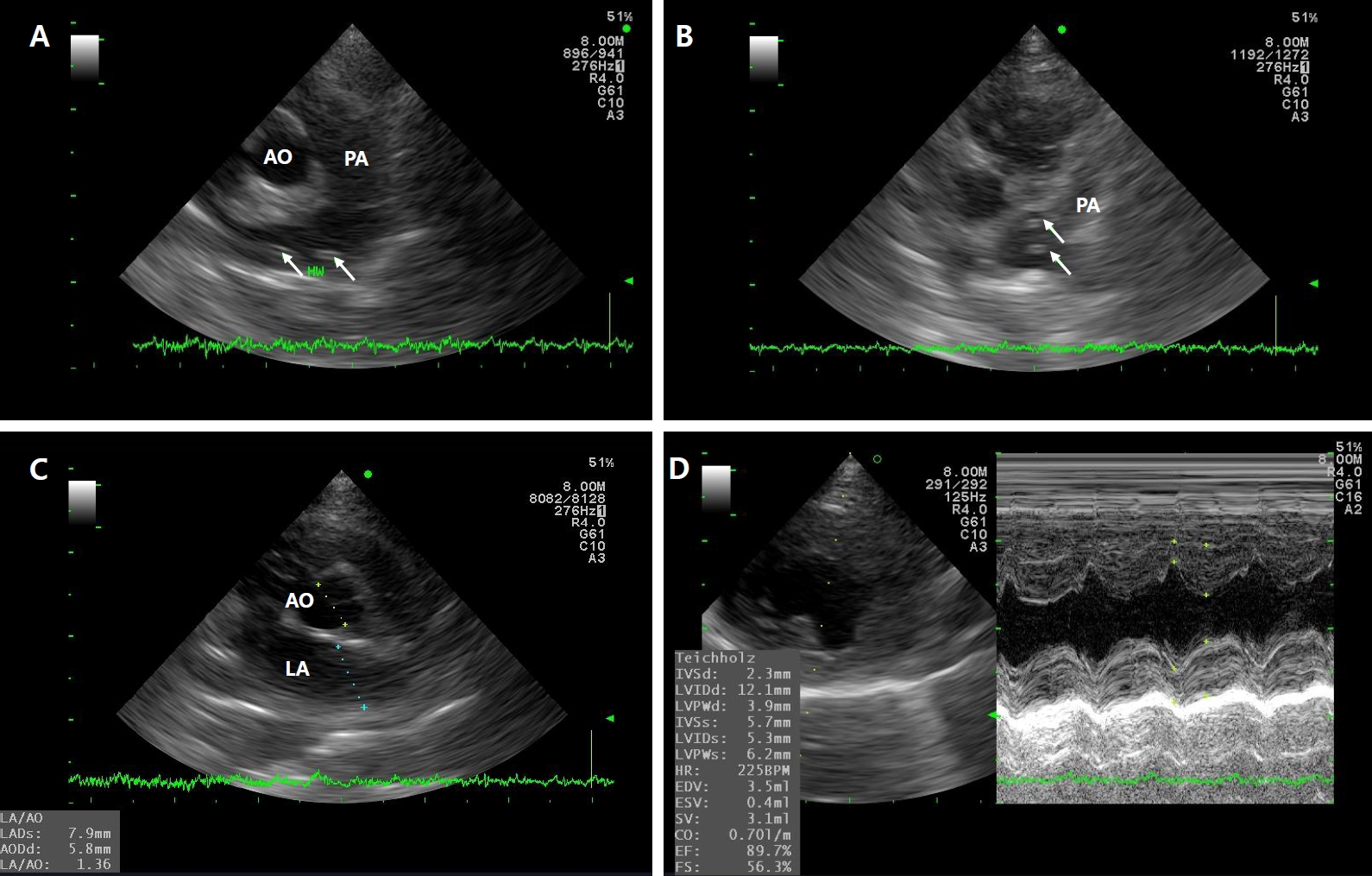
A 5-year-old rescued female stray cat presented with generalized skin ulcers, maggot infestation, and cachexia in August 2019. CBC, serum chemistry, electrolyte analysis, proBNP, FeLV and FIV tests, heartworm antigen and antibody kit tests, thoracic and abdominal radiographs, and abdominal ultrasound were performed. Test results were positive for heartworm antigen and antibody tests, anemia, dehydration, and azotemia. Thoracic radiographs revealed marked dilation and tortuosity of pulmonary arteries coursing through both caudal lung lobes. B-mode echocardiography revealed multiple hyperechoic, parallel double lines within the main pulmonary artery bifurcation and right pulmonary artery branches, consistent with adult heartworms. Standard short-axis, M-mode, and Doppler echocardiography demonstrated a normal left atrium-to-aorta ratio (1.36), preserved systolic function (fractional shortening: 56.3%), and no evidence of severe pulmonary hypertension. These findings confirmed the presence of multiple adult heartworms (
Fig. 2).
Ultrasonographic examination indicated jejunojejunal intussusception. After blood transfusion for anemia, surgery was performed to resect the intussuscepted segment, and an intestinal anastomosis was performed. After 1 month of hospitalization with assisted feeding, nutritional support, and regular wound care, the skin ulcers and maggot infestation had completely resolved. The cat was discharged with a body condition score of approximately 4/9 and showed no evidence of gastrointestinal or respiratory clinical signs. Revolution (selamectin, Zoetis) was applied topically once a month. Follow-up monitoring involved thoracic radiography, abdominal ultrasound, and serologic testing every 3 months. Follow-up thoracic radiographs revealed persistent, marked dilation and tortuosity of the pulmonary arteries coursing through both caudal lung lobes. Both antigen and antibody tests remained positive 1 year after infection. Despite apparent clinical stability, the cat died suddenly 1 year after infection was confirmed. As a necropsy was not performed, the cause of death could not be definitively determined; however, heartworm-associated complications, such as pulmonary embolism or cardiovascular compromise, were considered possible contributing factors.
Discussion
A 2005 study involving 155 stray cats in Gyoenggi-do province, Korea, reported that 2.6% (4 cats) tested positive for
D. immitis [
1]. Another study investigating 235 stray cats in Korea (Daejeon, Seoul, and Gyeonggi-do province) in 2014 identified heartworm infection in 14 cats (6%) [
2]. In this retrospective review of 428 cats tested over a 5-year period in Ulsan, Korea, antigen positivity was confirmed in 2 of 130 stray cats (1.5%), whereas none of the 298 client-owned cats tested positive. Although the overall prevalence was low, these findings align with those of previous reports, suggesting that stray cats are at a higher risk of infection due to greater mosquito exposure.
According to the American Heartworm Society, approximately 75% of heartworm-infected cats are stray cats, whereas 25% are indoor cats [
13,
14]. However, to date, no cases of heartworm infections in indoor cats have been documented in Korea. This may be attributed to differences in residential environments, as apartments are predominant in Korea, which may reduce the risk of mosquito exposure and the potential use of preventive medications. Additionally, asymptomatic cases or sudden deaths may be undiagnosed [
15,
16].
In dogs, antigen testing is considered the “gold standard” for diagnosing heartworm infections. Commercially available antigen tests target antigens in the reproductive tract of adult females; however, their reliability in cats is limited because unisex infections involving only male worms or symptomatic immature infections are more common in cats [
5,
17]. In contrast, antibody testing can detect infections caused by larvae of either sex as early as 2 months post-infection. Combining serum antigen and antibody tests provides higher sensitivity and specificity than using either test alone. Previous studies have reported sensitivities of up to 100% and specificities of up to 99.4% when both tests were combined compared with a maximum sensitivity of 89.5% and specificity of 92.9% when these tests were used alone [
18]. Although echocardiography could not be performed, Case 1 demonstrated concurrent positivity for both antigen and antibody tests at diagnosis, indicating the high sensitivity of combined serologic testing for detecting feline heartworm infection. During follow-up, serial negative conversion of both markers further supported successful resolution of the infection.
Case 1 highlights the potential for favorable outcomes with timely and appropriate treatment. Medications considered for feline heartworm disease include prednisolone to relieve coughing and other respiratory signs, doxycycline to eliminate
Wolbachia organisms from heartworms that contribute to disease pathogenesis, and supportive therapy such as bronchodilators, oxygen, and fluids to alleviate respiratory distress [
6,
11,
19,
20]. With appropriate management, the cat has survived for 4 years following diagnosis and has remained asymptomatic to date. In Case 2, echocardiography played a pivotal role in confirming heartworm infection in this cat, demonstrating characteristic imaging findings. B-mode imaging revealed multiple hyperechoic, parallel double lines in the main and right pulmonary arteries, a pathognomonic sign of adult heartworms. Echocardiography showed normal chamber sizes, preserved systolic function, and no severe pulmonary hypertension, underscoring its value for detecting early or asymptomatic infections and complementing antigen testing.
This case report has several limitations, including the small number of cases, absence of necropsy in Case 2, and potential selection bias from a single secondary referral hospital, where a large proportion of client-owned cats routinely receive preventive care. Moreover, this report was confined to a single geographic region (Ulsan). Nevertheless, our cases provide valuable clinical insights into feline heartworm infection in Korea, reporting the prevalence of infection in stray cats in Ulsan and describing 2 cases that highlight both the potential for long-term survival with appropriate treatment and the risk of sudden death in asymptomatic cats.
To the best of our knowledge, this report provides one of the few documented descriptions of the prevalence, clinical manifestations, detailed echocardiographic findings, and long-term management of heartworm infection in stray cats in Korea. Timely and appropriate treatment, including supportive therapies and medications, can improve HARD, although sudden death remains a possible outcome in some cases.
Notes
-
Author contributions
Conceptualization: Kim J, Yun Y. Data curation: Kim J, Kim M. Formal analysis: Kim J. Funding acquisition: Yun Y. Investigation: Kim J. Resources: Kim J. Supervision: Lee S, Yun Y. Writing – original draft: Kim J.
-
Conflict of interest
The authors have no conflicts of interest to declare.
-
Funding
This research was supported by the Regional Innovation System & Education (RISE) program through the Jeju RISE center, funded by the Ministry of Education (MOE) and the Jeju Special Self-Governing Province, Republic of Korea (2025-RISE-17-001).
Fig. 1.Thoracic radiographs of Case 1. Day 1: (A) ventrodorsal view and (B) right lateral view. Pulmonary artery enlargement extending to the right caudal lung lobe is evident in the dorsoventral projection. Additionally, interstitial infiltration is present in the lung field, with multiple fissure lines observed. Day 5: (C) ventrodorsal view and (D) right lateral view. Compared with the findings on Day 1, pulmonary infiltration decreased over the 5-day period.
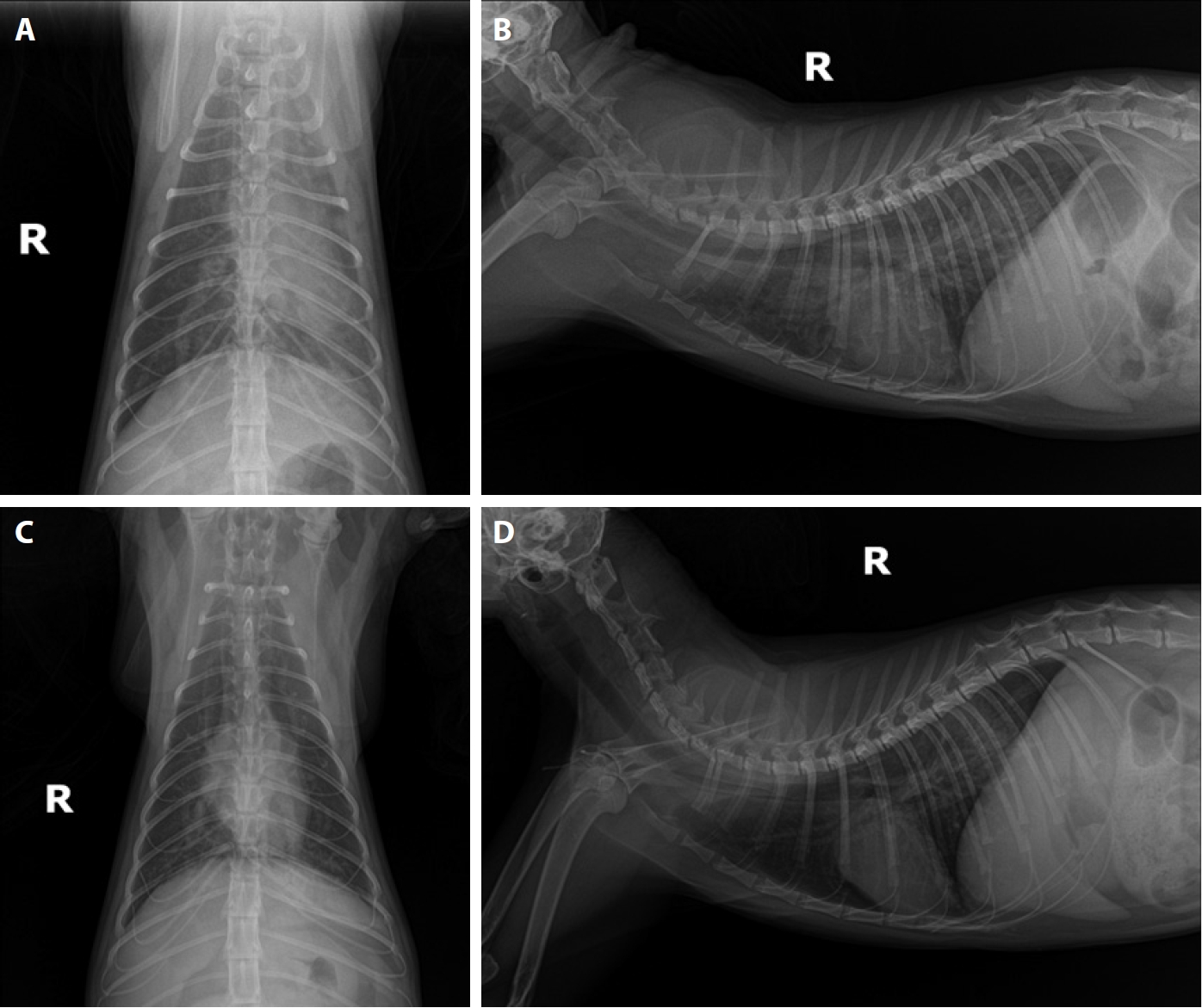
Fig. 2.Echocardiographic findings in Case 2. (A, B) B-mode image showing multiple hyperechoic, parallel double lines (white arrows) within the bifurcation of the main pulmonary artery (PA) and branches of the right PA, consistent with intraluminal adult heartworms. (C) Right parasternal short-axis view at the level of the aortic root showing a left atrium (LA)-to-aorta (AO) ratio of 1.36, indicating no overt left atrial enlargement. (D) M-mode echocardiography demonstrating normal left ventricular wall motion and systolic function (fractional shortening: 56.3%).
References
- 1. Liu J, Song KH, Lee SE, et al. Serological and molecular survey of Dirofilaria immitis infection in stray cats in Gyunggi province, South Korea. Vet Parasitol 2005;130:125-9. https://doi.org/10.1016/j.vetpar.2005.03.026
- 2. Park HJ, Lee SE, Lee WJ, et al. Prevalence of Dirofilaria immitis infection in stray cats by nested PCR in Korea. Korean J Parasitol 2014;52:691-4. https://doi.org/10.3347/kjp.2014.52.6.691
- 3. Ledesma N, Harrington L. Fine-scale temperature fluctuation and modulation of Dirofilaria immitis larval development in Aedes aegypti. Vet Parasitol 2015;209:93-100. https://doi.org/10.1016/j.vetpar.2015.02.003
- 4. Morchón R, Carretón E, González Miguel J, Mellado Hernández I. Heartworm disease (Dirofilaria immitis) and their vectors in Europe: new distribution trends. Front Physiol 2012;3:196. https://doi.org/10.3389/fphys.2012.00196
- 5. Lee AC, Atkins CE. Understanding feline heartworm infection: disease, diagnosis, and treatment. Top Companion Anim Med 2010;25:224-30. https://doi.org/10.1053/j.tcam.2010.09.003
- 6. Nelson CT. Dirofilaria immitis in cats: anatomy of a disease. Compend Contin Educ Vet 2008;30:382-9.
- 7. Nelson CT, McCall JW, Rubin SB, et al.; Executive Board of the American Heartworm Society. 2005 Guidelines for the diagnosis, prevention and management of heartworm (Dirofilaria immitis) infection in cats. Vet Parasitol 2005;133:267-75. https://doi.org/10.1016/j.vetpar.2005.07.009
- 8. Genchi C, Guerrero J, Di Sacco B, Formaggini L. Prevalence of Dirofilaria immitis infection in Italian cats. In: American Heartworm Society. Proceedings of Heartworm Symposium ’92; 1992; Austin, TX, USA. p. 97-102.
- 9. Carleton RE, Tolbert MK. Prevalence of Dirofilaria immitis and gastrointestinal helminths in cats euthanized at animal control agencies in northwest Georgia. Vet Parasitol 2004;119:319-26. https://doi.org/10.1016/j.vetpar.2003.10.019
- 10. Levy JK, Snyder PS, Taveres LM, et al. Prevalence and risk factors for heartworm infection in cats from northern Florida. J Am Anim Hosp Assoc 2003;39:533-7. https://doi.org/10.5326/0390533
- 11. Nelson CT. Heartworm and related nematodes. In: Sykes J, editors. Greene’s infectious diseases of the dog and cat. 5th ed. Saunders; 2021. p. 1399-417..
- 12. McTier TL, Shanks DJ, Watson P, et al. Prevention of experimentally induced heartworm (Dirofilaria immitis) infections in dogs and cats with a single topical application of selamectin. Vet Parasitol 2000;91:259-68. https://doi.org/10.1016/s0304-4017(00)00297-1
- 13. Atkins CE, DeFrancesco TC, Coats JR, Sidley JA, Keene BW. Heartworm infection in cats: 50 cases (1985–1997). J Am Vet Med Assoc 2000;217:355-8. https://doi.org/10.2460/javma.2000.217.355
- 14. Genchi C, Venco L, Ferrari N, Mortarino M, Genchi M. Feline heartworm (Dirofilaria immitis) infection: a statistical elaboration of the duration of the infection and life expectancy in asymptomatic cats. Vet Parasitol 2008;158:177-82. https://doi.org/10.1016/j.vetpar.2008.09.005
- 15. Dillon R. Feline dirofilariasis. Vet Clin North Am Small Anim Pract 1984;14:1185-99. https://doi.org/10.1016/s0195-5616(84)50153-3
- 16. Evans EA, Litster AL, Gunew MNM, Menrath VH. Forty-five cases of feline heartworm in Australia (1990-1998). Aust Vet Pract 2000;30:11-6.
- 17. Berdoulay P, Levy JK, Snyder PS, et al. Comparison of serological tests for the detection of natural heartworm infection in cats. J Am Anim Hosp Assoc 2004;40:376-84. https://doi.org/10.5326/0400376
- 18. Snyder PS, Levy JK, Salute ME, et al. Performance of serologic tests used to detect heartworm infection in cats. J Am Vet Med Assoc 2000;216:693-700. https://doi.org/10.2460/javma.2000.216.693
- 19. Taylor MJ, Bandi C, Hoerauf A. Wolbachia bacterial endosymbionts of filarial nematodes. Adv Parasitol 2005;60:245-84. https://doi.org/10.1016/S0065-308X(05)60004-8
- 20. Bouchery T, Lefoulon E, Karadjian G, Nieguitsila A, Martin C. The symbiotic role of Wolbachia in Onchocercidae and its impact on filariasis. Clin Microbiol Infect 2013;19:131-40. https://doi.org/10.1111/1469-0691.12069