Abstract
Persistent malaria transmission remains a considerable challenge in Indonesia despite national elimination efforts, with the Menoreh Hills representing a residual transmission hotspot characterized by ecological and socio-behavioral complexity. This highland region, spanning the boundaries of the Kulon Progo, Purworejo, and Magelang districts presents a complex eco-epidemiological setting in which malaria transmission persists despite substantial reductions in incidence. Spatial analyses consistently reveal micro-foci and cross-district clusters, underscoring the structural and ecological interconnectedness of the Menoreh Hills, including Anopheles mosquito habitats. Anopheles mosquitoes exhibit ecological adaptability and behavioral plasticity that may contribute to residual transmission. This region features a heterogeneous landscape of secondary forests, agricultural lands, and rural settlements that foster diverse vector species and habitats, occupational exposure, and sustained human-vector contact associated with Plasmodium transmission. Hypnozoite-mediated relapse in P. vivax, prolonged gametocyte carriage in P. falciparum, and asymptomatic or submicroscopic infections may contribute to residual transmission. Surveillance is complicated by fragmented governance, variable funding, high human mobility across district borders, and logistical constraints imposed by rugged topography. This review emphasizes the necessity of strengthening integrated malaria surveillance systems that combine entomological, serological, genomic, and spatial data to enable early detection and targeted interventions. Cross-sectoral collaboration, community engagement, and adaptive, location-specific strategies addressing socio-ecological determinants alongside biological and environmental drivers are essential to interrupt persistent transmission in complex residual foci such as the Menoreh Hills.
-
Key words: Eco-epidemiology, Menoreh Hills, persistence, malaria, surveillance, Indonesia
Introduction
Malaria remains a major global public health challenge, characterized by a substantial disease burden and uneven progress toward elimination across regions, particularly in ecologically and socially complex settings, despite the global scale up of malaria control and elimination strategies [
1]. In Indonesia, the national malaria elimination target for 2030, pursued through a subnational elimination strategy has substantially reduced malaria burden, specifically in western regions [
2]. However, progress remains heterogeneous, with residual transmission persisting in areas such as Java Island, where overall transmission intensity is low, such as in the Menoreh Hills [
2]. These settings exemplify residual malaria transmission, defined as ongoing transmission despite high coverage of long-lasting insecticidal nets and indoor residual spraying [
3]. This persistence is sustained by vector and human behavioral drivers that maintain exposure outside the reach of indoor based interventions, including outdoor or early evening biting, nighttime outdoor activities, and population mobility [
4,
5].
Ecological and landscape factors, such as forest, agricultural lands, water bodies, and dispersed settlements play a crucial role in shaping residual transmission [
6,
7]. In the Menoreh Hills, a cross-boundary highland region spanning Kulon Progo District (Special Region of Yogyakarta), Purworejo District, and Magelang District (Central Java), exemplifies this ecological complexity [
7]. Spatial and temporal analyses identify persistent malaria clusters across administrative boundaries, while local studies associate malaria risk with proximity of households to vector habitats, environmental conditions around settlements, and topographic influences on
Anopheles distribution in this region [
7,
8]. Similar patterns have been reported in other parts of Java, where micro-environmental variation drives spatial heterogeneity [
9].
This review demonstrates current evidence and offers an integrated eco-epidemiological perspective to support a more nuanced understanding of malaria transmission dynamics in the Menoreh Hills. The review further explores the socio-ecological and spatial drivers underlying persistent micro-foci, including mobility, occupational exposure, forest-agriculture mosaics, and ecological gradients that shape vector behavior and habitat suitability in this region. Key challenges and knowledge gaps are identified to guide future research, strengthen surveillance, and inform targeted landscape-based malaria elimination strategies in Indonesia, particularly in the Menoreh Hills.
The Menoreh Hills: Geographic and Ecological Context
The Menoreh Hills are a range of ancient volcanic hills located in the southern part of Java Island, extending from the northwest to the southeast [
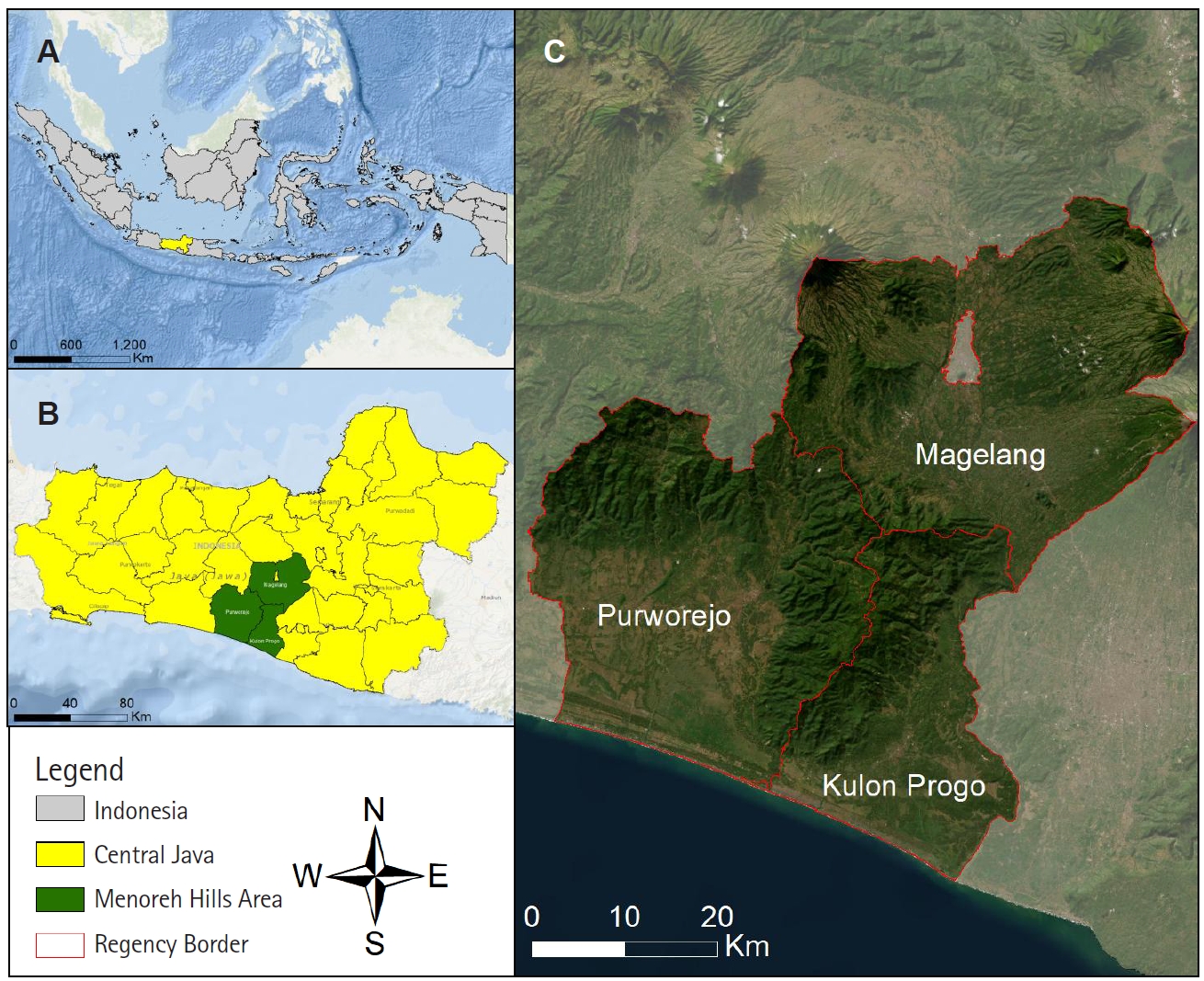
10]. Geographically, the Menoreh Hills are located in the transition zone between the lowlands of the southern coast of Java and the highlands of central Java. It stretches across the northwestern border of Kulon Progo District, the eastern side of Purworejo District, and the western side of Magelang District (
Fig. 1A-
C) [
8]. The Menoreh Hills region is located at coordinates approximately 7°44' south latitude and 110°08' east longitude [
11]. This region is characterized by a wide range of altitudes, extending from foothill areas at approximately 25 m above sea level to ridges reaching elevations of up to 1,050 m [
12,
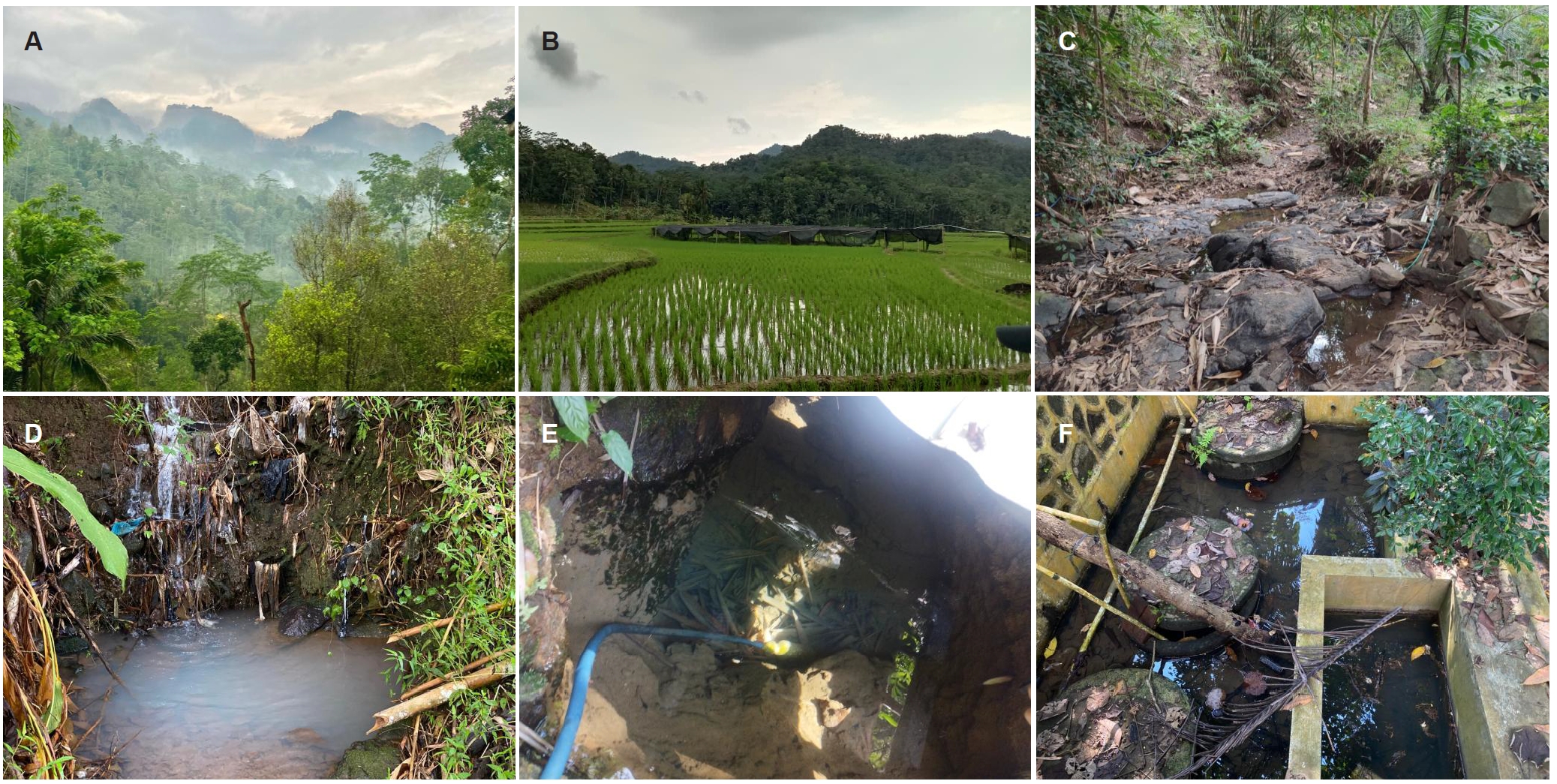
13]. The Menoreh Hills are frequently enveloped in morning fog, humid atmospheric conditions, and air circulation shaped by the topography (
Fig. 2A-
F) [
14].
The topography of the Menoreh Hills is dominated by steep slopes with gradients ranging from 4° to 35° [
14]. The soil in this area is thick and highly weathered, which further increases the risk of landslides [
14]. From an ecological perspective, the nature of the soil and topography influence water absorption patterns, surface runoff, and the formation of puddles [
15,
16]. On the other hand, the Menoreh Hills region experiences a tropical monsoon climate characterized by high annual rainfall, generally exceeding 2,000 mm per year, with peak precipitation occurring between November and March [
14,
17]. The interaction between high rainfall and steep topography creates complex water cycle dynamics further shaped by varying land cover across different areas [
18].
The land cover in the Menoreh Hills forms a distinctive ecological mosaic, consisting of hills covered with secondary forests, mixed gardens, terraced rice fields, and rural settlements equipped with livestock pens (
Fig. 2A,
B) [
8,
19]. Secondary forests and mixed gardens with layered vegetation create humid and relatively stable climatic conditions, characterized by lower temperatures and small fluctuations in humidity [
20]. Terraced rice fields and simple irrigation systems that follow the contours of the slopes provide a shallow water source that can last long enough during the rainy season and the transition to the dry season [
21,
22]. Together, these environmental features not only regulate microclimatic stability and breeding-site persistence but also shape host availability across the landscape. In this context, livestock can potentially serve as an alternative blood source for mosquitoes, thereby supporting vector population density and influencing biting behavior patterns [
23]. The close relationship between land cover, human activity, and the presence of animals has been identified as a key in the ecology of vector-borne diseases in tropical rural areas [
24].
Malaria Epidemiology in the Menoreh Hills
Malaria epidemiology in hilly and forested regions such as the Menoreh Hills reflects complex dynamics [
25]. Between 2005 and 2020, the Menoreh Hills reported a total of 5,210 malaria cases with an increasing number of high case incidence (HCI) villages over time, while the radius of primary clusters narrowed, indicating an intensification of geographically focused transmission [
7,
26-
34].
A study conducted in the Menoreh Hills, a cross-boundary region spanning Bagelen and Kaligesing (Purworejo District) and Kokap (Kulon Progo District) reported 3,812 cases over the 11-year period. During this time, the annual parasite incidence fluctuated between 0.2‰ and 10.8‰, with a mean value of 4.2‰, while the proportion of HCI villages increased from 11 (25.6%) in 2014 to 17 (39.5%) in 2015 [
7]. Additionally, the latest data from 2021 to 2024 demonstrate a heterogeneous and declining trend across 3 districts in the Menoreh Hills region, reflecting both progress and ongoing transmission challenges. Purworejo District, historically a primary hotspot, reported 558 cases in 2021 with a case fatality rate (CFR) of 1.1%, which slightly increased to 561 cases in 2022 with a markedly reduced CFR of 0.2% [
35,
36]. Subsequently, cases sharply declined to 49 in 2023 and 12 in 2024, with no fatalities recorded in these years [
37,
38]. Magelang District demonstrated a consistent and persistent low incidence, with 49 cases recorded in 2021, followed by a decline to 17 cases in 2022, 7 cases in 2023, and 11 cases in 2024, maintaining a CFR of 0.0% throughout [
35-
38]. In Kulon Progo District, the incidence of cases increased from 18 in 2021 (CFR=0%) to 97 in 2022 (CFR=1.0%), before decreasing to 10 cases in 2023 and 7 cases in 2024, with no fatalities reported [
39-
42]. These data align with spatial analyses that highlight Purworejo as the persistent primary hotspot, with secondary clusters emerging in Kulon Progo.
A study identified a consistently clustered spatial pattern of malaria incidence in Purworejo District using SatScan spatial analysis, emerging as the primary hotspot, with radius cluster shrinking from 15.2 km during 2005–2010 to 6.42 km in 2011–2015, centered in Kemanukan Village, Bagelen Subdistrict [
7]. Beyond the main hotspot, secondary clusters such as Kaligesing and Kokap subdistrict in Purworejo and Kulon Progo, respectively, reflect the outward spread of transmission was influenced by human mobility, ecological continuity, and vector presence [
7]. In this region, most infections were identified as indigenous, indicating that transmission primarily occurred within endemic villages of the region [
7]. The cross-boundary regions accounted for approximately 47% of all malaria cases and witnessed a substantial surge in cases between 2011 and 2015, predominantly driven by localized high-incidence clusters [
7]. The relative risk within the primary clusters reached 4.39 (
P<0.001), whereas the secondary clusters showed elevated but lower relative risk values [
7]. Global spatial autocorrelation (Moran’s I) revealed significant clustering during 2005–2010 (I=1.3,
P=0.049) that reflected changing spatial dynamics, shifting to a more random pattern in 2011–2015 [
7].
In the following regions, historical surveillance data indicated that
Plasmodium falciparum and
P. vivax were predominant parasites, accounting for approximately 58.5% and 28.9% of cases, respectively [
7]. In a study,
P. vivax has a particularly high prevalence, frequently appearing in mixed infections with
P. falciparum (3.5% of the total identified infections) [
7]. These 2 predominant species are epidemiologically important, as each possesses distinct biological characteristics that may contribute to residual transmission.
P. vivax can persist through hypnozoite-mediated relapses, whereas
P. falciparum may sustain transmission through prolonged gametocyte carriage and asymptomatic infections [
43-
45]. However, species-specific data from the recent low-incidence period remain limited.
Nevertheless, despite low clinical incidence, recent serological studies conducted in endemic villages in Purworejo District, Menoreh Hills, indicate the ongoing heterogeneous exposure to both
P. falciparum and
P. vivax [
46,
47]. Seropositivity rates for
P. falciparum antigens varied across villages, with PfEBA175 seropositivity reaching up to 40% in Kembaran and 23% in Wadas, suggesting localized recent transmission, whereas broadly elevated PfRh5 responses (53%–70%) indicate cumulative exposure to
P. falciparum [
46]. Concurrently, serological responses to
P. vivax showed substantial spatial variation. Pv41 seropositivity ranged from 18% in Wadas to 79% in Sedayu and 77% in Kemejing, while PvMSP1P-19 seropositivity ranged from 61% in Wadas to 74% in Sedayu and 87% in Kemejing, which reflects distinct spatial heterogeneity influenced by relapse potential and durable antibody responses [
47]. Beyond human malaria cases, zoonotic malaria caused by
P. knowlesi also warrants continued attention due to the forest-associated environmental characteristics of this region, which may increase the potential risk of human-vector-primate contact [
48], although evidence of local
P. knowlesi transmission in the Menoreh Hills remains limited.
Furthermore, in these settings, risk groups are categorized by age, occupation, and housing conditions [
8]. Children, especially those of school age, often show higher infection rates due to behavioral and immunological factors [
8,
49]. This group often experiences higher risk and prevalence of asymptomatic infections, with lower bednet usage and reduced healthcare-seeking behavior [
50]. Conversely, adults involved in forestry or agricultural work, such as men working as forest protectors, miners, migrant laborers, night police, construction workers, residents of remote farm huts (plot huts), and farmers, experience nighttime outdoor exposure that reflects occupational and behavioral factors to heighten exposure and seroprevalence levels [
49,
51-
54]. Pregnant women in malaria-endemic regions also represent a further susceptible group due to the higher
Anopheles attractiveness and heightened risk of placental malaria [
55,
56].
These epidemiological patterns in the Menoreh Hills reflect a complex interplay of ecological, biological, and behavioral determinants that influence malaria transmission on a fine spatial scale. Understanding key eco-epidemiological dimensions, including parasite biology, vector ecology, human behavior, environmental and landscape characteristics, and population genetics is essential for identifying the drivers of persistent malaria transmission and guiding context-specific control strategies.
Vector Ecology and Behavior
The ecological characteristics of the Menoreh Hills have created conducive conditions for the persistence of malaria vectors [
7]. The combination of hilly terrain, residual forest cover, agricultural land use, and continuous availability of water sources supports diverse
Anopheles populations and sustains vector environment interactions throughout the year [
7].
In the Menoreh Hills region, the diversity of
Anopheles species contributes to the persistence of malaria transmission, even after long-term control efforts [
7]. An entomological survey conducted in the Menoreh Hills identified the presence of several
Anopheles species, including
An. maculatus,
An. balabacensis,
An. aconitus,
An. vagus,
An. flavirostris,
An. barbirostris,
An. kochi,
An. minimus,
An. annularis, and
An. limosus [
57,
58]. In the context of malaria epidemiology in Menoreh Hills,
An. maculatus and
An. balabacensis are consistently identified as the dominant and efficient primary vectors for malaria transmission in densely vegetated hilly topography [
59,
60]. A vector survey in Purworejo District indicated that
An. maculatus comprised approximately 53.99% of the collected specimens, followed by
An. balabacensis at 19.76% [
61]. The findings underscore the epidemiological significance of
An. maculatus and
An. balabacensis, which are predominant vector species in the steep terrains of Central Java, exhibiting ecological traits similar to the Menoreh Hills, where malaria transmission persists [
61]. These species indicate ecological overlap, enabling the mosquitoes to coexist within habitats across forested, agricultural, and peri-domestic settings [
62].
The distribution and abundance of
Anopheles larvae in the Menoreh Hills are influenced by the availability of aquatic habitats formed through both natural processes and human activities [
57]. Larval surveys have identified springs, tiny streams with low water flow, and stagnant water bodies in agricultural environments, particularly rice fields and gardens, as the principal breeding locations [
63,
64]. Springs and headwater streams provide relatively permanent water sources with stable physicochemical conditions, which are specifically suitable for species such as
An. maculatus that prefer clear and moderately shaded environments [
64]. The
An. maculatus complex is exceptionally adapted to hilly and highland ecosystems, where it utilizes uncontaminated, slow-flowing water sources for larval growth [
65]. Furthermore, agricultural activities, conversely, result in inadequately drained fields due to the creation of breeding sites, such as rice paddies, irrigated crop plots, irrigation canals, and other standing water bodies that provide suitable habitats for
Anopheles mosquito larvae [
66]. For instance,
An. balabacensis typically consist of small to medium-sized water bodies, such as puddles, wheel tracks, ground depressions, and shallow pools situated at the periphery of forests [
67]. These habitats become highly productive during the rainy season, when increased rainfall expands the spatial distribution of breeding sites [
57]. Vegetation cover, sunlight exposure, and water permanence further modulate larval survival and productivity across these habitats [
64].
The ongoing spread of malaria in the Menoreh Hills is closely linked to environmental variables that facilitate uninterrupted reproduction of
Anopheles mosquitoes [
7]. Seasonal fluctuations in rainfall and temperature further influence larval habitat stability, adult mosquito survival, and biting activity, thereby affecting malaria transmission intensity as demonstrated in the Menoreh Hills cross-boundary area [
7]. Regional climatological records representative of the Menoreh Hills environment indicate that nearby Magelang Regency experiences high average annual rainfall of approximately 3,200 mm per year, with pronounced seasonal variability, including monthly rainfall peaks around 470 mm during wet-season months and declines to roughly 70 mm during peak dry months, reflecting strong contrasts in water availability that influence the persistence and seasonal stability of
Anopheles larval habitats [
68]. Moreover, a study identified the steep terrain of Kokap Subdistrict facilitates the creation of semi-permanent puddles, which provide consistent larval habitats for malaria vectors year-round [
69].
For instance, the presence of numerous
Anopheles species in Kokap Subdistrict underscores the diversity in vector behavioral ecology pertinent to malaria transmission [
69]. Species of
Anopheles, such as
An. balabacensis primarily were observed to bite indoors, whereas
An. maculatus typically exhibited a preference for outdoor biting [
69]. These species exhibited seasonal fluctuations, with
An. balabacensis exhibited consistent presence during the dry season, while
An. maculatus demonstrated higher frequencies during the early dry season [
69]. However, both species were observed throughout the year, including during the rainy season [
69]. Furthermore,
Anopheles mosquitoes in the Menoreh Hills demonstrate a high degree of adaptability to environmental changes associated with land use modification and irrigation development alter local hydrological systems and generate new breeding opportunities for malaria vectors [
57]. These environmental changes shift the spatial distribution of larval habitats and modify vector population dynamics [
67]. The capacity of
Anopheles spp. to thrive in a variety of natural and artificial aquatic habitats underscores their ecological adaptability [
64]. This adaptability of
Anopheles spp. contributes to the persistent malaria cases in the region [
59]. Consequently, vector breeding ecology and environmental receptivity play a critical role in sustaining malaria transmission, despite the implementation of ongoing control measures [
59].
In addition,
Anopheles populations in malaria-endemic environments show host selection flexibility, especially in regions with a high livestock presence. There is evidence that the availability of cattle can affect feeding preferences and vector abundance, with certain species exhibiting zoophilic tendencies [
70]. Study identified that cattle sheds characterized by inadequate management or located near larval habitats contribute to increased mosquito abundance through the creation of microclimatic conditions that support vector survival and population persistence [
57]. Numerous
Anopheles species, such as
An. aconitus,
An. vagus,
An. kochi have a predilection in animal hosts, indicating primarily zoophilic implications, specifically in rural regions with plentiful cattle sheds [
64]. Nevertheless, anthropophilic behavior is evident, specifically human hosts are readily accessible or cattle density diminishes [
64].
In terms of spatial biting behavior,
Anopheles mosquitoes in this region are largely exophagic, with biting activity occurring predominantly outdoors in the evening and nighttime hours that can sustain residual transmission despite indoor control measures [
64,
71]. A study states
Anopheles mosquitoes generally exhibit exophilic behavior, indicating a preference for resting outside of human dwellings and commonly found around animal livestock and on the exterior walls of houses [
64]. Studies demonstrated adult
Anopheles mosquitoes predominantly rest by perching on various surfaces within the domestic environment, including walls, ceilings, and floors and frequently observed in proximity to houses and near animal livestock externally [
58,
72].
Furthermore, it is known that a number of
Anopheles spp. are species complexes that can only be classified through molecular techniques and genetic analysis [
73,
74]. Molecular analyses indicate relatively stable genetic structures among
Anopheles populations in Central Java, suggesting long-term persistence and limited disruption by environmental changes [
65]. A preliminary genetic study in Purworejo District that examined the
Anopheles population showed diverse genetic variation among
An. kochi,
An. maculatus, and
An. vagus [
74]. Recent molecular studies have revealed the existence of a new species,
An. maculatus, found in Kulon Progo, Menoreh Hills that underscores the hidden diversity within the regional vector complex [
65,
74,
75]. These findings are reinforced by the discovery of a separate population of
An. barbirostris in Magelang, related to geological dynamics during the Pleistocene epoch (from 2.58 million to 11,700 years ago), which was marked by continental plate shifts and increased volcanic activity in Central Java and East Java [
65,
76]. In this context, the Menoreh Hills were previously reported as a relatively isolated and protected area from the effects of volcanic activity in the surrounding area, thus functioning as a refugial area that could potentially serve as a refuge for vector populations [
65,
76]. The genetic complexity carries significant epidemiological implications, as the presence of hidden subpopulations that may suggest variations in vector competence, host preference, and insecticide susceptibility [
74,
77-
79].
Human–environment Interaction
Ecological receptivity, characterized by appropriate climate, topography, and vector presence, establishes the biophysical potential for malaria transmission; however, it does not necessarily determine its actual occurrence [
7,
80]. Human–environment interaction constitutes the critical interface that translates this potential into actual transmission events [
8,
81]. In the Menoreh Hills,
An. maculatus and
An. balabacensis populations persist across the forested hillsides, yet their epidemiological significance depends entirely on human behavioral patterns that create exposure opportunities [
54,
69]. Four interrelated dimensions shape this interface: livelihood-based occupational exposure, settlement and housing configuration, nocturnal behaviors and protective practices, and population mobility [
8,
69]. Together, these dimensions form a behavioral ecology that operates in parallel with vector ecology to maintain transmission in this residual transmission setting [
46,
54].
The livelihood strategies of Menoreh Hills residents create the first and most fundamental layer of exposure risk [
8,
54]. Agricultural and plantation-based activities dominate the local economy, with residents engaged in farming, clove cultivation, coconut production, coffee harvesting, and salak fruit collection [
69,
82]. These occupations frequently position workers along forest margins and hillside environments, which are optimal habitats for
Anopheles mosquitoes [
8]. This positioning elucidates why farming is responsible for 48.6% of malaria cases, in contrast to 38.49% observed in control groups [
8]. Approximately 30% of participants in endemic villages were engaged in forest-related occupations, and multivariable analysis showed that forest workers had higher odds of
P. vivax seropositivity (adjusted odds ratio [OR], 1.2; 95% confidence interval [CI], 1.0–1.3), while male participants were also more likely to be seropositive (adjusted OR,1.3; 95% CI, 1.2–1.5), suggesting that the observed male predominance in malaria exposure reflects the gendered division of labor in forest-based activities [
54]. The temporal structure of agricultural work further compounds this risk, as forest workers begin activities at dawn and continue through the evening hours when
An. maculatus and
An. balabacensis exhibit peak host-seeking behavior [
69].
Among these occupational activities, coconut and palm sap tapping represents a particularly high-risk practice that illustrates the constraints on behavioral modification [
69,
83]. The collection of nira (palm sap) follows a twice-daily schedule, typically conducted during morning hours (07:00–09:00) and evening hours (16:00–20:00), with evening sessions coinciding directly with peak vector activity periods [
69]. Due to sap flows optimally only during specific temperature conditions, schedule modification is largely impractical, and individuals in high-risk occupations including sugar palm tappers demonstrate a 63% probability of malaria infection compared to lower-risk occupational groups [
83]. Community perceptions reinforce this biological constraint, as tappers view schedule changes as economically unfeasible given the narrow temporal windows for optimal sap collection [
69]. This occupational exposure effectively shifts the primary locus of transmission beyond the household, fundamentally challenging assumptions underlying house-centered control approaches [
46,
84,
85].
While occupational activities determine exposure in the broader landscape, housing characteristics and settlement patterns modulate risk within the domestic environment [
8,
69,
86]. Construction in the Menoreh Hills reflects resource availability and economic constraints, with bamboo and wooden materials predominating in higher-elevation villages [
69]. Residing in houses with bamboo or wood walls significantly increases malaria risk (OR, 2.20; 95% CI, 1.31–3.71), with 61.6% of cases living in such structures compared with 37.6% of controls [
8]. These housing characteristics are important because they facilitate vector entry through multiple structural pathways: 92% of malaria cases reside in houses without ceiling coverings, and over 97% have no wire mesh on ventilation openings, while qualitative observations indicate that open eaves are common features of local house construction that further facilitate indoor mosquito entry [
8,
69]. Such structural features transform dwellings into semi-open environments that offer minimal barrier against mosquito ingress. Settlement location further amplifies this permeability, as houses within 100 m of breeding sites demonstrate nearly twofold increased malaria risk (OR, 1.94; 95% CI, 1.03–3.64), with cases averaging 83.9 m from the nearest breeding site compared with 167.0 m for controls [
8]. The hilly terrain naturally concentrates water sources in valleys and along slopes where settlements cluster for agricultural access, creating inherent spatial coupling between human habitation and larval habitats [
7,
69].
The domestic environment in the Menoreh Hills is further complicated by the presence of livestock enclosures, which introduce ambiguity rather than straightforward protection [
69,
80]. Classical zooprophylaxis theory suggests that cattle might divert vector blood meals away from humans [
87], yet evidence from endemic areas of Indonesia, including Java, indicates context-dependent effects that often contradict this expectation [
80]. Keeping medium-sized animals such as goats and sheep inside or outside houses increases malaria risk (OR, 2.98 and 1.71, respectively) rather than providing protection [
80]. In the Menoreh Hills, community members have attributed increased malaria transmission to declining livestock numbers, perceiving reduced cattle as eliminating an "animal barrier" against mosquitoes [
69]. However, entomological evidence complicates this perception:
An. vagus collected from cattle sheds in Kokap tested positive for
P. falciparum circumsporozoite protein, confirming that peridomestic animal husbandry may facilitate rather than interrupt transmission [
69]. Similarly, participants in Purworejo who fed livestock at night demonstrated significantly elevated antibody responses to
P. falciparum antigens (
P=0.006), suggesting that evening animal care activities increase human-vector contact [
46]. Housing in the Menoreh Hills thus operates not merely as a protective structure but as an active component of transmission ecology, where construction materials, settlement location, and peridomestic practices collectively shape indoor exposure intensity [
8,
46,
69,
80].
Beyond the physical characteristics of dwellings, behavioral practices during evening and nighttime hours critically determine contact frequency between humans and vectors [
46,
69,
86,
88]. Nocturnal outdoor activities constitute a prominent feature of social life in Menoreh Hills communities, with widespread participation in
pengajian (religious study groups),
jathilan (traditional dance practice),
wayang (shadow puppet performances), and
njagong (wedding celebrations) [
69]. These gatherings occur during peak exophagic biting periods, creating collective and recurrent exposure events that are socially structured rather than individually determined [
69]. Even when residents remain indoors, protective behaviors show substantial gaps between ownership and practice [
54,
69]. Bed net ownership reaches 77% in surveyed households, yet only 39% report consistent use, while other surveys document even lower utilization with only 27% using nets despite 42% ownership [
54,
69]. The consequences of these behavioral gaps are substantial: failing to close doors and windows between 18:00 and 05:00 increases malaria risk more than sixfold (OR, 6.46; 95% CI, 2.30–18.12), while not sleeping under a bed net increases risk more than fourfold (OR, 4.44; 95% CI, 1.52–12.93) [
86]. Repellent adoption remains minimal, with 76%–93% of residents reporting non-use [
46]. Importantly, these knowledge-behavior gaps reflect structural constraints, including incompatibility between net use and occupational schedules, rather than simple individual negligence [
69].
Population mobility adds a final dimension that extends exposure beyond both household and local landscape boundaries [
69,
82]. Economic pressures drive migration from the Menoreh Hills to malaria-endemic regions outside Java, where residents work in nickel and coal mines, palm oil plantations, and logging operations in Kalimantan, Sumatra, Sulawesi, and Halmahera [
69]. These occupational environments combine high transmission intensity with limited access to preventive measures, and cyclical return during religious holidays, family events, and agricultural seasons facilitates parasite importation [
69]. The scale of this movement is considerable: Hargotirto village alone recorded 369 documented return immigrants in 2011 and 411 in 2012 [
69]. Travel history to endemic areas is significantly associated with
P. falciparum seropositivity (
P=0.015), confirming the epidemiological significance of return migration [
46]. Intra-regional mobility further complicates transmission dynamics, as extensive daily movement occurs for traditional fruit farming, trading, and cultural events across the network of main roads and informal dirt paths connecting Kulon Progo, Purworejo, and Magelang districts [
82]. Cross-border zones consequently contribute 39%–47% of regional malaria cases, and multiple informal access routes reduce the effectiveness of district-level surveillance systems, rendering the transmission landscape difficult to partition into discrete indigenous versus imported case categories [
7].
These 4 dimensions interact through socio-ecological feedback loops that perpetuate transmission [
7,
54]. Human activities in the Menoreh Hills actively modify environmental conditions in ways that influence subsequent exposure risk [
7,
54]. Forest-fringe agriculture and plantation development create landscape heterogeneity that supports diverse vector breeding habitats, while peridomestic water storage and animal husbandry practices establish additional larval sites proximate to human habitation [
8,
69,
80]. Vector populations may in turn exhibit behavioral adaptations to human activity patterns, including early evening biting that precedes typical bed net use [
46]. These feedback dynamics generate a behavioral vulnerability landscape superimposed on the underlying ecological receptivity of the region [
54,
82].
Collectively, these human-environment interactions constitute a complex behavioral ecology that sustains malaria transmission despite decades of vector control efforts [
69,
82]. Livelihood structures create obligate exposure during peak vector activity periods, while housing characteristics and settlement proximity to breeding sites modulate domestic transmission risk. Nocturnal social practices generate community-level exposure beyond individual protective capacity, and population mobility continuously reintroduces parasites while cross-district movement diffuses transmission across administrative boundaries. Effective intervention in this context requires strategies that address these socio-behavioral determinants alongside entomological factors, recognizing that transmission persistence reflects the systematic interaction between human activity patterns and ecological conditions rather than isolated risk factors [
8,
82].
Surveillance Challenges in the Menoreh Hills
The Menoreh Hills region faces multifaceted challenges in malaria surveillance and control, involving systemic, environmental, social, and operational dimensions. Financial and human resource limitations exacerbated by decentralization, impact surveillance coverage and quality [
82]. The decentralization of health governance that autonomous district-level malaria control programs, which led to an imbalanced allocation of financial resources and competencies among districts [
7,
69,
82]. This, coupled with ineffective communication in integrated intervention, caused fragmented authority and poor coordination between districts and provinces [
69,
82].
Moreover, the participatory approach revealed the gap between development strategic plans and funding cycles which led to implementation delays due to the timing of the strategic plan completion that did not align with the local government budget planning and allocation process [
82]. The cycle for the upcoming year had already been closed before the plan was finalized although stakeholders were eager to implement the joint malaria elimination promptly [
82]. This mismatch meant that activities identified in the strategic plan could not be immediately funded or operationalized, forcing them to be postponed to the next budget cycle [
82]. The delay in funding approval and allocation hindered timely execution of malaria control interventions in the Menoreh Hills region despite the participatory process producing a well-structured and jointly agreed plan [
82].
In the Menoreh Hills, a study demonstrated spatial and temporal clustering of malaria cases with persistent hotspots in Purworejo Districts [
7]. Nevertheless, the high mobility of residents across districts borders, including daily and seasonal migration, complicates malaria Active Case Detection (ACD) [
82]. This mobilization is facilitated by two-way main roads connecting the 3 districts and is driven by activities such as the fruit trade and cultural or religious events, which often take place at night [
82]. Moreover, economic pressures have driven some residents to seek employment on the island or abroad as migrant workers that may encounter the risk of malaria exposure and infection [
69]. These workers typically return home during specific periods, such as religious holidays, thereby potentially bringing malaria parasites to their home regions, particularly among those employed in mining, logging, or agricultural sectors [
7,
69,
82]. Additionally, high-risk groups, including farmers and loggers, frequently traverse borders via a network of small dirt roads that wind through villages, fields, and forests during their work [
82]. These frequent cross-district movements facilitate malaria transmission across administrative boundaries, complicating case tracking and classification between indigenous and imported cases [
7,
82].
However, this misaligns with the surveillance efforts that lacks adequate migration tracking and case investigation capacity, including the reliance on village-level retrospective data and the lack of field verification, that suggest the potential for under-reporting, silent transmission, and misclassification particularly in cross boundaries areas [
7,
69,
82]. A study observed that health workers experienced confusion in differentiating imported versus indigenous cases, particularly in border villages, which can result in inaccurate case classification and underestimation transmission [
82]. Furthermore, the passive case detection system relies heavily on reports from health facilities, which may miss asymptomatic or subclinical infections [
89].ACD was severely limited during some periods, specifically when village malaria worker (juru malaria desa) numbers declined due to funding cuts [
89]. The number of primary health centers involved in malaria surveillance and control varies, with some primary health centers designated as HCI areas, but overall ACD coverage remains insufficient [
7,
82]. Delays in blood slide processing (up to 3 days) further reduce timely case confirmation and response [
89].
Insufficient funding support contributes to weaken surveillance capacity, reduce human resources, and hinder coordinated malaria control efforts in the Menoreh Hills region [
69,
82]. Lack of standardized protocols and surveillance systems harmonization across districts and provinces, with poor data sharing and inconsistent reporting formats, impeding comprehensive situational awareness and coordinated response [
7,
82]. The limited capacity for migration surveillance, coupled with the lack of endorsement for surveillance policies, contributes to the missed detection of imported or asymptomatic cases [
82].
Furthermore, malaria transmission exhibits both seasonal and spatial clustering, necessitating prompt and targeted ACD [
8,
82]. However, logistical challenges, including rugged terrain, hilly ecosystems, and the presence of numerous and dispersed breeding sites along rivers and streams, hinder access for surveillance teams and vector monitoring [
8,
82]. The Menoreh Hills’ steep slope (4° to 35° gradient) and dense vegetation create physical barriers that hinder access for surveillance teams and complicate ACD and vector monitoring [
14,
82]. Altitude above 500 m was identified as a significant risk factor of malaria (OR, 3.62; 95% CI, 1.61–8.16;
P=0.002), complicating surveillance due to ecological variability and vector habitat diversity at different elevations [
8]. Moreover, operational and logistical constraints such as inadequate transport and infrastructure delay sample processing and treatment initiation, prolonging infectious periods and transmission risk [
89].
Consistent with these factors contributing to persistent malaria transmission, a study conducted in the Menoreh Hills highlighted the ongoing issue of insufficient community awareness regarding malaria prevention [
82]. Limited community awareness, participation in malaria prevention, and surveillance activities reduce community-based case detection efficacy and increase malaria exposure risk [
82]. Nighttime outdoor activities and inconsistent use of protective measures such as bed nets increase exposure and complicate the surveillance targeting, with the bed net ownership rate was found to be approximately 67%, while the consistent use rate was approximately 39% [
8,
82]. These surveillance challenges in the Menoreh Hills are multifactorial and interlinked, requiring integrated approaches to strengthen the effectiveness of malaria control interventions. This situation results in a lack of integration of vector and epidemiological data in the Menoreh Hills that underscores the importance of moving toward an integrated eco-epidemiological surveillance system that is essential to capture the complex interactions between vectors, parasites, environment, and human behavior for the effective malaria elimination.
Toward Integrated Eco-epidemiological Surveillance
Malaria transmission systems are inherently heterogeneous, shaped by interactions between vector ecology, environmental conditions, and human mobility patterns [
90]. In the Menoreh Hills, these dynamics manifest as persistent spatial clustering across administrative boundaries [
7]. Entomological studies remain foundational by identifying and characterizing the primary malaria vectors, such as
Anopheles behaviors, ecology, and breeding habitats [
64]. Understanding the composition and ecological characteristics of vector species is crucial for the development of targeted vector control interventions, particularly important given that the biology of local factors often exhibits geographic specificity such as differences in species composition, biting and resting behaviors, and habitat preferences that vary across regions and ecological zones [
64].
Despite the established value of entomological indicators, they provide only a partial representation of transmission dynamics, particularly in low-intensity or spatially heterogeneous settings. Molecular methodologies, such as PCR, enhance the detection of submicroscopic and asymptomatic infections that sustain transmission and are frequently missed by microscopy, thereby improving prevalence estimates and risk assessments [
45,
91,
92]. Furthermore, genomic approaches provide complementary insights into malaria transmission by characterizing parasite population structure, genetic diversity, and patterns of drug resistance, thereby strengthening molecular epidemiological surveillance [
93]. Together with serological approaches, these molecular tools provide a more comprehensive representation of transmission processes across scales.
Spatial analyses strengthen elimination efforts by enabling spatiotemporal mapping and detection of persistent hotspots, including clusters that span administrative boundaries, thereby supporting targeted surveillance and more efficient allocation of intervention resources [
7]. This analysis integrates environmental, climatic (humidity, temperature, and hydrological conditions), vector, and parasite data to characterize landscape features and ecological determinants that shape malaria transmission dynamics [
90,
94-
96]. This approach is particularly relevant for malaria elimination in the Menoreh Hills, where complex topography, forest cover, and surrounding agricultural landscapes create diverse ecological niches that shape vector distribution and human exposure risk [
7]. Integration of biological indicators with spatial analyses further enables precise identification of localized risk clusters, supporting timely, and location-specific responses during the elimination phase [
90].
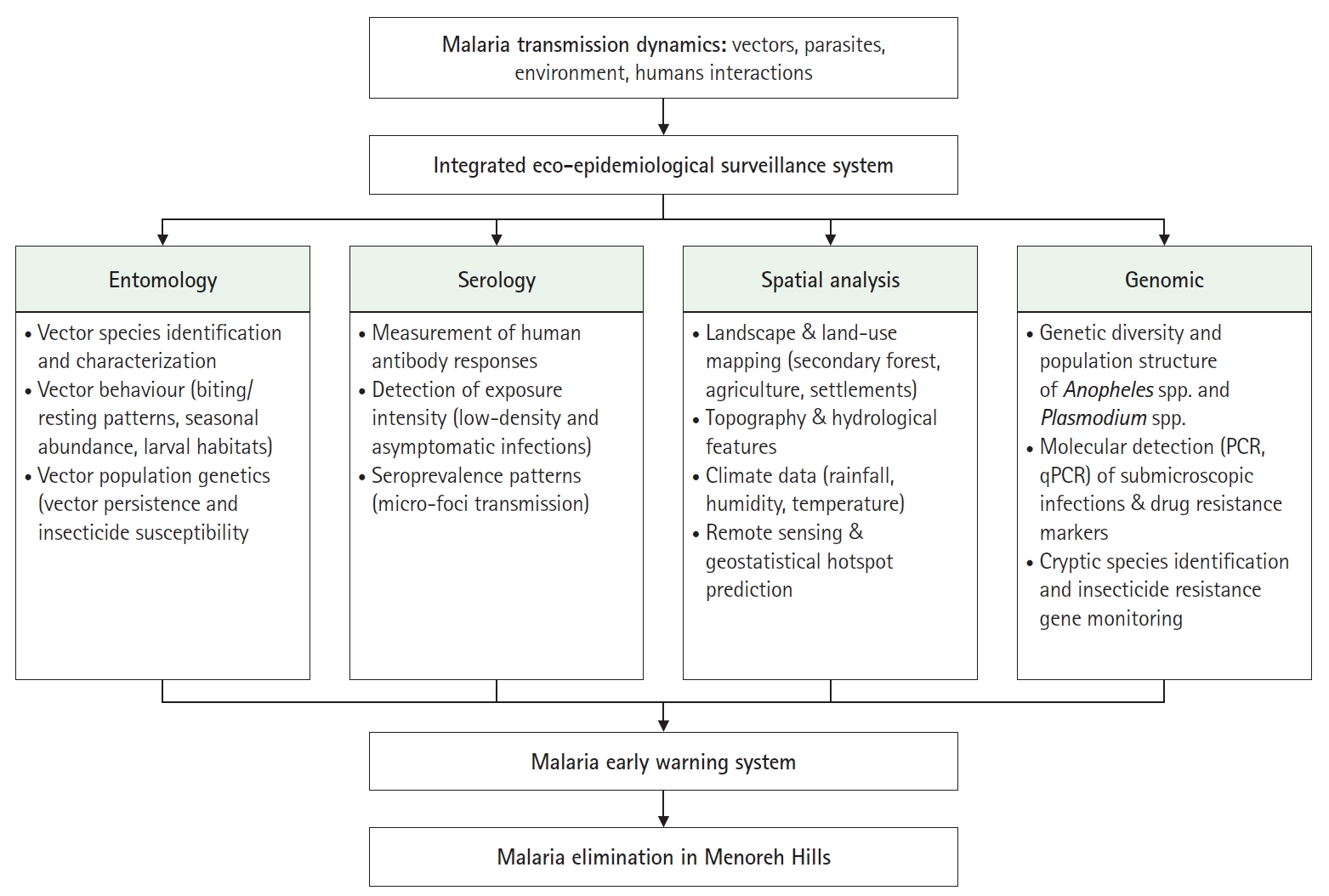
Thus, the development of a malaria early warning system (EWS) is strategically relevant for malaria surveillance systems [
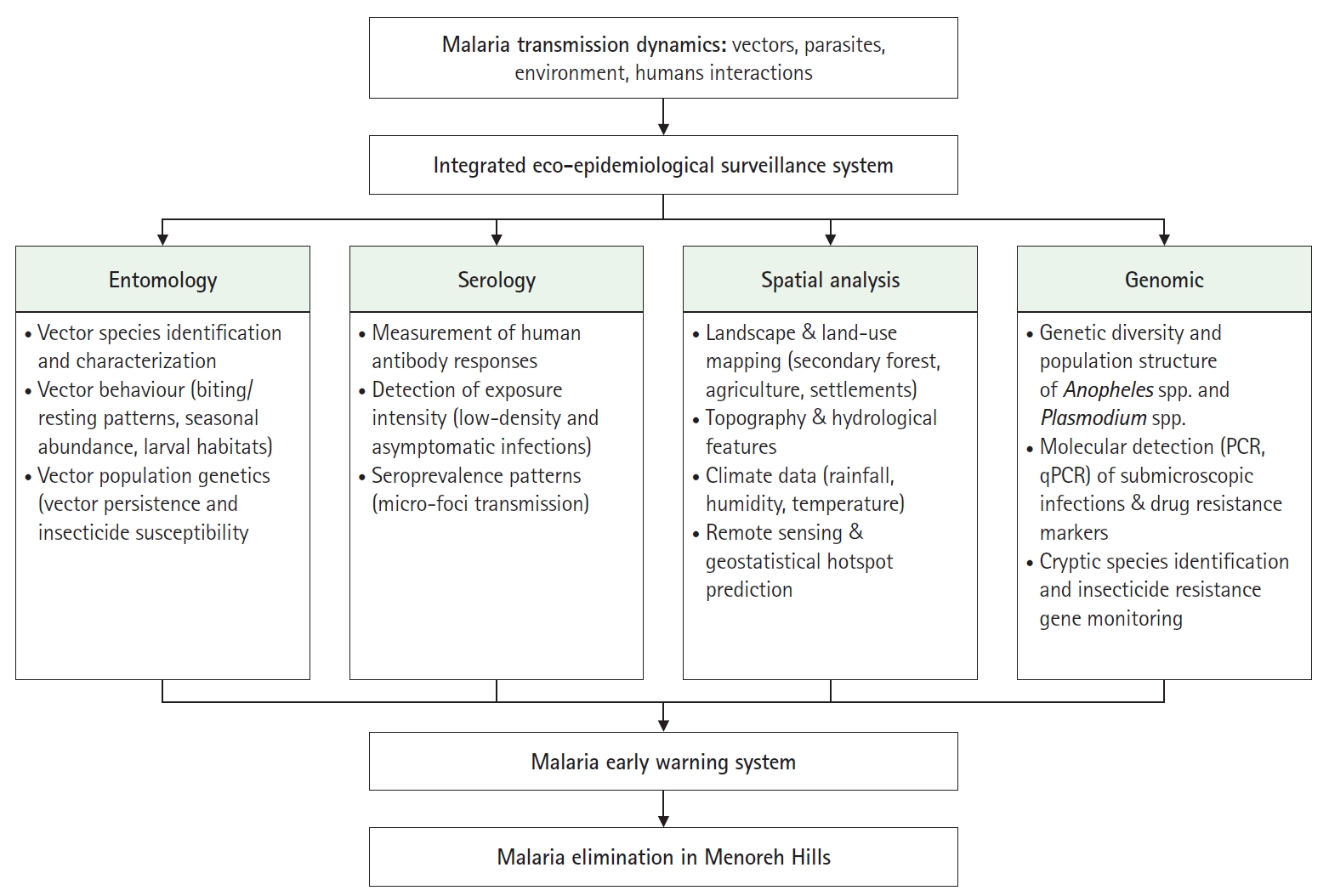
97]. The substantial elimination of malaria settings that integrate with EWS, which encompasses entomological, serological, genomic, and spatial indicators, have the potential to enhance surveillance sensitivity in persistent regions such as Menoreh Hills (
Fig. 3). This integration provides a comprehensive and timely picture of transmission dynamics beyond clinical data alone, enabling the proactive detection of signals indicative of increased transmission risk before increase in clinical case numbers captured by routine surveillance, particularly in areas characterized by residual transmission and ecological heterogeneity [
97]. Adaptive, location-specific intervention strategies informed by EWS outputs can effectively target micro-foci and cross boundary clusters by incorporating fine-scale spatial heterogeneity in disease risk, optimizing resource allocation and enhancing intervention impact.
Beyond technical and operational strategies, the success of malaria elimination also highly depends on policy support and resource allocation at the local, regional, or national levels [
98,
99]. Strengthening networks, governance, and cross-sectoral advocacy is necessary to support the implementation of malaria control across regions by involving stakeholders from both health and non-health sectors [
82]. The development of an integrated malaria information system in the Menoreh Hill regions facilitates data exchange, standardized reporting, and evidence-based decision making among the districts [
82]. Inter-district working groups formation authorized to manage cross-regional malaria serves as a key coordination mechanism for planning, implementation, monitoring, and evaluation of malaria elimination programs [
82]. To decrease the transmission cycle, the implementation of community-based interventions in malaria-prone areas is also essential [
100]. Family and community engagement through health education fosters consistent use of preventive measures, enhances local reporting and response mechanisms, and encourages participation in malaria control efforts, thereby closing gaps between data collection and intervention impact [
101]. Sustained political commitment and resource allocation are fundamental to maintain and scale integrated surveillance systems and community engagement initiatives, ensuring the long-term success of malaria elimination efforts in the Menoreh Hills. Malaria elimination in the Menoreh Hills requires a multifaceted approach that integrates strengthened cross-regional collaboration, operational strategies, and community involvement.
Conclusion
Persistent malaria transmission in the Menoreh Hills is shaped by complex interactions among environmental factors, vector dynamics, and human factors related to human-environment interactions, reflecting an eco-epidemiological transmission system. An eco-epidemiological perspective is essential to understand these complex interactions and to design interventions that reflect the ecological and social realities of the Menoreh Hills. Strengthening integrated malaria surveillance that prioritizes application of vector genomics approaches, sero-surveillance, and reservoir surveillance is essential to reduce transmission in endemic areas, including improvements in surveillance systems based on standard operating procedures. Cross-sectoral collaboration across entomology, epidemiology, genomics, environmental sciences, and public health systems is required to support the sustainability and effectiveness of malaria elimination programs in this region.
Notes
-
Author contributions
Conceptualization: Han JH, Muh F. Funding acquisition: Han JH, Muh F. Methodology: Han JH, Muh F, Qanita NG. Supervision: Hitipeuw D, Saputra EY, Jun H, Jeon BY, Cahyani NKD, Han JH, Muh F. Writing – original draft: Qanita NG, Hitipeuw D, Nuranindita R, Saputra EY, Ramadani EP, Putri FA, Pratama DA. Writing – review & editing: Qanita NG, Hitipeuw D, Nuranindita R, Saputra EY, Ramadani EP, Putri FA, Pratama DA, Jun H, Jeon BY, Cahyani NKD, Han JH, Muh F.
-
Conflict of interest
Jin-Hee Han and Fauzi Muh serve as editors of Parasites, Hosts and Diseases but had no involvement in the decision to publish this article. No other potential conflicts of interest relevant to this study were reported.
-
Funding
This study was funded by the Institute for Research and Community Services (LPPM), Universitas Diponegoro, through its internal research grant scheme (306-24/UN7.D2/PP/V/2026). This work was also supported by the Korea Health Technology R&D Project through the Korea Health Industry Development Institute (KHIDI), funded by the Ministry of Health & Welfare (RS-2025-02309009); the National Research Foundation of Korea (NRF), funded by the Ministry of Education (RS-2023-00240627) and the Ministry of Science and ICT (RS-2025-16069701); and the Regional Innovation System & Education (RISE) program through the Gangwon RISE Center, funded by the Ministry of Education (MOE) and the Gangwon State, Republic of Korea (2026-RISE-10-002) (JHH).
-
Acknowledgments
The authors would like to express their sincere gratitude to the Faculty of Public Health, Universitas Diponegoro for the institutional support provided during the preparation of this study. They extend particular thanks to colleagues, peers, and malaria experts in Purworejo District for their constructive feedback and suggestions on earlier versions of the drafts. The authors also acknowledge the contributions of researchers whose work laid the groundwork for this review.
Fig. 1.Geographic location and administrative boundaries of the Menoreh Hills region, a malaria-endemic area spanning Purworejo, Magelang, and Kulon Progo districts, Indonesia. (A) Location of the study area within Indonesia. (B) Position of the Menoreh Hills within Central Java and the Special Region of Yogyakarta. (C) Satellite view of the Menoreh Hills region showing the administrative boundaries of the 3 districts.
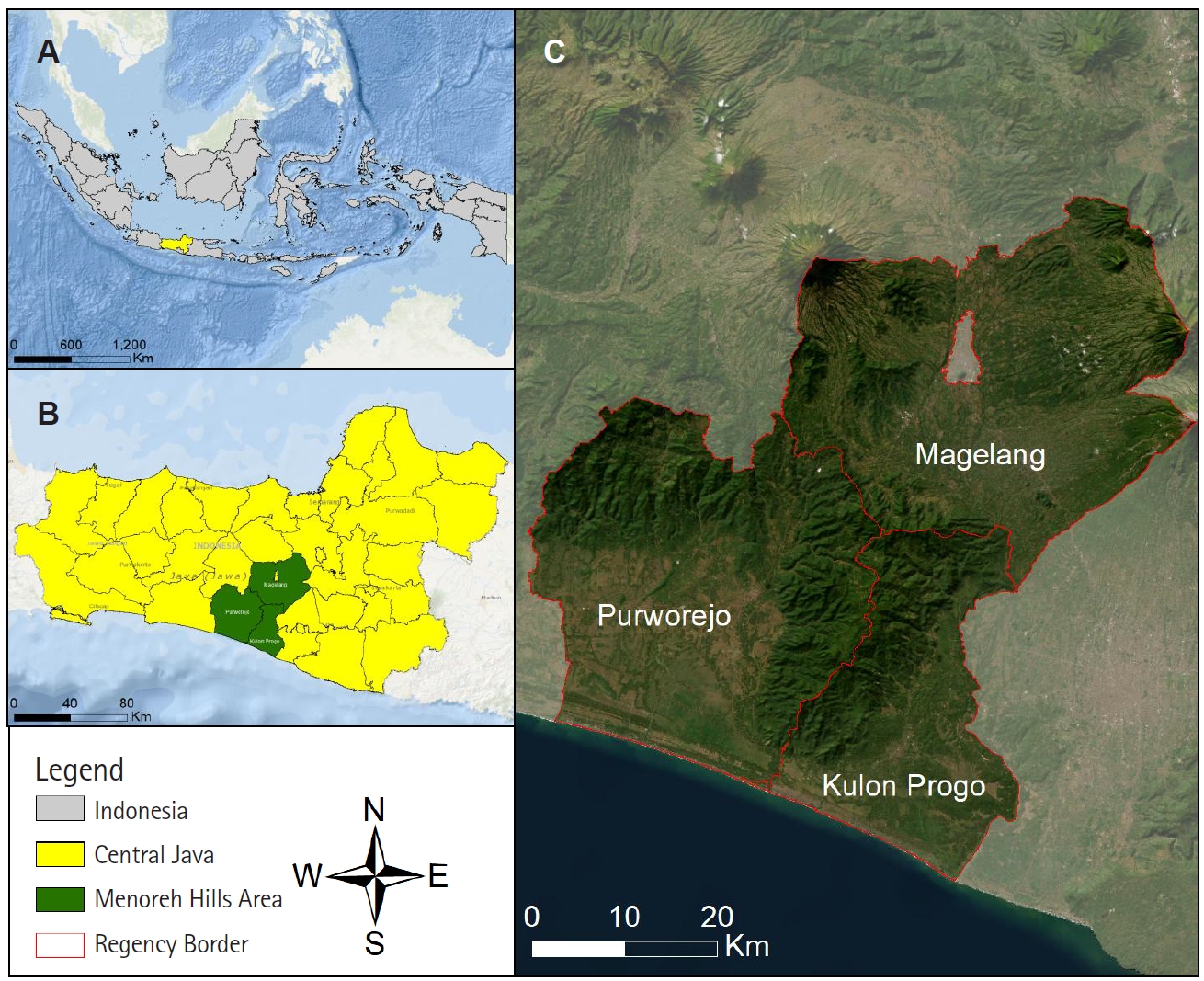
Fig. 2.Environmental and landscape features of the Menoreh Hills. (A) General landscape of the Menoreh Hills, characterized by hilly terrain, dense vegetation, and forest-agriculture mosaics. (B) Rice field ecosystem with irrigated and semi-permanent water bodies. (C) Small puddle in shaded forested areas formed by rain-fed pools. (D) Natural seepage pool. (E) Small natural spring water. (F) Drainage structure with stagnant water accumulation.

Fig. 3.Conceptual framework of an integrated eco-epidemiological surveillance system linking entomological, serological, spatial, and genomic data to malaria early warning system and elimination in the Menoreh Hills.
References
- 1. World Health Organization. World malaria report 2025. World Health Organization; 2025.
- 2. Herdiana H, Prameswari HD, Puspadewi RT, et al. Shrinking the malaria map in Indonesia: progress of subnational control, elimination, and future strategies. BMC Med 2025;23:512. https://doi.org/10.1186/s12916-025-04355-w
- 3. Carnevale P, Manguin S. Review of issues on residual malaria transmission. J Infect Dis 2021;223:S61-80. https://doi.org/10.1093/infdis/jiab084
- 4. Sherrard-Smith E, Skarp JE, Beale AD, et al. Mosquito feeding behavior and how it influences residual malaria transmission across Africa. Proc Natl Acad Sci U S A 2019;116:15086-95. https://doi.org/10.1073/pnas.1820646116
- 5. Monroe A, Mihayo K, Okumu F, et al. Human behaviour and residual malaria transmission in Zanzibar: findings from in-depth interviews and direct observation of community events. Malar J 2019;18:220. https://doi.org/10.1186/s12936-019-2855-2
- 6. Legendre E, Girond F, Herbreteau V, et al. 'Forest malaria' in Myanmar? Tracking transmission landscapes in a diversity of environments. Parasit Vectors 2023;16:324. https://doi.org/10.1186/s13071-023-05915-w
- 7. Rejeki DSS, Fuad A, Widartono BS, Murhandarwati EEH, Kusnanto H. Spatiotemporal patterns of malaria at cross-boundaries area in Menoreh Hills, Java, Indonesia. Malar J 2019;18:80. https://doi.org/10.1186/s12936-019-2717-y
- 8. Rejeki DSS, Solikhah S, Wijayanti SPM. Risk factors analysis of malaria transmission at cross-boundaries area in Menoreh Hills, Java, Indonesia. Iran J Public Health 2021;50:1816-24. https://doi.org/10.18502/ijph.v50i9.7054
- 9. Ngadino, Winarko, Nurmayanti D, et al. Spatial analysis of malaria cases and Anopheles species in East Java region, Indonesia. Trop Med Health 2024;52:91. https://doi.org/10.1186/s41182-024-00662-9
- 10. Kusumayudha SB, Ciptahening AN, Purwanto HS, Kristanto WAD, Nugroho NE. Slope movement characteristic and models based on engineering-geological properties of the Menoreh Hills, Purworejo Regency, Central Java, Indonesia. AIP Conf Proc 2020;2245:070014. https://doi.org/10.1063/5.0010201
- 11. Aji MT, Saputra SW, Purnomo PW, Sabdaningsih A. Population dynamics of Geosesarma sp: a new species of vampire crab from the Menoreh Mountains of Java, Indonesia. Int J Agric Biosci 2025;14:1388-96. https://doi.org/10.47278/journal.ijab/2025.118
- 12. Budiadi, Irwan SNR, Lestari LD, et al. Biodiversity, social adoptability, and preference toward managing medicinal plants in homegardens across elevations in the Menoreh Mountains, Kulonprogo District, Indonesia. Biodivers J Biol Divers 2025;26:1316. https://doi.org/10.13057/biodiv/d260331
- 13. National Disaster Management Agency (BNPB). Republic of Indonesia. Reflections on the management of the Purworejo landslide [Internet]. 2026 [cited 2026 May 10]. Available from: https://etangguh.bnpb.go.id/
- 14. Kristanto WAD, Kusumayudha SB, Purwanto HS, Nugroho NE, Khafid MA. Correlation of the hydrogeological systems and landslide potential in the Northern Menoreh Hills, Purworejo Regency, Central Java, Indonesia. AIP Conf Proc 2020;2245:070010. https://doi.org/10.1063/5.0010170
- 15. Jarecke KM, Bladon KD, Wondzell SM. The influence of local and nonlocal factors on soil water content in a steep forested catchment. Water Resour Res 2021;57:e2020WR028343. https://doi.org/10.1029/2020WR028343
- 16. Ma Y, Wang Y, Ma C, Yuan C, Bai Y. Effects of gravel on the water absorption characteristics and hydraulic parameters of stony soil. J Arid Land 2024;16:895-909. https://doi.org/10.1007/s40333-024-0079-y
- 17. Xia C, Liu G, Mei J, et al. Characteristics of hydrogen and oxygen stable isotopes in precipitation and the environmental controls in tropical monsoon climatic zone. Int J Hydrog Energy 2019;44:5417-27. https://doi.org/10.1016/j.ijhydene.2018.10.171
- 18. Tunda A, Malamassam D, Soma AS, Sudia LB. Dynamics of land cover change on hydrological conditions using the soil and water assessment tool model in the Tiworo watershed. Ecol Eng Environ Technol 2025;26:14-26. https://doi.org/10.12912/27197050/196400
- 19. Sanjana P, Barcus MJ, Bangs MJ, et al. Survey of community knowledge, attitudes, and practices during a malaria epidemic in central Java, Indonesia. Am J Trop Med Hyg 2006;75:783-9.
- 20. Mulyadi R, Karyati A, Pardede S, Halimah N. Microclimate conditions and thermal comfort in various land covers in Samarinda City, East Kalimantan. IOP Conf Ser Earth Environ Sci 2025;1562:012045. https://doi.org/10.1088/1755-1315/1562/1/012045
- 21. Zhao TY, Xue RD. Integrated mosquito management in rice field in China. Wetl Ecol Manag 2022;30:963-73. https://doi.org/10.1007/s11273-021-09840-6
- 22. González MA, Chaskopoulou A, Georgiou L, et al. Mosquito management strategies in European rice fields: environmental and public health perspectives. J Environ Manage 2024;370:122534. https://doi.org/10.1016/j.jenvman.2024.122534
- 23. Olagunju EA, Ayewumi IT, Adeleye BM. Effects of livestock-keeping on the transmission of mosquito-borne diseases. Zoonoses 2024;4. https://doi.org/10.15212/ZOONOSES-2024-0036
- 24. Hoffman-Hall A. The role of land cover/land use in malaria transmission in Myanmar. In: Vadrevu KP, Justice C, Gutman G, editors. Remote sensing of land cover and land use changes in South and Southeast Asia. CRC Press; 2026. p. 179-91.
- 25. Kar NP, Kumar A, Singh OP, Carlton JM, Nanda N. A review of malaria transmission dynamics in forest ecosystems. Parasit Vectors 2014;7:265. https://doi.org/10.1186/1756-3305-7-265
- 26. Purworejo District Health Office. Purworejo district health profile 2022. Purworejo District Health Office; 2022.
- 27. Purworejo District Health Office. Purworejo district health profile 2023. Purworejo District Health Office; 2023.
- 28. Bantul District Health Office. Bantul regency health profile 2018. Bantul District Health Office; 2018.
- 29. Kulon Progo District Health Office. Kulon Progo regency health profile 2020. Kulon Progo District Health Office; 2020.
- 30. Magelang District Health Office. Magelang regency health profile 2017. Magelang District Health Office; 2017.
- 31. Salaman Community Health Center Village Malaria Officer. Malaria cases at the Salaman Community Health Center. Salaman Community Health Center Village Malaria Officer; 2017.
- 32. Central Statistics Agency of Magelang Regency. Malaria cases in Magelang regency 2018. Central Statistics Agency of Magelang Regency; 2018.
- 33. Central Statistics Agency of Magelang Regency. Malaria cases in Magelang regency 2019. Central Statistics Agency of Magelang Regency; 2019.
- 34. Central Statistics Agency of Magelang Regency. Malaria cases in Magelang regency 2020. Central Statistics Agency of Magelang Regency; 2020.
- 35. Central Java Provincial Health Office. Central Java health profile 2021. Central Java Provincial Health Office; 2021.
- 36. Central Java Provincial Health Office. Central Java health profile 2022. Central Java Provincial Health Office; 2022.
- 37. Central Java Provincial Health Office. Central Java health profile 2023. Central Java Provincial Health Office; 2023.
- 38. Central Java Provincial Health Office. Central Java health profile 2024. Central Java Provincial Health Office; 2024.
- 39. Special Region of Yogyakarta Provincial Health Office. Health profile of the Special Region of Yogyakarta 2021. Special Region of Yogyakarta Provincial Health Office; 2022.
- 40. Special Region of Yogyakarta Provincial Health Office. Health profile of the Special Region of Yogyakarta 2022. Special Region of Yogyakarta Provincial Health Office; 2023.
- 41. Special Region of Yogyakarta Provincial Health Office. Health profile of the Special Region of Yogyakarta 2023. Special Region of Yogyakarta Provincial Health Office; 2024.
- 42. Special Region of Yogyakarta Provincial Health Office. Health profile of the Special Region of Yogyakarta 2024. Special Region of Yogyakarta Provincial Health Office; 2025.
- 43. Joice R, Nilsson SK, Montgomery J, et al. Plasmodium falciparum transmission stages accumulate in the human bone marrow. Sci Transl Med 2014;6:244re5. https://doi.org/10.1126/scitranslmed.3008882
- 44. Mikolajczak SA, Vaughan AM, Kangwanrangsan N, et al. Plasmodium vivax liver stage development and hypnozoite persistence in human liver-chimeric mice. Cell Host Microbe 2015;17:526-35. https://doi.org/10.1016/j.chom.2015.02.011
- 45. Lindblade KA, Steinhardt L, Samuels A, Kachur SP, Slutsker L. The silent threat: asymptomatic parasitemia and malaria transmission. Expert Rev Anti Infect Ther 2013;11:623-39. https://doi.org/10.1586/eri.13.45
- 46. Daud MM, Rahayu AA, Ilyas M, et al. Serological evidence of continued exposure to Plasmodium falciparum among residents in a near-elimination setting. Front Microbiol 2026;16:1742072. https://doi.org/10.3389/fmicb.2025.1742072
- 47. Muh F, Qanita NG, Hitipeuw D, et al. Anopheles ecology and serological evidence of malaria exposure in clinically malaria-free areas of Menoreh Hills Central Java, Indonesia. Sci Rep 2026;16:22565. https://doi.org/10.1038/s41598-026-50685-x
- 48. Bin Said I, Kouakou YI, Omorou R, et al. Systematic review of Plasmodium knowlesi in Indonesia: a risk of emergence in the context of capital relocation to Borneo? Parasit Vectors 2022;15:258. https://doi.org/10.1186/s13071-022-05375-8
- 49. Rahayu N, Suryatinah Y, Kusumaningtyas H. Discovery of malaria cases on forest workers in public health center, Teluk Kepayang, Tanah Bumbu, South Kalimantan. BIO Web Conf 2020;20:01008. https://doi.org/10.1051/bioconf/20202001008
- 50. Walldorf JA, Cohee LM, Coalson JE, et al. School-age children are a reservoir of malaria infection in Malawi. PLoS One 2015;10:e0134061. https://doi.org/10.1371/journal.pone.0134061
- 51. Sluydts V, Heng S, Coosemans M, et al. Spatial clustering and risk factors of malaria infections in Ratanakiri Province, Cambodia. Malar J 2014;13:387. https://doi.org/10.1186/1475-2875-13-387
- 52. Makenga G, Gallalee S, Mkali H, et al. Occupations at high risk for malaria in Zanzibar: a case-control study, May-August 2023. Malar J 2025;24:268. https://doi.org/10.1186/s12936-025-05517-0
- 53. Supargiyono S, Bretscher MT, Wijayanti MA, et al. Seasonal changes in the antibody responses against Plasmodium falciparum merozoite surface antigens in areas of differing malaria endemicity in Indonesia. Malar J 2013;12:444. https://doi.org/10.1186/1475-2875-12-444
- 54. Surendra H, Supargiyono, Ahmad RA, et al. Using health facility-based serological surveillance to predict receptive areas at risk of malaria outbreaks in elimination areas. BMC Med 2020;18:9. https://doi.org/10.1186/s12916-019-1482-7
- 55. Adam I, Babiker S, Mohmmed AA, et al. ABO blood group system and placental malaria in an area of unstable malaria transmission in eastern Sudan. Malar J 2007;6:110. https://doi.org/10.1186/1475-2875-6-110
- 56. Himeidan YE, Elbashir MI, Adam I. Attractiveness of pregnant women to the malaria vector, Anopheles arabiensis, in Sudan. Ann Trop Med Parasitol 2004;98:631-3. https://doi.org/10.1179/000349804225021307
- 57. Ikawati B, Sunaryo S, Prastawa A, Marbawati D. Various mosquitoes species and control efforts in villages with malaria problem at Menoreh Hill Central Java. Adv Health Sci Res 2020;24:99-105. https://doi.org/10.2991/ahsr.k.200311.019
- 58. Prastowo D, Widiarti, Garjito TA. Bionomic Anopheles spp as a basic malaria vector control in Kebumen District Central Java. Vektora J Vektor Reserv Penyakit 2018;10:25-36. https://doi.org/10.22435/vk.v10i1.967
- 59. Barcus MJ, Laihad F, Sururi M, et al. Epidemic malaria in the Menoreh Hills of Central Java. Am J Trop Med Hyg 2002;66:287-92. https://doi.org/10.4269/ajtmh.2002.66.287
- 60. Barodji B, Boewono DT, Boesri H, Sudini S. Vector bionomics and the malaria situation in Kokap District, Kulon Progo Regency, Yogyakarta. Indones J Health Ecol 2003;2. https://doi.org/10.22435/jek.v2i2Agt.1393
- 61. Center for Research and Development of Disease Vectors and Reservoirs; National Institute of Health Research and Development; Ministry of Health. Final report of the special research on disease vectors and reservoirs (Rikhus Vektora) in Central Java Province. Ministry of Health of the Republic of Indonesia; 2015.
- 62. Farner JE, Howard M, Smith JR, Anderson CB, Mordecai EA. Local tree cover predicts mosquito species richness and disease vector presence in a tropical countryside landscape. Res Sq 2024;rs.3.rs-3954302. https://doi.org/10.21203/rs.3.rs-3954302/v1
- 63. Sunaryo, Ikawati B, Wijayanti T. Spatial distribution of malaria vector breeding sites in Purworejo District, Central Java Province. Aspirator J Vector-borne Dis Stud 2021;13:1-8. https://doi.org/10.22435/asp.v13i1.4023
- 64. Aida PN, Astuti FD, Azka A. Species diversity and bionomics of Anopheles spp. in Malaria endemic areas in Indonesia. Aspirator J Vector-borne Dis Stud 2022;14:89-104. https://doi.org/10.58623/aspirator.v14i2.11
- 65. Garjito TA, Widiastuti U, Mujiyono M, et al. Genetic homogeneity of Anopheles maculatus in Indonesia and origin of a novel species present in Central Java. Parasit Vectors 2019;12:351. https://doi.org/10.1186/s13071-019-3598-1
- 66. Beke OA, Assi SB, Kokrasset APH, et al. Implication of agricultural practices in the micro-geographic heterogeneity of malaria transmission in Bouna, Côte d'Ivoire. Malar J 2023;22:313. https://doi.org/10.1186/s12936-023-04748-3
- 67. Byrne I, Aure W, Manin BO, et al. Environmental and spatial risk factors for the larval habitats of Plasmodium knowlesi vectors in Sabah, Malaysian Borneo. Sci Rep 2021;11:11810. https://doi.org/10.1038/s41598-021-90893-1
- 68. Weather & Climate. Average monthly precipitation (rainfall) in Magelang, Central Java, Indonesia [Internet]. 2023 [cited 2026 May 10]. Available from: https://weather-and-climate.com/average-monthly-precipitation-Rainfall,magelang-central-java-id,Indonesia
- 69. Murhandarwati EE, Fuad A, Nugraheni MD, et al. Early malaria resurgence in pre-elimination areas in Kokap Subdistrict, Kulon Progo, Indonesia. Malar J 2014;13:130. https://doi.org/10.1186/1475-2875-13-130
- 70. Mayagaya VS, Nkwengulila G, Lyimo IN, et al. The impact of livestock on the abundance, resting behaviour and sporozoite rate of malaria vectors in southern Tanzania. Malar J 2015;14:17. https://doi.org/10.1186/s12936-014-0536-8
- 71. Killeen GF. Characterizing, controlling and eliminating residual malaria transmission. Malar J 2014;13:330. https://doi.org/10.1186/1475-2875-13-330
- 72. Msugupakulya BJ, Kaindoa EW, Ngowo HS, et al. Preferred resting surfaces of dominant malaria vectors inside different house types in rural south-eastern Tanzania. Malar J 2020;19:22. https://doi.org/10.1186/s12936-020-3108-0
- 73. Norris DE. Genetic markers for study of the anopheline vectors of human malaria. Int J Parasitol 2002;32:1607-15. https://doi.org/10.1016/s0020-7519(02)00189-3
- 74. Hitipeuw D, Nuranindita R, Martini M, et al. Genetic diversity and phylogeographic structure of Anopheles kochi, Anopheles maculatus, and Anopheles vagus: ITS2-based analysis of highland transboundary populations in the Menoreh Hills, Java, Indonesia. Parasites Hosts Dis 2025;63:228-42. https://doi.org/10.3347/PHD.25026
- 75. Ali RSM, Wahid I, Saeung A, Wannasan A, Harbach RE, Somboon P. Genetic and morphological evidence for a new species of the Maculatus Group of Anopheles subgenus Cellia (Diptera: Culicidae) in Java, Indonesia. Parasit Vectors 2019;12:107. https://doi.org/10.1186/s13071-019-3358-2
- 76. Van Bemmelen RW. The geology of Indonesia. Government Printing Office; 1949.
- 77. Harris C, Morlais I, Churcher TS, et al. Plasmodium falciparum produce lower infection intensities in local versus foreign Anopheles gambiae populations. PLoS One 2012;7:e30849. https://doi.org/10.1371/journal.pone.0030849
- 78. Main BJ, Lee Y, Ferguson HM, et al. The genetic basis of host preference and resting behavior in the major African malaria vector, Anopheles arabiensis. PLoS Genet 2016;12:e1006303. https://doi.org/10.1371/journal.pgen.1006303
- 79. Djogbénou L, Chandre F, Berthomieu A, et al. Evidence of introgression of the ace-1(R) mutation and of the ace-1 duplication in West African Anopheles gambiae s. s. PLoS One 2008;3:e2172. https://doi.org/10.1371/journal.pone.0002172
- 80. Hasyim H, Dhimal M, Bauer J, et al. Does livestock protect from malaria or facilitate malaria prevalence? A cross-sectional study in endemic rural areas of Indonesia. Malar J 2018;17:302. https://doi.org/10.1186/s12936-018-2447-6
- 81. Rozi IE, Syahrani L, Permana DH, et al. Human behavior determinants of exposure to Anopheles vectors of malaria in Sumba, Indonesia. PLoS One 2022;17:e0276783. https://doi.org/10.1371/journal.pone.0276783
- 82. Ahmad RA, Ferdiana A, Surendra H, et al. A participatory approach to address within-country cross-border malaria: the case of Menoreh Hills in Java, Indonesia. Malar J 2021;20:137. https://doi.org/10.1186/s12936-021-03673-7
- 83. Sulistyawati S, Fitriani I. Risk factor and cluster analysis to identify malaria hot spot for control strategy in Samigaluh Sub-District, Kulon Progo, Indonesia. Iran J Public Health 2019;48:1647-53. https://doi.org/10.18502/ijph.v48i9.3024
- 84. Moshi IR, Manderson L, Ngowo HS, et al. Outdoor malaria transmission risks and social life: a qualitative study in South-Eastern Tanzania. Malar J 2018;17:397. https://doi.org/10.1186/s12936-018-2550-8
- 85. Edwards HM, Sriwichai P, Kirabittir K, et al. Correction to: Transmission risk beyond the village: entomological and human factors contributing to residual malaria transmission in an area approaching malaria elimination on the Thailand-Myanmar border. Malar J 2019;18:248. https://doi.org/10.1186/s12936-019-2881-0
- 86. Cahyaningrum P, Sulistyawati S. Malaria risk factors in Kaligesing, Purworejo District, Central Java Province, Indonesia: a case-control study. J Prev Med Public Health 2018;51:148-53. https://doi.org/10.3961/jpmph.18.036
- 87. Franco AO, Gomes MG, Rowland M, Coleman PG, Davies CR. Controlling malaria using livestock-based interventions: a one health approach. PLoS One 2014;9:e101699. https://doi.org/10.1371/journal.pone.0101699
- 88. Esayas E, Gowelo S, Assefa M, et al. Impact of nighttime human behavior on exposure to malaria vectors and effectiveness of using long-lasting insecticidal nets in the Ethiopian lowlands and highlands. Parasit Vectors 2024;17:520. https://doi.org/10.1186/s13071-024-06607-9
- 89. Murhandarwati EE, Fuad A, Sulistyawati, et al. Change of strategy is required for malaria elimination: a case study in Purworejo District, Central Java Province, Indonesia. Malar J 2015;14:318. https://doi.org/10.1186/s12936-015-0828-7
- 90. Stresman G, Bousema T, Cook J. Malaria hotspots: is there epidemiological evidence for fine-scale spatial targeting of interventions? Trends Parasitol 2019;35:822-34. https://doi.org/10.1016/j.pt.2019.07.013
- 91. Okell LC, Bousema T, Griffin JT, et al. Factors determining the occurrence of submicroscopic malaria infections and their relevance for control. Nat Commun 2012;3:1237. https://doi.org/10.1038/ncomms2241
- 92. O'Flaherty K, Oo WH, Zaloumis SG, et al. Community-based molecular and serological surveillance of subclinical malaria in Myanmar. BMC Med 2021;19:121. https://doi.org/10.1186/s12916-021-01993-8
- 93. Mensah BA, Akyea-Bobi NE, Ghansah A. Genomic approaches for monitoring transmission dynamics of malaria: a case for malaria molecular surveillance in Sub-Saharan Africa. Front Epidemiol 2022;2:939291. https://doi.org/10.3389/fepid.2022.939291
- 94. Reiner RC Jr, Perkins TA, Barker CM, et al. A systematic review of mathematical models of mosquito-borne pathogen transmission: 1970-2010. J R Soc Interface 2013;10:20120921. https://doi.org/10.1098/rsif.2012.0921
- 95. Wangdi K, Wetzler E, Cox H, et al. Spatial patterns and climate drivers of malaria in three border areas of Brazil, Venezuela and Guyana, 2016-2018. Sci Rep 2022;12:10995. https://doi.org/10.1038/s41598-022-14012-4
- 96. Hasyim H, Nursafingi A, Haque U, et al. Spatial modelling of malaria cases associated with environmental factors in South Sumatra, Indonesia. Malar J 2018;17:87. https://doi.org/10.1186/s12936-018-2230-8
- 97. Hussain-Alkhateeb L, Rivera Ramírez T, Kroeger A, Gozzer E, Runge-Ranzinger S. Early warning systems (EWSs) for chikungunya, dengue, malaria, yellow fever, and Zika outbreaks: what is the evidence? A scoping review. PLoS Negl Trop Dis 2021;15:e0009686. https://doi.org/10.1371/journal.pntd.0009686
- 98. Burkot C, Gilbert K. Eliminating again, for the last time: a case study of donor support for malaria in Solomon Islands. Asia Pac Policy Stud 2021;8:189-207. https://doi.org/10.1002/app5.320
- 99. Hasyim H, Jassey B, Yudhastuti R, et al. Prevalence of Plasmodium spp. in humans and cattle: implications for zoonotic malaria transmission in Indonesia. Vet World 2025;18:1831-9. https://doi.org/10.14202/vetworld.2025.1831-1839
- 100. Baltzell K, Harvard K, Hanley M, Gosling R, Chen I. What is community engagement and how can it drive malaria elimination? Case studies and stakeholder interviews. Malar J 2019;18:245. https://doi.org/10.1186/s12936-019-2878-8
- 101. Obeagu EI, Obeagu GU, Iduh MU. Behavioral health interventions in malaria control: efficacy and implementation. Medicine (Baltimore) 2025;104:e43762. https://doi.org/10.1097/md.0000000000043762


 , Derico Hitipeuw2