Abstract
We intended to report a case of Dibothriocephalus nihonkaiensis infection diagnosed in Suzu City, Ishikawa Prefecture, Japan. A 23-year-old man from Aichi Prefecture moved to Suzu City, one of the most severely destroyed areas by the 2024 Noto Peninsula earthquake, to engage in reconstructive works. He visited the internal medicine department of Suzu General Hospital by the passage of long slender worm in his stool. Numerous operculated helminth eggs were detected from his stool samples, and a tapeworm strobila with the scolex was found after the treatment of praziquantel (10 mg/kg). Magnesium citrate was administered before and after praziquantel treatment, and stool samples were collected from the patient. The expelled tapeworm measured approximately 1.7 m in length. Morphological examination revealed a relatively small scolex with 2 suckling grooves, suggesting an immature adult specimen. Phylogenetic analysis of the mitochondrial 16S rRNA and cox1 genes identified the parasite as Dibothriocephalus nihonkaiensis. This case highlights the importance of integrating morphological and molecular approaches for accurate species identification in cases with complex epidemiological backgrounds.
-
Key words: Dibothriocephalus nihonkaiensis, 2024 Noto Peninsula earthquake, molecular diagnostic techniques
Introduction
Dibothriocephalus nihonkaiensis is a fish-borne tapeworm that uses Pacific salmon and trout as second intermediate hosts [
1,
2]. This parasite has been reported predominantly in East Asia, including Japan [
2], China [
3], and Korea [
4], but cases have also been documented in North America [
5] and Europe [
6] along with the global spread of raw salmon consumption. In Japan, human infections have been reported widely from Hokkaido to Okinawa, but the more cases have been reported in urban areas in central to northern Japan [
2]. From 2001 to 2016, totally 15 cases in Aichi Prefecture and 27 cases in Ishikawa Prefecture had been reported [
2]. Although approximately 40 cases per year have been reported in Japan, the true incidence is thought to be several times higher because many infections remain unrecognized or are not formally reported [
7].
The adult worm of
D. nihonkaiensis has a slender body consisting of a scolex, a short neck, and a long strobila composed of numerous flat proglottids [
8]. The adult parasite can grow up to over 10 m in length in the human intestine. Most patients become aware of their infection by noticing long, whitish segments being spontaneously expelled in their stool. Despite the considerable size of this tapeworm species, the gastrointestinal symptoms, i.e., abdominal pain, diarrhea, and/or nausea are to be usually known as mild or absent in humans, and many patients are otherwise in good general condition at presentation [
2].
The 2024 Noto Peninsula earthquake, which occurred on January 1, 2024, had a magnitude of 7.6 and caused severe shaking, resulting in over 450 fatalities and missing persons as of November 2024 [
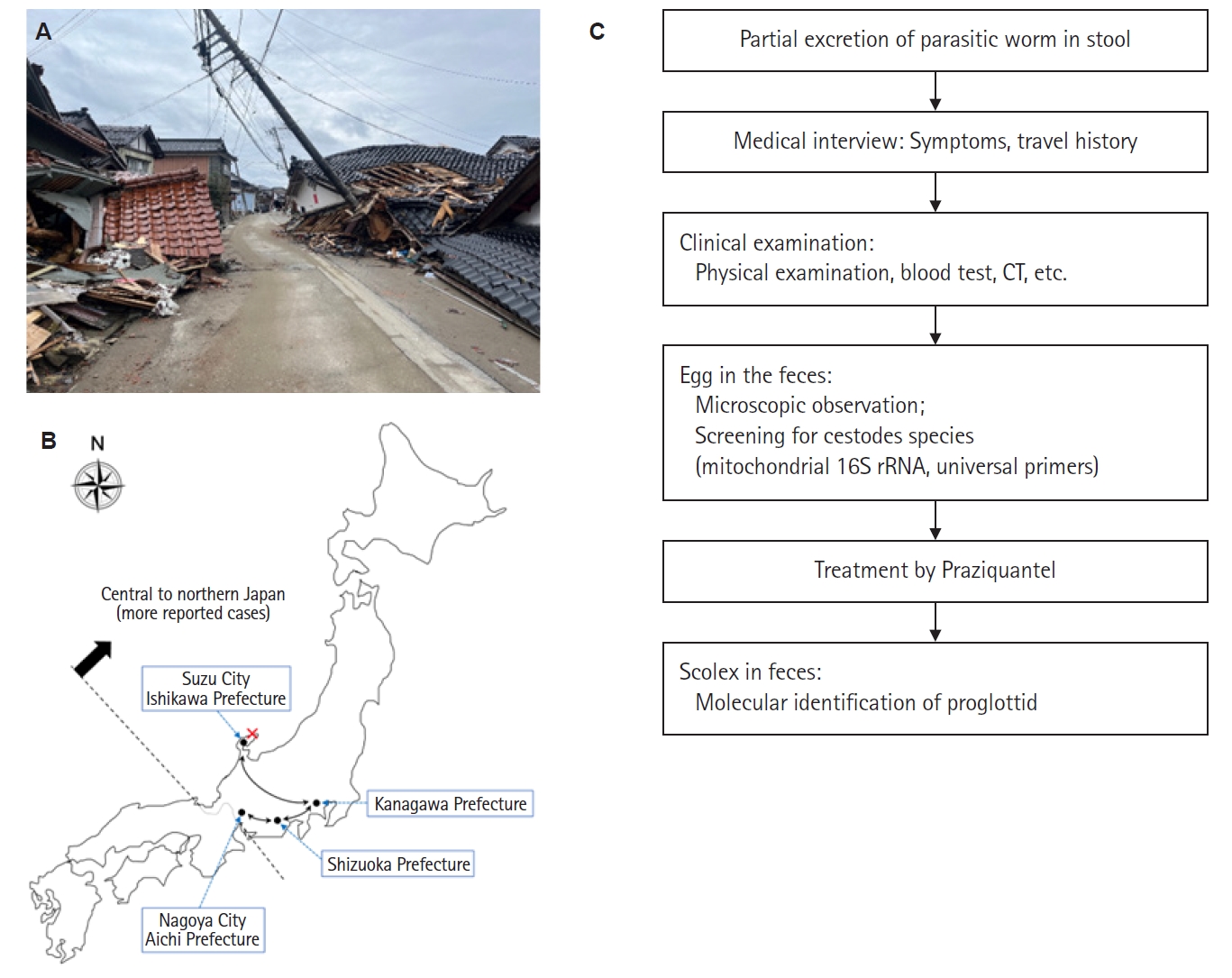
9]. Suzu City, located at the tip of the Noto Peninsula, was one of the areas most severely affected by the earthquake (
Fig. 1A). After the earthquake, Suzu City experienced an influx of workers and support personnel from various regions across Japan who were engaged in post‑disaster recovery activities, including demolition and reconstruction projects.
Here, we report a case of D. nihonkaiensis infection in a reconstruction worker from Aichi Prefecture who was staying in Suzu City and highlight the importance of integrating morphological and molecular approaches for accurate species identification when epidemiological interpretation is complicated by patient movement. Informed consent for publication of this case report and accompanying images was obtained from the patient.
Case Report
A 23-year-old man from Aichi Prefecture moved to Suzu City in Ishikawa Prefecture to engage in post-earthquake reconstruction work 18 months after the 2024 Noto Peninsula earthquake (
Fig. 1B). For the preceding 3 weeks, he had noticed the passage of long, slender worms in his stool and therefore visited our internal medicine clinic. He reported mild diarrhea but denied fever, abdominal pain, or vomiting. The patient stated that, beginning approximately 4 months before presentation, he had frequently eaten raw or inadequately cooked salmon and trout purchased from supermarkets in Aichi or Shizuoka Prefecture. He had frequently dined in Yokohama for 2 months before moving, but did not eat raw salmon or trout. He had no recent history of overseas travel. His vital signs were unremarkable. On physical examination, his abdomen was soft and nontender, and no specific abnormal findings were noted. Blood tests showed no anemia or other abnormalities, and abdominal computed tomography revealed no remarkable findings. Based on the clinical course, we suspected a cestode infection and managed the patient according to the flowchart (
Fig. 1C).
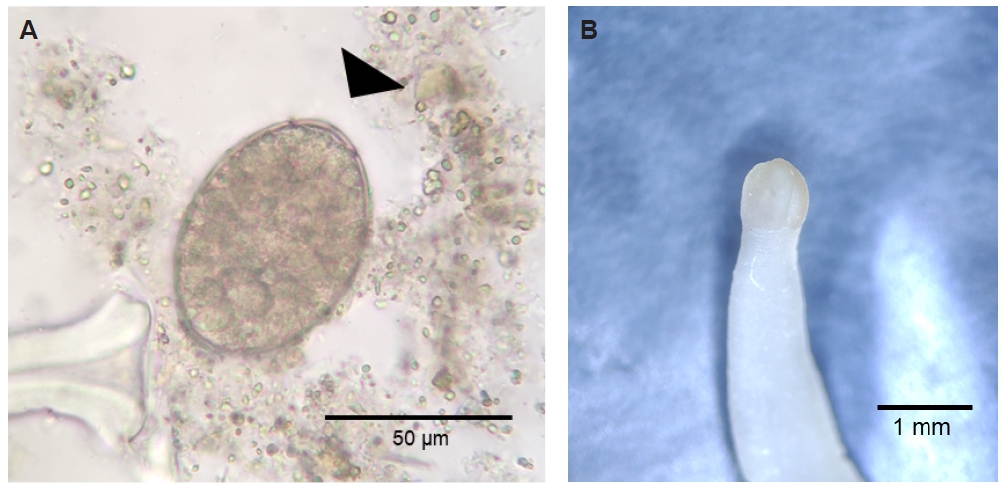
Stool samples were collected over 3 consecutive days. Microscopic examination of stool samples revealed numerous oval eggs measuring 64.2 (±2.2) × 47.5 (±1.0) μm (
n=12). The eggs had a thin, smooth shell and contained granular internal contents. An operculum was observed at one pole, and the overall morphology was consistent with that of diphyllobothriid eggs (
Fig. 2A). The patient was orally administered a single dose of praziquantel (10 mg/kg). Magnesium citrate was administered before and after praziquantel treatment, and stool samples were collected from the patient. After treatment, a single tapeworm measuring approximately 1.7 m in length was expelled in the stool. The tapeworm had a relatively small scolex with 2 small sucking grooves (
Fig. 2B), suggesting an immature adult specimen. The patient had no recurrence of symptoms or passage of proglottids during follow-up.
DNA was extracted from 20 mg of feces and expelled worm using the QIAamp DNA Mini Kit (Qiagen) according to the manufacturer’s instructions. PCR was performed in a 10-μl reaction volume using Tks Gflex DNA polymerase (Takara) according to the manufacturer's protocol, with 1 μM of each primer, 16S-F (5’-GTGYDAAGGTAGSATAAT-3’) and 16S-R (5’-CCGGTYTYAACTCARCTCAT-3’) [
10], and 0.5 μM COX1-F (5’-TTGATCGTAAATTTGGTTC-3’) and COX1-R (5’-AAAGAACCTATTGAACAAAG-3’) [
11]. The thermal cycling conditions were set as follows: 35 cycles of 98°C for 10 sec, 55°C (16S) and 52°C (COX1) for 15 sec, 68°C for 30 sec. PCR-positive samples were purified using the NucleoSpin Gel and PCR Clean-up kit (Macherey-Nagel) according to the manufacturer’s protocol. The purified PCR amplicons were subjected to Sanger sequencing. Sequencing reactions were performed by the institutional service using BigDye Terminator v3.1 (Thermo Fisher Scientific) on an Applied Biosystems 3500xL Genetic Analyzer (Thermo Fisher Scientific). The obtained sequence showed 100% identity with
Dibothriocephalus (formerly
Diphyllobothrium) sp. in a BLAST search (
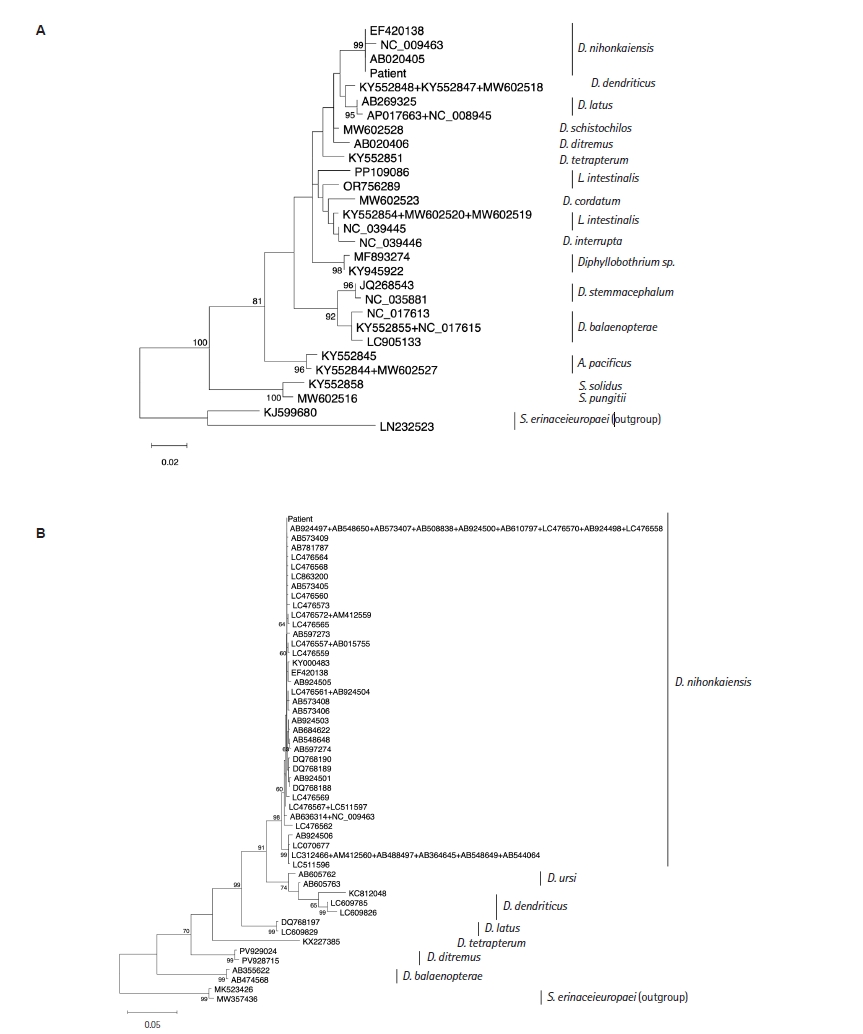
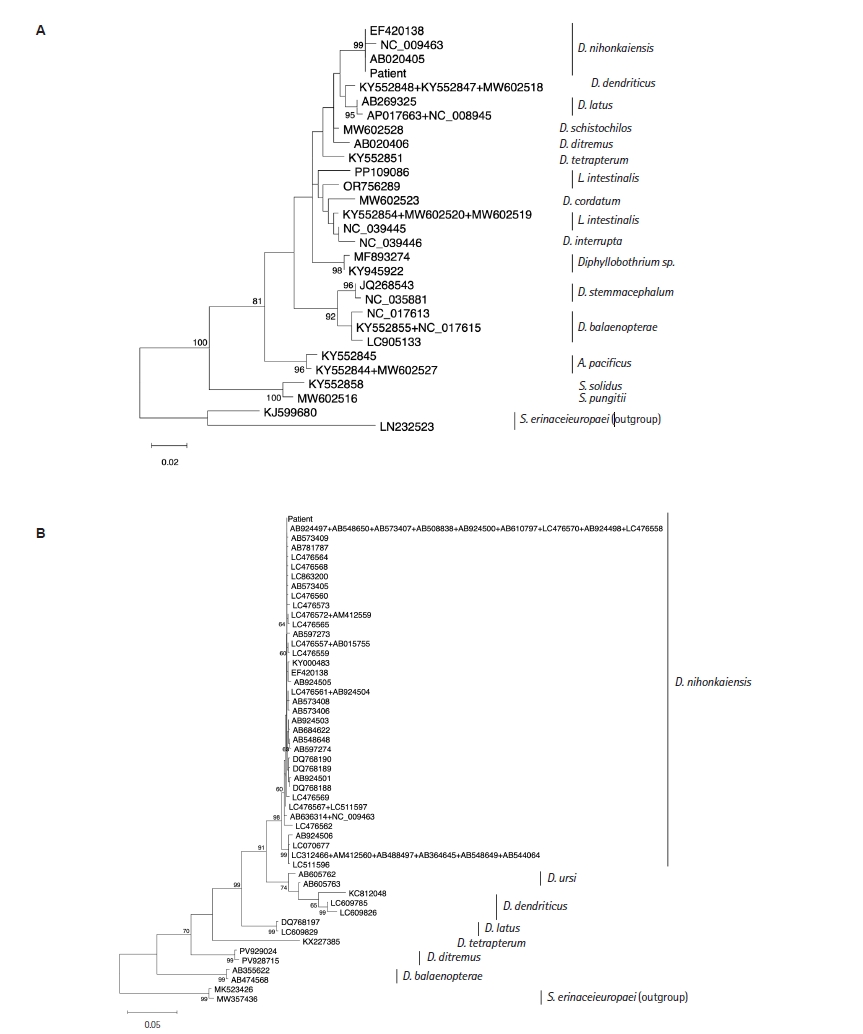
https://blast.ncbi.nlm.nih.gov/Blast.cgi). Together with the morphology of the eggs, diphyllobothriasis was diagnosed. Molecular analysis confirmed that the DNA sequences obtained from the eggs and the expelled worm were identical. Phylogenetic trees were constructed using MEGA version 12 [
12] with the maximum likelihood method based on the Tamura-Nei model and 1,000 bootstrap replicates. The sequences clustered within the same clade as
D. nihonkaiensis in both the mitochondrial 16S rRNA (
Fig. 3A) and
cox1 regions (
Fig. 3B). The 16S rRNA and
cox1 sequences obtained from this patient were deposited in GenBank under accession numbers LC920160 and LC921641, respectively.
Discussion
D. nihonkaiensis infection is associated with the consumption of raw or undercooked Pacific salmon and trout, and the number of reported cases has increased globally over the past few decades, reflecting increased global distribution and consumption of raw salmon [
13].
D. nihonkaiensis infections have been reported throughout Japan; however, cases are more frequently observed in large urban centers [
2]. Thus, this infection is not considered common in rural municipalities such as Suzu City, and in fact no cases of
D. nihonkaiensis infection have been recorded at our hospital in the past decade. Following the 2024 Noto Peninsula earthquake, Suzu City experienced a substantial influx of workers and support personnel from various regions who were involved in demolition and reconstruction activities [
14]. These workers either domestic or foreign may have different epidemiological backgrounds, highlighting the potential for variations in infectious disease risks among individuals entering disaster-affected areas [
15]. In the present case, the patient consumed raw salmon purchased outside the disaster area. This scenario suggests that, in disaster affected regions with a transient and heterogeneous population, clinicians should remain aware of parasitic infections whose exposure may occur both inside and outside the local community.
In terms of species identification, distinguishing
D. nihonkaiensis from
D. latus based on morphology alone is challenging [
4]. As a screening for genetic testing for cestode eggs, we investigated targeting 16S rRNA gene using PCR with universal primers [
10]. Based on in silico analysis using the MIDORI2 database [
16], these primers cover 91% of cestodes including human-infecting
Dibothriocephalus spp.,
Spirometra spp. and
Taenia spp., and 88% of trematodes including
Schistosoma spp.,
Paragonimus spp. and
Fasciola spp., suggesting their usefulness for screening for parasitic Platyhelminthes. This approach (
Fig. 1C) can help detect uncommon parasitic infection even without expert parasitologists. In the present study, the detected sequence clustered in the same clade as
D. nihonkaiensis (
Fig. 3A). However, for more accurate molecular identification, the availability of reference sequences of genetic markers in public databases should be taken into account [
17]. Indeed, owing to the limited availability of reference sequences for the 16S rRNA gene, an additional phylogenetic analysis may be necessary. Previous molecular studies demonstrated that
cox1 is commonly used for the genetic characterization of
Dibothriocephalus spp. [
11]. Accordingly, we analyzed the
cox1 sequence of DNA obtained from an excreted proglottid. In this analysis, the sequence likewise clustered within the same clade as
D. nihonkaiensis (
Fig. 3B).
After the treatment of
D. nihonkaiensis infection with praziquantel, the scolex needs to be confirmed to prevent recurrence [
18]. In this case, expulsion of the worm with the scolex was confirmed following praziquantel administration. No further passage of tapeworm segments has been observed to date. To prevent diphyllobothriasis, fish should be heated, or frozen at -35°C for 15 h or -20°C for 7 days [
2,
19].
In the present case, we diagnosed Dibothriocephalus nihonkaiensis infection in a short-term worker deployed to a disaster-affected area by combining morphological examination with sequencing of 2 genetic markers. This case highlights that integrating morphological and molecular approaches enables accurate species identification and supports appropriate clinical management, particularly when epidemiological information is limited or the place of diagnosis may differ from the place of infection.
Notes
-
Author contributions
Conceptualization: Kawabata K. Data curation: Kawabata K, Mochizuki K, Murakami M. Formal analysis: Kawabata K, Mochizuki K, Murakami M. Investigation: Kawabata K, Shimosaki R, Ikku R, Saito H, Mizuhara K, Dejima A, Mochizuki K. Supervision: Kawabata K. Writing – original draft: Kawabata K. Writing – review & editing: Kawabata K, Shimosaki R, Ikku R, Saito H, Mizuhara K, Dejima A, Mochizuki K, Murakami M.
-
Conflict of interest
The authors have no conflicts of interest to declare.
-
Acknowledgments
We thank Ms. Kita for technical assistance with DNA sequencing.
Fig. 1.(A) The scene of post-earthquake destruction by the 2024 Noto Peninsula earthquake in Suzu City, Ishikawa Prefecture, Japan. (B) The map showing the occurring spot of present case, Suzu City in Ishikawa Prefecture, and the areas of central to northern part of Japan, which were more frequently reported the cases of diphyllobothriasis. Black circle and arrow indicating patient travel history; a red cross indicating the epicenter of the 2024 Noto Peninsula earthquake. (C) The flowchart of the clinical course from the symptom onset to the diagnosis and treatment.
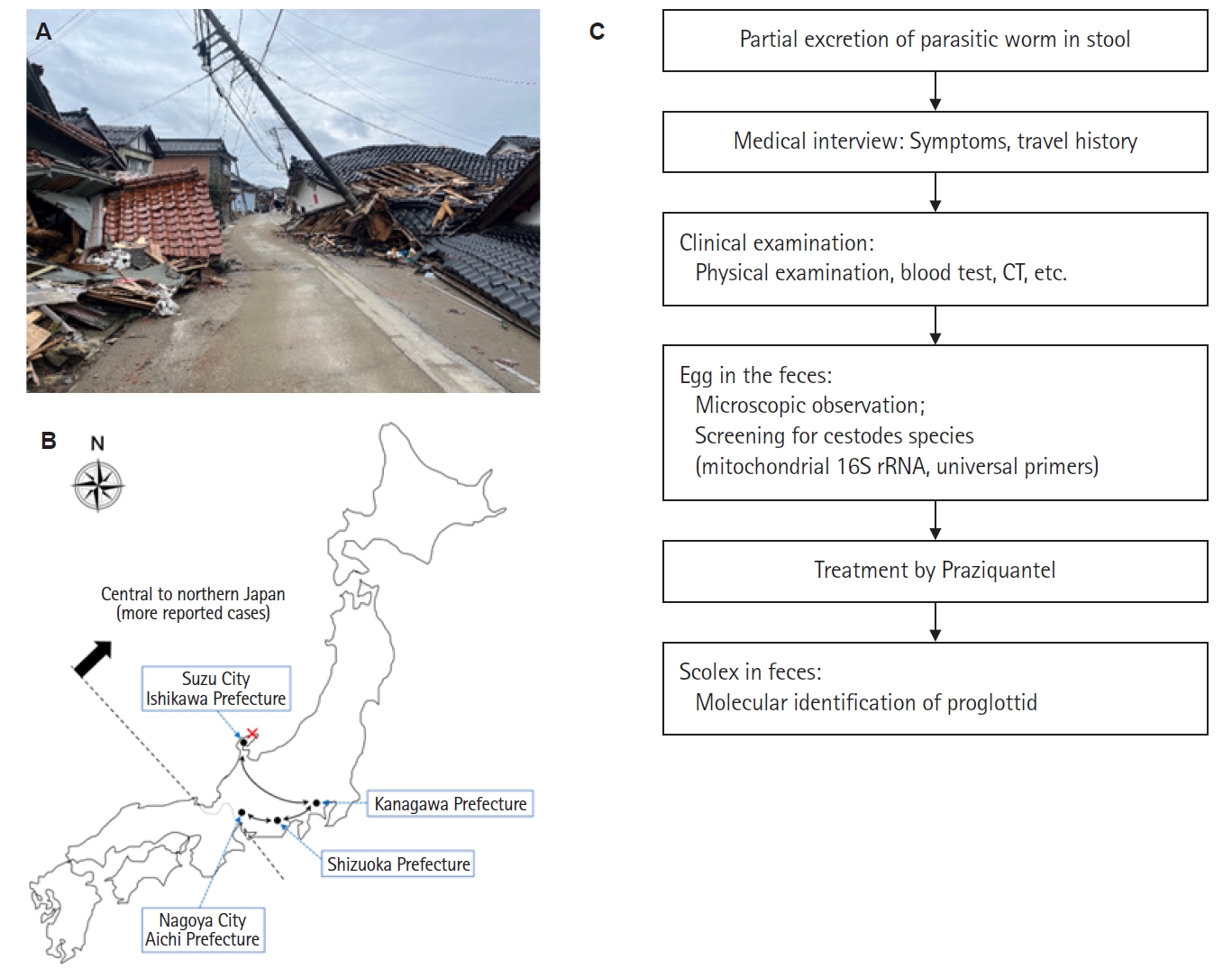
Fig. 2.(A) An unstained wet mount preparation of an egg of Dibothriocephalus nihonkaiensis detected in the fecal sample of the patient. The black arrowhead indicates the operculum of the egg. (B) The scolex part of worm expelled in diarrheic stools after the praziquantel treatment. Informed consent for publication of this case report and accompanying images was obtained from the patient.
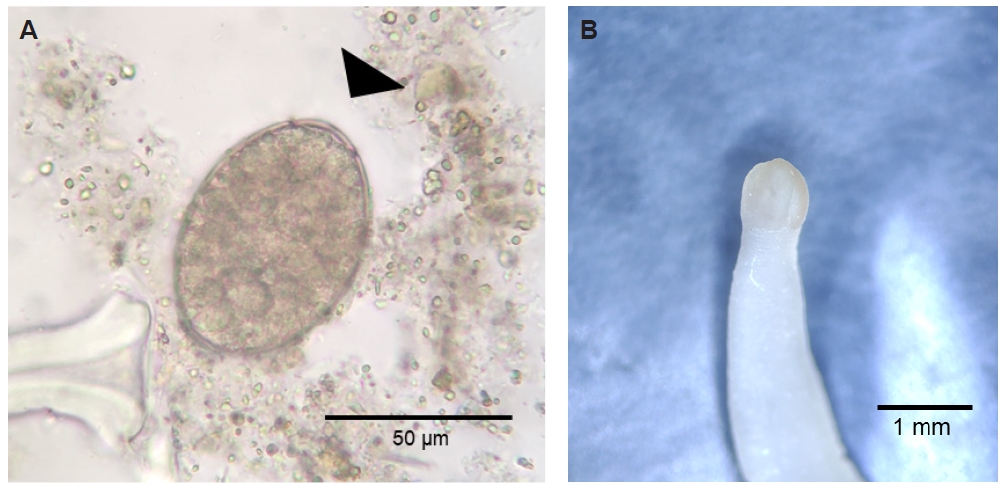
Fig. 3.Phylogenetic analysis of mitochondrial 16S rRNA and cox1 gene using maximum-likelihood methods. In the analysis of (A) mitochondrial 16S rRNA and (B) cox1, Spirometra erinaceieuropaei included as an outgroup. Bootstrap values ≥60% shown.
References
- 1. Scholz T, Garcia HH, Kuchta R, Wicht B. Update on the human broad tapeworm (genus diphyllobothrium), including clinical relevance. Clin Microbiol Rev 2009;22:146-60. https://doi.org/10.1128/CMR.00033-08
- 2. Ikuno H, Akao S, Yamasaki H. Epidemiology of Diphyllobothrium nihonkaiense Diphyllobothriasis, Japan, 2001-2016. Emerg Infect Dis 2018;24:1428-34. https://doi.org/10.3201/eid2408.171454
- 3. Tsang HF, Leung SWM, Hung TN, et al. Molecular identification of Dibothriocephalus nihonkaiense infection using nanopore sequencing: a case report and literature review. Diagnostics (Basel) 2024;14:2871. https://doi.org/10.3390/diagnostics14242871
- 4. Park SH, Eom KS, Park MS, et al. A case of Diphyllobothrium nihonkaiense infection as confirmed by mitochondrial COX1 gene sequence analysis. Korean J Parasitol 2013;51:471-3. https://doi.org/10.3347/kjp.2013.51.4.471
- 5. Fang FC, Billman ZP, Wallis CK, et al. Human Diphyllobothrium nihonkaiense infection in Washington State. J Clin Microbiol 2015;53:1355-7. https://doi.org/10.1128/JCM.00065-15
- 6. Autier B, Belaz S, Degeilh B, Gangneux JP, Robert-Gangneux F. Dibothriocephalus nihonkaiensis: an emerging foodborne parasite in Brittany (France)? Parasit Vectors 2019;12:267. https://doi.org/10.1186/s13071-019-3516-6
- 7. Yamasaki H, Morishima Y, Sugiyama H. Current status of cestodioses in Japan. Infect Agents Surveill Rep 2017;38:74-6.
- 8. Yamane Y, Kamo H, Bylund G, Wikgren BJP. Diphyllobothrium nihonkaiense sp. nov. (Cestoda: Diphyllobothriidae): revised identification of Japanese broad tapeworm. Shimane J Med Sci 1986;10:29-48.
- 9. Fire and Disaster Management Agency. The responses to the 2024 Noto Peninsula earthquake [Internet]. 2025 [cited 2026 Jul 1]. Available from: https://www.fdma.go.jp/publication/hakusho/r6/report1/67963.html
- 10. Chan AHE, Saralamba N, Saralamba S, Ruangsittichai J, Thaenkham U. The potential use of mitochondrial ribosomal genes (12S and 16S) in DNA barcoding and phylogenetic analysis of trematodes. BMC Genomics 2022;23:104. https://doi.org/10.1186/s12864-022-08302-4
- 11. Arizono N, Shedko M, Yamada M, et al. Mitochondrial DNA divergence in populations of the tapeworm Diphyllobothrium nihonkaiense and its phylogenetic relationship with Diphyllobothrium klebanovskii. Parasitol Int 2009;58:22-8. https://doi.org/10.1016/j.parint.2008.09.001
- 12. Kumar S, Stecher G, Suleski M, et al. MEGA12: Molecular Evolutionary Genetic Analysis version 12 for adaptive and green computing. Mol Biol Evol 2024;41:msae263. https://doi.org/10.1093/molbev/msae263
- 13. Shimizu H, Kawakatsu H, Shimizu T, et al. Diphyllobothriasis nihonkaiense: possibly acquired in Switzerland from imported Pacific salmon. Intern Med 2008;47:1359-62. https://doi.org/10.2169/internalmedicine.47.1026
- 14. Ishikawa Prefecture. Noto earthquake summary of the press conference [Internet]. 2024 [cited 2026 Jul 1]. Available from: https://www.pref.ishikawa.lg.jp/chiji/kisya/r6_2_1/1.html#
- 15. Mavrouli M, Mavroulis S, Lekkas E, Tsakris A. The impact of earthquakes on public health: a narrative review of infectious diseases in the post-disaster period aiming to disaster risk reduction. Microorganisms 2023;11:419. https://doi.org/10.3390/microorganisms11020419
- 16. Leray M, Knowlton N, Machida RJ. MIDORI2: a collection of quality controlled, preformatted, and regularly updated reference databases for taxonomic assignment of eukaryotic mitochondrial sequences. Environmental DNA 2022;4:894-907. https://doi.org/10.1002/edn3.303
- 17. Miller ML, Rota C, Welsh A. Transforming gastrointestinal helminth parasite identification in vertebrate hosts with metabarcoding: a systematic review. Parasit Vectors 2024;17:311. https://doi.org/10.1186/s13071-024-06388-1
- 18. Miyazaki Y, Ueno A, Adachi T. Dibothriocephalus nihonkaiensis in a regular sushi consumer. Am J Trop Med Hyg 2026;114:401-2. https://doi.org/10.4269/ajtmh.25-0529
- 19. U.S. Food and Drug Administration. Food Code 2022 [Internet]. 2022 [cited 2026 Jul 1]. Available from: https://www.fda.gov/food/fda-food-code/food-code-2022
Citations
Citations to this article as recorded by



 , Rin Shimosaki1