Skip to main navigation Skip to main content
  • KSPTM
  • E-Submission

PHD : Parasites, Hosts and Diseases

OPEN ACCESS
ABOUT
BROWSE ARTICLES
FOR CONTRIBUTORS

Articles

Original Article

Identification of a Novel Microtubule-Binding Protein in Giardia lamblia

The Korean Journal of Parasitology 2016;54(4):461-469.
Published online: August 31, 2016

Department of Environmental Medical Biology and Institute of Tropical Medicine, Brain Korea 21 PLUS Project for Medical Science, Yonsei University College of Medicine, Seoul 03722, KoreaJFIFddDuckydqhttp://ns.adobe.com/xap/1.0/ Adobed     ! 1AQa"q 2#w8B36v7XRr$9bCt%u&Ws'(xy4T5fH  !1AQaq"2B Rbr#u67Ѳ3sTt5v8Sc$4ĂCÔ%UӅFV ?_Aנj- H>>,m*>fzp"TrKkr^r.|_&]|*vPuܶvoQ1mwVJUhu-I"=LniAƕ8"۲ k*ҿ[yu:.vUQ+)%F DHyVBk>Hy8jݹ q~9D4KRmzQ)^ʔ.J%k_tVi5NTjg!'ky|5asOȻ)R۸ߩFMԿ3L4j6dڜ#NIwUF]JqB/(FafJRzq3\G՛ ?~\ 6)6W4m[O^L0E&rRMض*C .]Unl-1 1r#Rj/&QɈ׉˩s6Rj=5Tg.y.·Pӡ:JJS:C8-2u]d&vUz;7p9 5VnL֢"y)">iי(IDDd| Yj0; LRfS:ktYK%*N2^m|&dğth":ey)uPQZW)gcC3Pv&MMWd&Ŵ۲mvTRoժM03*F3Yd6\8,\hݻ kߔi<k NTwSԪmljj[>->ptU%'LR>&EBH$MQAUx[$Z6vi&_a.KIQ{hyƒ j"JOC9eFҝfj;˚Ω<[3_m% lQ@4g=5$(J]Yc-OMq<Ǎ wSzڗ)k$7VIP붾ͯnV+卵*t]iЎD31~SA1éC2u)ʼnQn-Uoi3:grI8ؓWm*G zܕ)ZקJ}Y YlGeJ6cB2I NS3Q>k=KTBT]W6+SOXQgGR? telˊ%-Re\hѯ2TF"C/OJΩ6r[N.0{SpljjX1“jOsӥ;ҭhe}xu`Ք&.)yO̒ Fߑ.$Qw;9Iw2o+RVJMSOj[SoҌZ%;`d$blQ{Ro{Imڌ>3egf\O֝Uzx"䢸g+mv%Gʆ:|V[N'&ס-ޝ'kfE|K,G&˳98Juin/\\Qݿ̋v~Ǩ!rtWU d|E߫R4d}.qPw*Ӭv5YEcn~f5c%MTMkb-F>5JT,})QHg%{("ӔȸWMsYyWNRrkkJr0XドnͫT}r-jj,Ŕʍ\Q2Ri>v$5!]"JB2WɅ)]VԜUc8i|.jeRO6^V.¸ Q&#|ܶ-*uOG%JAtRZRr]FFG\۩w+?'zչSѧt jz>KW&ot{7P&2D;&\\>Q2JzܗAKSfeNn[jRrԕf6,q,F1tRfԗ>vֶևj-&R'Zi2=xv~Elbsvm8=ӛ"ū񕜈BȩlWau[]ٷBߨF~J!|Ipr3R̴#Yp)={7:G{+:\W}n|Q#%)7^-h"Ƒq:M*%J&$T軨I333׎g_- ucBwwjp[6i25$̏bU’ٱRv?G\~#Iͪb7<<}Ezt" q_Inw,7-d,G÷%T* Wg1"䥱kq/A.,_KhqŒxwvo u2ۥۧ.bQ}XκA$֣ +K״ZUNmڸII{.v{5z5ѮRme[moyƾd~cRݾK'j.\i&/S6f|b=5: p!6i_ 4j6=.si˧eƾtS^c.Y^RJVS-Vi3,esi08?H$GvZgg?gi䤟2adw릿:"۪lkSN>q-4kI܋ێe̊qۅgDoѨ9; #T.Q;7#~_Ufstb_'w~Xw1Xk,vcOt._}v}8"(4Z\ۘgk?J?bm_c!g{HZV]Fkk%~gEt)b秴vΰB|꽸}mp~E6ݹv;7P٤v+ri*3Ԣ|'O14_~7nP{7ZU\Vű[ +7󖱅o#:ǥŬ\|3r%TJX]V7ez¨Y]lc|O3V! R zbJ'PnGqVJ"19WVeOF埜EaEJωqCN5Z g-9[S<$sUK5b|7sn\7x qmv##FF\ w[=-43$^ooVSiXօv7iB۴yg>]Vf"r$J3""32!Zh[K%7GvNLs+4nB/B{vlsobJaҺJR:0g%&zR\ S3T[&ִor*ⷳc3ʊO[iozW٨%$gn:ܶWwFBԹjHP&z u&F2\f;ipW73 [; '_̽b;vib!oec dC-tS__$Xs]l9&z$2/N>%'[}b{h/{`{Ji׉׏ YJB/X%}.|+{(S:qz]4_Kѵo`^tY_4S#* ^zvݾMr+TrkQ g.8Ͽ^i>ӈǙvix>$o( ^qt*&t1oJVu-ql5U6jCЉmĻ*"?JT=K'O/|=Vo}l0b}}f?X[?/\JSBe,kP8ETJ==?.p5ފgbU9}ǶdNKk—_$8̸͓ۍ8Di\BԿ-1v{FF]|.^ۅ{vl12׏z7-R7wE?\nh\jN/Kձr_oBw"N QMBZqe-m:ӨSn6j4%!hQ;sv'm4kcM=!8\m[M4{SMliۇ%eֽR&N:{2A8)THLK3Zj[jPBx#BگMf:G1\`edcʮ?|w(-̮vXt,bW2;.ιNHRR#YwTM"<;mk\.foIDjmlJ;vxy7o7i\,KQŊ9d^Mmgc L*.T6tLeIuOH3SJQ3=F/ʿ<9\JM6mN6=<{xkP!F1QR[I$6ُimXu2An2yԒMU q f[IB-'䤯jYm52&JG\zд\~vdg QtHGXw&1Lw+nDEdC1w|YJmvP)HZ>i0BPβә?R:QO["]I_Jʏۍ>QKyu^bycBq4lXF~l [\*N>-J6,Gq(Zr5h]CwYӤU~ʶߑ u*SIv%ZfJ7)! FS*s_\|IŸZ)J ]ܜi4"z[+Z,MOZ))}|Ʀ(RUNIII.S'ˍO~˨rn}M)xxӕ0 eyҵ7YMAB]ӣU:/ѭ*6bcwP͵ "+qēVjŹO|GtY4V j[mLV M -m>",B$ GD1~j6O4|LxnNmqATNR3ε|DŽa[fmn-ڭ+FiK7Pcm;r5 l8r{#-]'nrFh2ruycb;pW=njRqRJ(d mnpckNnʹ+6]tz~E=ʕ l ZZ5jSi3#47.Lcfe`9؏v囜.F\-UZ:*0_<Νu9Lӵm&)_3\^ҹ3"1n1v_|uRʞͫr'iȧN_kH׺8xXrj=\МH)V\ˬ.Xʸ oVRC}ySU9/OBY먌5 ٿwޞ)rw8Ӫi5*5ZΗcGƱ !ZۄlmpjJ -l <R̵/JAպZuq\IdUS 48wXJJtcg4cI~aqߓwŷrm-v)G7yS^7H^-\mŌAq|"m9IBnF㏉9[N+mmy/!KKۉ%n +BdddfFF6FQRN-U5;Sv'm4kcM=Mn)\qιqUd9F%",6MGdT%-+~ f%+y֛^3SrF>6lc(֪vۊN;g._0Sѧ]ETWرkQKzGe9ʨsKA"yC y2\[5 rԭ7Gk5Mzw_4sM3hxЊ'oÍ5jsub )ͪ~tR2H]R͍>̋m6=%(˿(Wrr-܅y5(ܔJ޺YunW̹븹NsqK ]/QR#"ZMDfD|43Qw|._ԡSqTZBg??O Ϥ)/E_U|i}2 9Z?¹0:x'3,whǣ?C y-A~=daJј&M?D1_PS+Oi&;a @;Dž7[ zZC"bv:jjMQk$M RԸ3uA\=wI.AwC"^.{?-\NSiˏ"b}T/}q/ o.1M}R%:-ZniʒL$SgrBW*,Mw'N\ɇ{s\j]VryG'8f`}'N<*/`U숻z CwHq18J+vԕKss4R53/&XTt1bZƟo\=%nO)h$rBi-nKĪ^ ջڜlwkYm[̑+/QrZo%TQ;TLs($2C:s.%+eoNttq۰kK7O0m_t_pZ1SsSM7"mevFZ[w -FJ*T*jФQRg BSu|]g:ɵzjqwmltL.e3sRMچkSmjkmWœިm++¦'tILk*բQ D,PB\lI[9{%Gb R6öۍmX-MaʉA931cs..G4CujQտ[9 }G-xwl)IQz j Ó"rqe&=]꾧֎c)<kӳ+0JrRR3'TnXi^xMF Bު*tIL.[h"2"nKzZe'ZV/RrNYz]8죝n]Ķܩ>^Ժ]u-7^\mZjܣ9+Rmn ߑv?oꋘ?&ƪy^N4o=3-ؔ̿*`}V݁ ƒPu8%$ ݗ]wt;\y\>='OjPIp/nJU8{϶FNMsf"ίNqƹ(+ ݮF2Km |jܴZs%zf*eȫ?]4)I۵nR&FX + [jDh(#哑9q9Eծj8noǕZf\J-l&Z˫}`ӎhyrΉn\űn]9pʌӣ"׮Wt?N4_I_~54#/my1Xr*척aS#DT >q ssΛW;3oUaJSRMDgQnt:Ql,/ ܷfRqiM Ȼ>Cob;A>ڦWقM9X~/!'MW.}Vrߔꔵ!5|iB(0-zF=}okڢE$^wW~nokY߮\6՜̌{i-AF*9)\t9IV6۸5ZUF6R$ŨQIq砳YUZ]eyv >hI櫥N )&l JulwE1GDOuFN2| }馥uC1rޫV+^gdb&W[4<^e4YW,d|htͮsUM)۸8:{3d{AѢ)~ \#J=NdƮꮓ90 |1K$v*?мS ]i$J,C,SG?/_՜pMSƯM|mG1V1$~K>CSvkuj=&) -,yLjuFHK{c駗.SOua;BrSqj-ۍZ#'Jys7[g2z/.u4+XV2VQ.ޕ)$"(%)#Z7suZ%j }BǬݕe)Jvz8zJf:hIN|svO1O#IEcۍjݽ:SdὮvu^@:o^5cs>i/VqmVm]ؔܢn6'vޑ̗J4Wn@OlKbX ;n:hgJ9ŻyǑz8f܌q&Y fN0N;[69 rbׅC2/#kE l&2~èMR.*%g=Ft.%؝e8<.e=Uv{~㻏"EˑnvDѭ͜Lu3u0:U֝$[M5<:oi+V4V9 6nXvx&_ q Qqw3W:uϔ2yb/(ɳ|5zQiJ#r|Hw#.W?4aDŲ\ugWG;Cw鐢K|xg)##=O.dF˟jMUvWĻsr.z]kPc9"]R)mkfOd*uYf١RsB Aîh=k]ʳUrrZsq`d#r$/Ը3o^&lRWȍyuW̦Y4QDUMJ65ƒ[+ygk XK_±k#y:8(TJOSQhJt2.DR}"5[) r)6V6u5k:eXZmv𭤔!푊Q[qQ}ҹLE- 8qIZG|UM4j}Mܕ[Vwm{} Naqµ"ԈM zOpKѰ?IAD3Ir0'/q1itoB5{%wkOBn-ۜduqIzYK60{+DʕܞqIt";r1mG/\/ym[6JƫR \L=S=OT@Ix[TMm{>ݾտ֒ݸӉLYIx>+"JVNzx||5rI?C{oz8۹e\R-^\A2F R+N9 vlT]"ۭ d)t֞i #E2jB@׵=#/N+!ĕhx}I!cM`ąZ*ŻɄҒ߮Y.Z}='/oۙ3IpW̮hT7cTSuz9>B}΄&h!>lӵn~j˅IvU.'v'CSZw8QK3G> ,J59ٷ+HSg䧎hJdzvwv-cvxS5[̊n~ؿ%ַX?O0\6ne 6kn9.ϯ} *h 8_QhLݣ7q +=XBҲ5?[[)+F`=4 }B,sNg==u*Nj9k_GJ)+R~GSPBȒZ:(K]heL=vKPӢwq(NrG^ثϣ?#tC?.ͼ[ۅo؞y#%ǛjVyLSw%T*s92JTM%"YkQО.q)gCͲn8cgi6j1MѾ[{9h^vƘǚםidfi.^RHmg&rׇz:}݃}xT$ضk'5s-狶,\vpbPD،=Okf.c#cdz2FK5T!&)|ntD<+OŹU i-G[EE*FDfeaf2QƤM\UG_{ǹm%\yrGy:.\4wjPGUJޕUV7Do\7Vy_13w;[?c]H\$IJ,*L]3b%L{y.JRKG2sq,B6T}(#nW|km+q5] r㪍bJ@y{byz,b踊3ϻJ,'^xd،)JVw#.Vټc''ÝպWtbRؒJz۠8!o9IۄS95E9ؔ-e9JR{dmnッ<[~n${~Њ$W?&ՐY_? #a.ߑv?oꋘ?&ơ|y^N4o=3t=~7!/M3>n8W홎2M`Qx+ z qy8%]7_~540ۦ彷]Wq CѡwkďyF5Dum_}~P(5.(X,K9vᯐ?leB9;Jhm#3{CxGE-S{;@Fz˙]=O'!ɿ]' r`:7'2bЖ>Iy,/eTy/V<.H?UYY{\^#ѣr9^7?xoRȆ7EoS_&??zϾM?(~Q-K&>"~aߨ t7Emsϛ+?;fCr)fY+>z$tIkjn_>vnrֳki-˹l= t;'EyC¥|/BLwBJdgjۛ$s S1|ɍV%JI6KvəhzIlBYɒ|0"Sy0F>eo5W)O+X˻u';v)2vVq۳kۮws?UʑBǴYO漪e2MIjPAک\b1)DDؚKm6ZWΨgȕ۶yjڳ 2ضN[C[|r@9Jfo<_eI7q.|cÊV߷:i.:$ȋ)1%%)ADZCEBxJ0MJۥy(bNsKM9k43IwNt.\%N簤I'.j|ƃ2$grBEٌ\}9:v*!n7M(ɽ]7c@XxƱԨ37īf62cTTfFK]9wntQHͮvٱI/f|j=7}\_V5U^+:uljSȃY(XI.ȱmo1甅jڎIZ2>#\*:gY|4k\8ZwSqtyA!+];бޞKծË¥e)#5ap.QK^8VdU{*ѽL\=qmjnB5>{ Ӟ`v±5 ^k&O~Oshɷ,;6nOW>u6{RqS`)S%jp\ipdEBLfTWy$GIYw~䲭J.1vSY5z.V>^+Ǎvc.I[R{QsNR3ӎfhd>y?UJ*}~[e\i5U^͛E]G_FS(Iɿ]i8:4zj~շsW,ˆsy:%O}iur]iF5~3M:Ӟ#N06)4ߧgdawIotiz:1r5YDZLHBSi;NQc44la=Y kQIT*ըl:tq2(է9VO4뒳܂~2rq'nrVZŦ[t7\oլfb/mlpc.I8콚q^1iE~䰳mi[dۧw֤ICfdFeCsg:i| 6擣׋* 96lust^{%99UNRvaMܽo ammi$em4D6DD\nA%$$#}۷/ݕr99JMն[oT޲E"KTaP+HGkŴj5TM5xƱOS-k`ۛkٝWz;{kS}F;~q|~^_|euwnE'pSupUP)V]vE+t =ZRaVdG6= *.ϼnj9:UɷbېmF_tޫgHjVS'śǕًdkkѻ_]Kv?nT>)^e=Ar1'3ԔILyD?:-^in):{7.؂\.:V }#뺾.3r̸*xbFM aȵz 6SQ:ײj[ 8nn iFMw rR"5M5I旘35f^j='j:nNW.ʭocZvZKV^ɚJ.cM1ZI7E'6rg탸5oZ=[m Z`\hbMUR١Ȗĉ):Jin!_7Dй+f̷eKҷvͨBPR(V`y6tw*MRΝcB.ڭTnc;P$8nFvm4(D(R#R-L -2:FP lxZKQc6I("Km%$E, 78uXIFA$RQI$JbInG]c[ֹ:ZM+n^')JmJMJRu{e)7jQDw~%yQl}BZujSSf۩QZ+Dzhd5o%BIc'GZ?}΍:>Ɵivז-%݌J5MqGWTVʦh݇ܟ~Օ_6 n'{3~mϬj'J11OȻn߃r Qr\3y٘+WӍ'WxEs^O3 o~[|7>]]H9݇ZomT@]?5B:Z߂'`V_+/MSKX߆ޠk3?o7y:4R/7þ] iG߬aBRU&?r&/} cQߥGj2?C5Yśe7hU=?+ x龳f-܈czW^7p%-(\D4h{UK&ӡn^m]Fݢ:`δvj俜F+) y[{{ 7 tu>gvrěOj'5 iRg[ͶFjGe n~qT$ci ۚ0oԹc*jL[sVWqj\ݻ&6"WoK:cnWmrv)o>66(F>=W^bf#c zzʞtپy%mՉPël e}J.\Zk4ttt>oEM=q)hJjI=ͥ(%]脼_88ф;͛gWG;Cw~˘$4=uWdĜTثNDkiQL9U*O"4XP`02,Ge-k5$h>ܼ]3vr6!9RQPIVSnM(ۓ{>;/Qͱv{3&-[rc)ܚI$n{Sv3[j00)-D3z}MRzVQпj,T[uVs0\}Sid;r(ݝJ>æʺL&c[jPK0~d(FKÝW\m]GTcF|Iׁ)I3~#oX%vҦEݑؼ5Żv2qAZTE^..M{ʐfȏ2##.R}*KʛZz^ӞN*lPťLf\G6[WVQquV]XAi)5J!,$iJ6o$tPZc;Kjx_n3`qIelV~vLy{fn匋Ѿn%;zV.n'-ұdd2߽1bZksPe3TI9)$ԩIN9Vơ\=2885N\ p)/a柛w9g_lױo8ݷ iixJV& ғRi{N^_oAŮE6Y7I$Nk$|Q)-*4Z)^¸%4Qm [I%.c-OV+C֧R#%ѨCe3i;w$G+_dy| Fzj$DI(=OA gj%v/]8qԯNIS*֩',Q%\44ZZ%D|Ǧʴ6&vֵI$%8(ԬƾS&#Z. }6z?b/|Jl{ץv&mpx4Z$”ڝ4-H%dGKfM:sKSRWeJAn]>s6应-W9'H]'uȫYvgK^\czp|My\鏩w/ËQ.)]\QiS`8uL뚛̸=J"ܻi\å'-)54Ue]:K\퓡vK xwBqrH\*֕TnzC.mT=t-H]SČ~Nu╏NÅ3f|͡G~B+Xm[Q7U{9"~jgK Zoʰ7"qJ,ekSeNGgϳ] ^.6:s}_,%eRg<5⿨z{ZPun#jRІ.6g T.!]xa c#jN$Zpl̋H WZu8WmMRýsĮ?Mco~sx TU҆Q :KDG4n42.<3/'^?6/ܠڒ^yrrÿr2\D}}B]^E~^T cɛ7϶Y[<֞[7d}2%QPqOLEQR\CIsj1?\}%tJ0e~ *sk"*)&ۓEi#{1J8Hrt|'ܝRr8)=ƔN'RVz:cf]F7bZyZUȘ4x8,#JG̒?.W9XnO]KO]%]ƻ O5Γ/3qÓj؍/r̺rƵ 5\&m6h.xoeX[=<3%< lZ"2h\Z[&jW3ejm?k&[]ųj+{N{66leu_+lj]q* 7g*knأYv= q ەdxЬZ|%GUrQ3jLŒqET]1% qkXYūYc[7Ś]QY\jko\</Lc7+'hMSUc6qXyؙ~6#ѯv.0$BQi5YyIhɍiy=KD!n3Vm[V%W-B%swa97ajۗ m+9~]fKq|Ddaˑ0A]_v޺mM5* F-BYHJ5}q>ʉ.6hyDmpD׬'-_v5;5[8K[viJ.3dR:oYHHh9I7:۽fi+wm^ [)odPѱ52CZUJicSw\&_s0uBȍh32džzQflcd^m|7GѹE!fO5]]H9݇ZomT@]?5B:Z߂'`V_+/MSKX߆ޠk3?o7y:4R/7þ] iG߬aBRU&?r&/} cQߥGj2?C5Yśe7hU=?+ x龳f-܈czW^7p%5|Y:SJE\U-(a_cƣUǽXXKiȞNlmۊڭڄR!**ܤMeȽ$|X5(Ź\rJ~ܮ]>'HB0cp XFr_c?f?7<ukSgov¥iG>>䙗i.+t+bOjIܶ . i^:nm}s}(3>NZ$2Qg([".>i.ƾ)B̋M8+"- >eE6DݥJnJˣt׻ 5.˅nJGwZD~!i۶a,Db3ZQ3O#KO5/֍ozuK'GbRi᝘NV_ҝcvם ZoX}F6z 7e5_e:ۓj=AB+iܔERadMBq*ԯ DwI/Gy*mĥiRKg6skY/#SN4e$-yXM YL?^ĸNNӪ{$r1JJRSLO]Aqm>V/s[~i/j+m>z}eI"Qvp]{ZԼ:{vPAG2=T͡@ڐ#u"E*>C;o$~C#_d/HBq^YRٽzIKbOm\~żjFFGdiQ(*/i*#.FF]©m=BmpQQQSP&Ҫ!T&^>:y)$ˑÐFčI Bӡ-t!bM WҦŶ'UZ=}zvn~oT/\ǒ'nr8 AJIӆz<^uߖ4eFC1i+v!3qNyߕni?4JZlmYFXFۼO0B\m[ tʄU3s"Sr(NJ;SKW72L4̏BVdf^Ҹj\]ȱ۪(ӷm?J-KEmWڽ^4<8qu%9pŹW~877ܾeVгS(յe^C]yX͹! םm4FGȋ\y'Z FX7e)|Gjt߹#gb\ŧq_([R8[qU$Z (ʻezV2V!iQ,i$JE˂٩ a(GK'O{vnBvryRd-RK4=qxZJMl_CuuIz @Rt㮽޳!|68\-l[џ84-2Pu" RJ_^OL>G1~XnBŬw6J0*Uvlږ1N G1q9IUm*'oWu][&UyYZbBZRZNfEJf"+2nF~Eû7n1xv.RUM$6 lAxSQJ&n5ܞwlEói"#>4׿Q.nEq7Oko[1wg8ZQwZYiqtm&~">Bo?w͡ni2峋NCEy Ҕ+%ZJ ʩq*fpˤl,~^Mχk1+:ݕ z&Y`KLӪУDr3[*Z :(SL&ݻ۬Vqsyԭs x|iI߽zZrg.:mp%6ԜvgmpIUt;QbS.Է) ǨKSV,*lڌ|5Jt3#NP.=+OZ~/G سIgbꥹJnl_DUM\iM!֔wVZuԺ,yV.Q>f v:݇WiaŸN5Ҕ[M7SsrvǣrMW= \8ZW-jsnڕ.ZnF2qt ً[ٻޘY۷Zm"Jxr&NAfA-݌to9s359݆mZ+N1-qS$D=17 x׵+%_ ve4ir6Z$FDڗnFtOr'7'{9C˨ꤡaYoace{Refnft RR"4%ʌm:Sj3)OdInTO>X'vxV#jܮw9Fog;5.~Y5\~18YQܹvj4+~t7S ﬕs %^۵ڴDZV69R^Y+rj$ԇoJKR5wB9C>Y:l+EǎS{ʲ{T6Wi* ^^9k/y/Cs\g*qڵgn4T8mERr|Ti+iPe;;.i\EBEJ 丬i9ɧM-ԼsGDrZ>r#R>~X9y4b棇9JwV۔%m(b[Tjvl}۩~nDԺ{Zo-YuK1vx.nWuO+jN [ٮ0%"΢CdTJK-RަH"$I(*ve &҉FzB,_Vpqp9m8werv')E;o&QE׵^d9˦j\_,ڵugZȻ̧8k+jK{wmr@3ӭ2 wFkzFVqs1؛.v'I%$[iT]D5Dl2 nk7qUxԫLS+sا3/ΖeZYK<["%-g/kRs:f3;*E ت wJ%)5&+&rw*霣i|sMҴ|;R+fm䡩.!**dӶ-6s6,]zAXMWjmnz%SJߴm2UXw7MQ%<!tKys#P,W>s;3IYwx<+i_\\\U6 u7P|xbn_k&ӓVOe䦒 VUr,-㘘"-LZeOSҠթrEvq8Kf%5%&K"#%vD/.ZYYŏ+p$nZkvއuW9㓱Z G wYIFyf)?ƎUm5ԉ/'k84{KO:rQI}XRuԪ|*lu)3qZ[mSm5R3".Xcَ5c®ࢫI*۳~wRϿQWޝ(EJrri&ۥ^ʶ齲Im|[yb;mnm֩uiܘq>E+Ikx߄3r33-5𹻖09ϖ9[Tz~mr5NsWl$oPusޛ^{Z;);sڹf\3oٹZmԉ/'k84{NO:rQIBø8Bݱ3n֤DiK4u& ofSȒܩx<˘|N0Fչ]qsp"}! QWw@t4ӭ+cO5%]'*{eM߲DRO1y*q8w++e!c߶ܪlZWّM欼 CQ̼빶lX{vib/V/ ai;x6~]+z]MWB>re-:lgk}պ!#9?%܋V-c[z!W?c7YNm/jRr[HOzԻefճ0q15Zp#rkQQ0tU-AmڵP/cȕ?0cZYj;:0ZM=D6g ?'UN+ձ[K ܖB2'xq9{|۫N0ku 7xaj;n\ 2[VznMlWiKbSk))f..)Km)&bGZ=>OR܍W:j'rM'wYz&/鶧{Sʵb"vջq[I-ՌZH._x*BagC'T(Q:$ͳQcMCKy?3g'ߝqnT);qs #ؤZ}OOI:cfnc8W~qy.;^pVl]Hԓ>^H^@7-AA܃nmL(uWܻS߿ Td95Bdh4t6*dDh!EhI[iŨ\L.&Nc ܮf^;$R)\rip9I|ٺ?#R.ZDZ;/]nݻqs\QE9M&Bd ]N mN*D>tgbK>+ˏ.!23]BȔR1ɝ^j'k2ƮqBQq[$di]icV/e`޵B.FIIJqbi>Ӥ|p; 6${)RU>_e}^dzdfzi %ekRVUS?6'hׂ)5.\+qUgzE2C˷ecŏ^֔ibk shesFWJ#~> Wk~ݨ}ڶ>ơǚ)׽ZƉo~B-ڼrvoE:Ʃ3ۣK7+Y`WirS):{>ڛ}:wԨ(J_";6R%[u&ƫdZ_\'np| RJwNeTW,=rrbnkڄ[M3ܴz)3- R.?:okۼ0TU'w{6&w7j1z3ON'fGoO?)S_bQ_¿R(^ԴԴG.EtMڇ&RUiW uQjU> Kiu1d<ѥIQ'RQ1:O/lŗᏩiʂv&Jc{D5 Tt)1.n[n۶X}RjqnOʽ(~[Ns{ސ⛌uO,kgo֢dRNQȄ .'6W!׌P朼tdZjFGE"]K@'i۪N;sI[{SOzk>`rRR+!σj8&TjlvA̷Q?HyjyLHNտJMjܶT۽lG?SnKN%<‘ nq[N0Sq[Ta(&t(|HGO~gvkݻTR4&Z$#ViOY1r$6YF?e4U/Mvxų:zbU^gQQ+NW_'4jfz^c'#`rvrڡ(IJ/J ݦ6 ]-CW |_{v*_q3^DZ}Ic6Uڌ8p7{crZq5ki`)mU6|-Z5^iEz3P=:Cu7DF'k%}<C-޹ֲ̱#\,(f88%X-N(ck0VLR~} G"-8ӏ/ϰKq?(#nrVTmZ;zióM4 m |UT'C^_1X.gXM{%ʤd 4\ovN":"y-,T)fLQgۢr=/CƹǨJVr[a+!rT|%Y\ٱzsS>jͱ.oOc6f$q% ǒGo;n[];ߎjrk{~\VۓNIGn:iqxo |~t5)Rxעri{Vi&NUOl_ѮMfsޕkЄay.0P{7N((BaIP$ K"U6Gl ݙqJRu+qN$ m#*p<|{:>-Ev=86N*MM긭U*uѾ?/^o7;'u,h4݌xښRM:5.(/ \իU.{F^rmF-Jɷ.>Q"[4xT^OZ~mK}T0ݛ^SAo9u?lX(' qj%=X}"^e4wˠ|rܫ 6I\Ķ;Ӻw!'ڍWg{ i U_9Avhۣƾ+:vs/MK[ɭīe{`Zgb}r[i'GE2J7Nez579wRq+Un ]J.cJ4M:h箽Wxxm^ pc\wcN%'My $$| :$Fqɏ¾^қP9J6Wxvu}ݵP>Z'FFdg"-; [¢cmWkÎT8nG%ݣ7*\խCLRYZͤiD&J#'ehbSyXK|y*ӞpS̍R`[pTr/Eg)K+92{_ n3zwz'oŸۤ+sOj J:`T>Cf*lwd\fYOP"R E֢̔L4ɥ :;.b(B02rJ蠟9>V'9M%)IqnhP<%,r'P/vNSwr#w"ݨaqc(|{kd=^0jTMR2ULNz|.<|^PfY22##!,K~E BEJۜ&jRNsHަޛg\r,v؜.jK3)[EJ2ii{KEiHP^&]Gn8x=K}Wx/KI9-ϵwQ%spܾ[^R}S3$qvq8M[ ozKxcqmJ/ӿ{_}7&ݨ\f6ZSyQz& 7ۉ[8~UNn|nkiTB+4RI8'Nc%tn{!]Ȋo.nEmʱn𵵥J A+wy#+ikǒڂ;՛s85'KmE:Ђu""Iģ5p=БbTY-ͽڔ詻ngL2Q}$de# fs^o{DUUsfwӶ;s1T,ǤtޒQ\෼J=.tKU,7čJ5 N$y3kdSMQU~mO[03 $zAڟsF5^뜞"Կ QHmrR"ӳηer+ҔZ]hE-6Jmt'ޒ=O[sQj)6K}?e4v_KfZheޓ=BV[bY}lݒTTЬ{ȫvO_qpRApVŗ 6ju=*BR)g "O1yhb=tqJ gtm\b3RY+JQ^Ō֍\յ\>+uSi{=x ^w;uӘ#ĸzLn*$anok߷CBӷ}5Yqvdž<( "_OWit5:EZj2 B ρ1̊fi[n!HQF82q1牙nqnEpT(2RMoM4ϳOu ':֧_Xjsg jP^(ڙ{2%E͖j^}ZU[Q$'U) <܂%!s"m R'G5M0<+zM6qYm$ڕ$3ǧH]?o2N<8F1̻r_my[Rf59NjpzBnl7*{.QP 3N&^BLJPjAHCK2Q}$#~YMq8 k(MFMU)8MEqTy+Tʞ-ar5yܕOXw!e;q-Jqܶ䓊Y:LC UE{/t>r"lI9)3KJjϤA 6SEE$d߇3KG*En|P\ԭTn6I-ƍKTj<1H_zwGr19wF N8ݝ+a9ɫM6mhePi%mmD! """"""*1bRKrD"vnrM۫mmĽm]ӡiG~e"˩ lhRTMk^MX["Jݱk7_ޕ*DqĒ&flՒ}`W}~SմZ{ĕ~wm*/{{ѹ_-0ط#P]xlڱ~Tn5wi*lڪ (JxioϏbqKYR|!|KN53 OS222$jzww%i}>N)E+rۥ7c$Ofl/LNث\6H9: FY󡈾I)fB֔JI_ ֣^: 9mY{66㒢7Uj]:.-os[R&gMF3˸#໹kmjq^8W"PΦURjʄWa˧T!͋ lW48JB2ko+ /Nw QwQzQ ے%$ޓ7^YL|r7!v%Trܥ &|M8~ybrn[RV gSn{{*#2#ԽᢏӴHak" ӌcwҜw&RJ07ױ>Ļ =^ BɆ)v32.M1=#6%̠tҤnzqMwԣ~s*%-j|_m*.Yx9Sz=)qE4 3pk+,`=kNRڥ=B=nŔNAx)Q$ԩȧ4z3t#Z2lҮYn$S%y- JzGpu|LBV7ZW#;Wwipܷ%(6jFG5#{$D"uۭ~]֫SrD܃fҎӾ+Tu>-ZTQ& N|$沸ii>eRWݳu'[O̻j8JۻEѩ[]vni= ڒ,[_%kC7I3Nv$4ɎЈeٸoUu:[}Do5|zNq=Tre%ɧ6&~DȍF]ƞG5q m]/w/ \ʲr8=oʔe9U(W"|S]uZd#?Se[W"ֿh][-7Nu:T=)R}.;ml*5Dlf $fF(̏T hiIUU4Szɕ t(%_|2 ~6eM;TƗK[f&]LK^CE2[ȏBOd;Mi|cx,^6;sیGpQ\NuJIFTJ~đArh* B"$H쉩eXPRj?sl"ԥ)su]xpԴY%VESH"ЋJǰ K&5^Ukzׄ8kEgS2h&Se\ Yl]WҶp-ZUvi7QS:4byqOo+[̺腋[6-_Fo.6[7$p&^ _GZԸߍkc.qqoI[9m߸YxOZЦ1uoiSH)P9Uʄjcq= S>֙NeR><;+ڌk%_qT].srNO?s[=vH[]RZHRMtᩗVؾ:/~u)ԍdg%=edVrISb{6vSu=(ܥ)mTv/J}̇8 S3ad:^hBSf؉OɔLhI_1d8,L><_A0y3rXq"'(۱;mFNII.v5_(^q~X>y{3צ I*Vܛv/jW' T'NR'j%ꔩ:mJ3SB}΋!-H-RJBТQoedi9tjENenPpke.%4]#{:>mkEɱdYWl\\\'nRM4&U>?Ќˉk÷!𴪛]]5}UqG~ݏI"O~s6(Ļ)qO~h}uԕd}Q~G,oE!&G&/]_H-O=o{k\̭bkv.Ô܈+;arZx)m?M\3lU$mk-CFXjTv6u' g:Vn_*qk:VC A%'4JV%EY)#BғO4<e׿jQQ]yUr4=wm[K1r׵%Iũ-O}|kC;/VcݩWZ)EHdžTru]8hgĵ-;=>U_ InvTm_jBM+QiF"9*{DI/iuo(=TzϖmPQl_v4z>T*ȴ>YF;ε\t]EH4ꌇ[VrLzef 2T^V>g2~kg5~Nק;{~Z~W}&ŒBӿS2$J?~(Yœ"˲ߩ\O]: J׉ښT{mmIѩn3˧)4LdFZ/zUG>U> n 5& ϴ-KJi2o]uKljvK3$bԔҚV旧iY5.ίfi96v7!v))FJM4{jG~Jt/lUE%pTAFe4qQk\ve۽/u/Im+W')v{\-E|Pms7߮DZRr۞/mu*1ՙaB܆ -xg3#6ۥtRogʌU)׎]ZҞNnŞr}F1Nnޞ;cZ{N}ۿMiuxʉ*3qi'9KHQ$WJxXyرŔe~[v5~/jN9Q4o6rJv FrdxM*iRjMzUinHdн7ᾞS=S'7 } ̽zt7K|_g J=Lq+/Bw_\ۧx\HJUPzQ<hqF[V0x==CsU7q|^ {)Iq38$_A(VgcKu06Ƅ"%i~_ˉk QCܣB8Ku/񋇵u([w}$F|8TՠI.E !;RJ^}MɒD_q2];Ɖ{5}*n7nEInO{Mwv}&q+v [V}Ĝ@%>#dXQ$f;iep.GquixVt x6bj͵mlKقQ[T]zs/&yەnM'W}!Fp_d^Tu N{ɻ'l{խ2.sTu{W^H&;1s)Pӛ6>$mě;Łnj= fLT)>׸+qReɴ[UR\L*P/!$Ӊ3Q 'K=m~6XqW3^W+ųO_[F$rR*u"T%@O +%# ]˽!aܽz{ͷvQh쩎]hGތ5ɇ*DzJDRNLi 4:{~2FmXY-zzĽ^f=]uū{/+&c:Ma{ĝDp2m܍kHș/(--m_vݮK(V{R}.k&yƴ7i^4@3f sK3^Ř˸B=]?gt5KbZB<e;kQLpxuWC}n 5ҴepB##~q= `x]KWF {GfŲ}?G.I9pjWkU]>={7q{kO/^I3==f1ɏ%nnʫ/Zu_yXN<57ۍ'vy/"8넭M2eԷ&Y,в33%IkjMr7xf nmQkX4踼>a-GcIeތw&U=-:qnW)z¥j :WqSZvԒ#j"KrIU)%qrmRoDGQ~SYRsu*V)  ,/x)MFD6O#]z 96[Ui(JRfw'y$GeUީkdMF-ݻ98F2d[o{Rn0n-xsV6Dh|Eb2E:KCOӪv4SJCr"J!!m,hRLD| ZYFm/X~ΧfrN&4Ƒ=Z9Mh.Mܵw/BdrܥniŪ8ɧ|y%œ[M=_tj?F!z5\evM:\ ~F-sg钬OWq“iiȍ<Gi%%n2rqͻllƑ)okw7}\Uk-:&fj솘XerV9yZuʼşdFC=rmo%~ZN78X(N)_7.Εn1MpJ}62jjJdI";R5&iLԸc:jmqiQj$ujp\{;v5B񥍪Xn Ą4qOERjzN(Ga٠䌡)p*v(J7#ZۻZ8O W uONb+^Qipv9GvֽƼϯrYƖKGJQDNPhRJjᡧC"21"9ѓS1;R_O7/WGz)8fE%F2ukmvSov/iZ&/]~KmI[:^~ͤ\kMi稜\ywJt3W7 8Ʒ~ݥeFgѼw"8VVSج\뻆}ݭ/J6Q)d|)zU3>k\L=;ow֯gN3pKѫ|wmkZ$z^2R:E)f>ς нd|#׆?\ǔpV{;\$ƵE%-ͪm0S6[n< kE[}mvE4DDZ^$OZ0*$~XUv҅B@^?]so#%ojw;Y#SxxueBگy v^i-)s)zV jC{7Gt.w3v,ygg8s]aE_,*E tY5k٨h=o"m泏:\6w噓aiL׎n^c\75AGkЯ0Lf46َ`egZ˓p/k;̛]kq!ݸzpԭG"}R9Ve>ˏHUjJ-&7nrnwG*Xv\˱/vN}O)ʼn&CV͍f̵]r\PMB-6Du-#RͰtRN^)mT _}nSȕC*_xBuTkJW[`ɩ`ejvsngP ڻ.-WUtܑqԹQj)t;vN&RNũT+8%IXӃ5fK՛-d9 ]CƑm|nZ-6=Hz,*aEm W3VzRšdY~Xf׀Xx"]s;)5u*ُHB BRGS6bݶؿ 9j[1*jױga7oX CUI%0v#~\-O-Ꙛuɷ쏪&5mY٦M`LJ2qK~HZbr =N'YobI. (^ ׾{_ ?OJ`S`3BN[}5w6:ǵ/iSlt=4F*d&T4y/#. ɵim5Uֲf 眕6Y7 fơ=3dϕq뚩$qTM-%r!$@A? ޾V0c~{[{;򥧅a~ڵ»&ڄv1ek=wb MLkNAԬw-x>~/r=e73VeVN)K%Sښe"+3uXuچrn ֺVzscJ峻m}vb㶓n\YbIUBT%*,0nov=;z꣓S/nSXSpl##k9mXGrZv^Gde!ŷRԠzQyjC]`gToPov{j~KRBMY}i[߶9KL2ԉO0K#m>wB[ٍ+n[[b٦DX ݲpo] [\m5qdT()mo4Oy9Ie b][wղmM~vmi۱~t \}$яimRk(L c Cvk7r9_r1 ;zv|F@KyZ[&jEji/"6$69ml#e]9s\{ScL}Ȣؿ0q/nZ*t,CLoD߉Njǚy=Pgmu6^]l-["çUʖMlʍp-"qmU>۷uFOJ%Ǔkx 'g=睋k[3u,{³WɘݪF]ՍeFX"Oy\,cچ=w/gn Ļ]#2? vqy-gXnR.^}ݺFs{ŝG]}e|#0mjx"ƬWكm?rgU^xVB":Dt>@LRbun~ݭ,w+v⪕;\U(RYa61>#Jm˞Μ9g9XKaG='u8gf}'qy#ɉw J]We.ʲ-<+&q%s?2dњztҼn`cΤmmqMdz O[-ߩӲ&;[tmܝVnr">{x<8U+p:Ig]zjGkt,uzf}dؠoJaکqEq -(:d<պ=eKy[˗^%ZXkX[C2߱\ITTLGzANM￵i]K>UsOGDDD.ZF6* ҃V Zhz{'xp^`wo8r0h ZmJ5"jb[l=yUu7-;7IT%:jFjߖm0tzU'K)څNۧYJ)4IQ}^KWm7kSP>q;ނ#)'n7&׊r?óM{IwR\j2Qn[v pe#/tAF\ϵ225q֒om6z})6҅*oqDsMf CNIN=T S2t,_ѧ}kveMF0J\Rnnݙܹy[rUc-j{yGtkQ%s]5qB.Nw.JN1LvR Ui5J ZESQԙr):MJ+g}χ!2;q([jAud][ljVK3$ײSJI=/|&tl'*n۽f.frܥ jQO8>&Z];.|7T/C}$ڋUmP2Reҭ8hFF\L 3~e v\۫]ݝNmrnB%*]Z«hKc=BTLG :V74$=Ǘy+EX'4tn(I:Ѝ;Df8c,k1%dJ6.j6ź{N~l6&*fœI7 WAlGOu-ҢH,,(ǔe뿋쩨kM܍ZſgRvQ' 9)?n|er˭|I|-fGK.rΛp8XV1%K6mvG+tc+qE&ǸC_Nm:l=_/m5^[dߌڇ.c<%:)tQ$Ow~-aY;UJ>=F)2[nk؆?훐M=l6[4(O.]2#-H^n#->&mp5~Fӛ+|| S,xag%qkEUzUgæBhߕP(7]kFnq?֖CpruZ6*rEڊtS|*tI*E}7R<,nUU֫^I7Q*mSly%rdȓd8hE<9oHhMfNSRj[i7D[Rj݊+kდq{"$$H?p\̅S?㭻;t~R߁)^/>Qj`yt[w ԛ;²~+ߔ_ YW~|o]?x^ᯛ `ʼn;g)T@vWn]>&4lp+$D̢1l|ȨF%-}.9[}w~ ԠLM9hСablfe&QoW!s?wjLK?s7yO>(=C~_nyǜu?v3vyo oI@qV-jeES^[9WoSܝh"l2C1a͔CiJ@3:Pճw=/7ovuk+\V;lDgն<[A+rX~d;m!_s8ݖ׷;;.0llUC+?i#_crʙ1~C.\–q ul8Hܶ2m`ܻM3Tov|Bs rɵ"oLS- DКw=Tv@f'6|YlD͓Y%׵-#Ѯo%:&!3o%\J<02;K87>^vgƓ# ;ݝmz^Y6=PS39U%~ &f# }o!muH;ʲŇ˷yvP+&.7e[3'vR4Yj̗IZ`e˽3o[WU{ m[sUbۋZǾۆl6~9'V*.\S2<Sd*zY[aŶ`]C$n.v^Ʌ dng>ەZ,Mmϑ :n6nϦezWqUJ4! ۇ4R! =>>Fn|Q[{pRO17ƕ~._I''00k=b՛o}Osðc2'o\3}ݭQ^2 . R1yKȣtAݿ-uܾw!`?1Whn|gzUo[ECWwjUIן)^h#1ɭ!/Z np;o;ΗŻkXs."6E`Z1 עӐ9Kl8qd q} 2Stt;#j>;խabONŗ=fwP1j)l6J̶|gV2`y/0E˛6+ԫ1? 6}KW c\KoKͨ2ۅFw–s*TԞLיuDx .kCzWXhy۶gLu|%TnupǺl-S* PRaLnT+c+*xl.v!.U=|; !_L̎뱚U=4hm:ٯ"y)$:>%(n}X'p[ȴ ^˒4kƓmzDx \ 'NqamP7nyN݅=j7%McSڵj%STy qXymvCg{w/w=wSW5r̹u erծˊsOm=DhEҚRb#n)QOxtվQwe]I}wCa'"[ۂ-z}2UuKP$㜉ԧ:mc<Ý>RoL?wu|%ҷ&K y_!y9 ??:tq3(UU-lkS'ɸ@jdzQˬR] EVPW1DJq2n:,c|ǻ̑;y{X,ۂ.u.b˕u.tKBjQ"[S園S`ٮdNبeJ&9Ơ ~0a(Vm٘L+Jr*vڑE( x0+tp˕ n';wm-ޜMOxX>{#2%jgb2M[`K*\5@8l'e=0u+w ֘鳾{y܀:R*Ya]"Ӧ%ktynlۣ65,3gU}{GYrb;ge'TKwǘ.,rpܚV]Tr,!dp /ԺU,xՉ>s׽~W5oTh yx?xrrx?)?ilbT׬,z$Ԏ.UH٠\U1pU:]JwSrGZq8àd驐,N67QYBӢD㏙W!Q25ϸo9ms-7-%3CihO.J鯽-;MZM8ku-7k9S$8]q2E(}bۏI[DKOK}3KUB^u %Y,u.-&f#]'܆o$x`Yu,dzwM;#oKxn;\[d7}Rb+*Y䛂ZuBӱl{j0O̓}LhK;[aֶaGL{Cb#S.T[>߃F]NK"u^LUʐ_ykW?!GRj29͖qa'0[npcDvV)qz9R)PۨM^aJx W] r>];eN3vxdmĘ(5W2K1䪖weF{mE/QP6\u54x5[hۮ-Nk”i[lUgL]J}5 S:EhiUrgHl!ŒJ$pe=q^b͵Q' ?6|R\,JA ڵ"TDꈭ:ymg`B5t%M] <N_zv2_Ortٵ/i/ReӮ*7[qүqEG* m"[I:6e^p"I$jԴęh!m)]GZkcjS!{e^z}+Cѥ9;R|/ֱeiUԏCNu2Zhcٗg$ݭwvr P8*7/Lk~I'Km1+MW%Bk|oOm>-#qj*|Dbѱkn|n{v#jĮqNpMIUm(7Liz;{ҜݞڝVƚVϬ+sO!OstGvxӉ']uӎ4g_ 1^-8ۦ k!)Ύ5O;YSB#2Zzχ;<.ֵOtge~.(RC#wFZeGZٸ6FFJ4e2ˇpJT$[wgV)q6muDGJ56q\I!̗ y/I~RtJ9kJ]Iy*'FN0s.[l!fw'y(7$œ WƫgyΙdMEU JQJv̋vmrۖ.jWR_M֨djYgSj0^\y'EoECjm$ IƩK>Z28J2TiJ2N#}.s cArl嫶nB.FIJ.)۔\ZiM>/hLĸ=C1s[?YMqp|94- 鮝𦔽/k^#NT(Y LS$6˩}{;5 )B۷W$qpN)qqoot}ZDVә;7TiK|6f3h$dԄ}fqݡ>Nb򗉉+ͶO]>ߡ_VtYf79ڰիF sq~prս|QM)g%l0ocJȨHz V;Bb/kLAcfPJ,ԭ{ƍgpjNR6VSI*$!yV足jᇑ.](EܣqM\qJ2eZT).<9UB/(B0j)mtKEj#׿fDI-=rZړj|'Nڤ]k*i$5qt"ݙPM6E4ke^Z8ۏhz$Q(R Ay2zfRñnpnkbkI:=j &ΝșW?׵d{+ύM'??XqeeĽ.[o=UxFS=ӷdZwenՄ]_X=ĭVa* pKs0ބۍfJ3 gz̚i|wnxtjc¼5${(1fXQ65ȼb̶Zkn>%FQMJXӡ{TZEVNᖣimT/37cNJUPnP҂ZOE~"-Rc4^b- FEͧtf5[)S!OZIښݲ͑;tvܡ+N)AR=hCNn;wL16-:特7M$=Tҕ-.R[HٷnXk sn[ҞD-0WS9p9:-Ϸ-jѬNu{ҹfv)[Ľvwfg(ٷfe+0mYj8Q1\ݧg]Eǎvڿc!4#j5̋C2"}BRriFp7=ô\TZ:\BLfj#I22װ<;صZl j 6:l"6]۸ K'6RTѯ^ئOԓV\?$x7s#r:Oh{ց=MmuHԷd{pN /܅:UE#Yy+(SgQ(Щ)RHzw>^Ѿݻ>mK&^ '$Jۻ&w%F|xfz%˳ L~3N?Cy9 v w/{ƿ kz3x> sXv}vP"@WyC z`'톽Dw%-tt yVY\wmuPYQA0iG-2JP,6/gˢ]u.-n!Zw.N7Q]Df}Q0({a\@=i_X7gFǘ8^⻲}G MZ1)WEfO12G+=-B@z\`||w6ċj߬m}UwRox֢I &c~XGP6Qndpvܻul'V7^FJt^{b^B(L~sѣ6@߿^xqU!ڙ5|Vpvef-uӥ^3  FSDɯKD%0r}FF穛r7 +o"V8tv̖NQU!5uFd"bCr^bJ=֤fM#ʳԷP0O-9xRBm\=`r-:;~3Tl(nXtXi%2Vٛ#vwqƴ`L@"H‹qW.j,JM5B[)WܺUeZFqc'V˷1W7V̾-MHФwn8N;HPSdݷC7&2j.W\τGŎ'Vb]c.x+Rx1%C2T{myg[qU|+m:M:շ8҉yWd)ՋWS%%:iqlʹmGwݹ WnNŤѩ5(9hTٵDdGUi-)vSs2 2{OnT$Xck n:¶(lASLeȔBjμPpTb2~N2~%^k[ܗ[Jzs0ӓHBKq[}JَA-$dFQgjxxFv4r/x*Rm% `4J(&iv7SkԲmSH1YWmx 8n.k']:Z˭_W >ڃXЩ. jTq%Aā[E}amc]D:rmHRiu:uӚӢ\p(5-q%e)(۬ҖȽIf<߽pr&ݫVfY91q2ĭEQgYbTGQ&,yL+N$[q*RVۉQ=FuTܻ>f>f㋳8N6$܌n)9&»iˤsX,݅܍ȩv+sRTpO}d?Wn/Inpȸ%O]StQO|v5\}7Zwb.AIVK^:wb{[uݯcytO߶S<{8KSRׁH̏N7ۚ[xkwYy_'ZӵF+>쌛ZUĦreE9F[24De{}@:ExWs-\ǻ7K-\JNvEk%:s˙#κ].oͳ;լ7wB6nwu:$L; DkI#Wz.:Xp(˅v$Sq,wn\qIN-e<5Oe+vuYTpcojUI_ާP8 O 7&VL8z$_B-H-[uh]T{|8=qVRN-:Ij:7PUtXϷmy鉿:RIM~33ӸS2#׳GdŲ5+/Bx{(WzȨ5Y㞎#|˖+ ط.|e<o/rߔX>7s}VE.OVti׽ .5nNJO"95{#q}Ay9do]R"M6z\tnNS-D!@3N_jicWsy*5uٮRcWv/.,j}=S)j5C^> Ie =gu9ӛqjtz]۪TMoߧI!Ǧ¶m:,"[L!{qAv-o 3{"KʼnrIkfٶj2ƙ؄S`7` k6jzޞ?e5G&6uʷ2%ԒRKE*G\Npom F/V |C0.q_eenƣ<5Oh'67ɪn[SĽ{ڔjǘzs;~׌(ۂ`ܢ1ƣ` _l9Va6%UQWh~P~\F^ZHR@:ۧCJ{ôGeBh;~ۧnU J\O+n2 RҠ)ng}Kh{5+S×ܛ.1ZjG)iRȤIN 4%{oΜ/eO[Nffd ĹK?nnԼMqX'܌nZvq<ķbFnͪaQ`5 s,M_լ?-@_{w{ӺձJ}GF[%v\5[ŒGkOw/ΜM9rjË%2+rd~+󲕛C9U۳r[aJǭm|˒LAʨSCq[XMۺoubfp:t+ΤĻo ][ zt-*67kvS7D·MMCQXm;)܎n_h%]4ܙnRk!]ڵsDUF"`R, &#R_*[z*ZqFXɻ]7|۵w+'pFDەs=r./ᐚm3Hשy yD"jHCr':sA65نѮ^o1V/ f;nFr3VM)e*- s D'H݅fӧ\*޷[k<7u<-]֍Q8R h|p=WlW3s%Q %3l}@U-K6f-NϿu|ڴmWN׮[׸F*mW\%r! C78:޳vBG7ŵ.JթԚ2x)ST!řn~9 W:Wpܢ件{xf8ٳwKE ҰWxVB\qBZ 2wMb[lGSnyԚ~z9ZmያvoN2Afnݽjf>)j3 !;gOYʹK" Wftڎ+׭b*2ϻK>ۢӱeyԪXISUm[z+ugX%0lϏnvg!;t{BqPj>PyvR7Cj]O%+ݲ :qiMj6W}3vC/R=4Som]ŗ=ю, TF6U_-\6MyskwMr&Q\wjKܩyMϣUj0*}RZܷSdY3>Zjqj6TgzpA/M`/Cmл,޻feE[/+uk^Vs1W$G(JsW2ٰu*߻q*Y޵.Wi:ur5T),=0uRmho.twܖiYwrWHntvEj8qhf`Ͻpf(R&>Ki%I7$QӖm-2 ~yߗQ-앑/ x[k8nw.c㩵k}]FkbJl:{.(˩n0Hqvαp7 귎.Gupx[N`Yq'+ruU7[ү+>!xrȫoSo]OC# d^Q]\>!ƛGw^Mx"-+%vdX-:M2UR%d>%l ioSu6lsj7D P>XxHz Ukà(n^Q V>5cVtWj SEiJdznyej[lE' 3kuٌNn4JW)gB {4 j6&]' m-(ZMEz8cz>WZ6#7+[,MR-Z!4ܓtCyE|umj1ƽvƷV\;%>Q :#Le(iVz5 4ũۤUWxX ^(ҔsլB2w-V ^R+; ˂M\z+Uwr+RWY⺧~ Q*JcYSNSλUd8in=v K낫k\IRרSUaCFmϿ5̗P|u ZTԕ}>oYѲ1sfP+sQkX8Gb~6r,s>^\,mGL+7[n-E\.Fqḕcl*Jmjb5 ,m]c}NXfeVlǸJ5eˡ$4%g~N p4Y*WwW٧<8v#;qԩTut,m"#Y D\5V`\\Lȋ];LȇiS6ϝZ l>LruR\v=ǘϔDg=ԈdFZ+M{=|,[;0>RiSi4,S5}yxw&(E7&fݙ4UՕ! ~'Id)]ǽu2K-fޭ \08Vڅ쓬=Vy^^ IhyKR-B#Ըr=]mܻӾ'*Umkoy rTqT_i,/8Q^<ݤ|4ԻO(܄"'5N~#m.(Ҿ2i6Uev&I*<}҄$eNtÛzyWJubW^iBW.܅Wڮg]irO6Ve90sgv.+sV޿aޔ[p?3q*FutUo*eL\KM'EG*ZcAFfG5J 5jj=MJ3OK:k˝'NMB7m3uFҕ\-Ywg%PRqMIyZGY9|μvn߻5cWݷa^+X֥vnݘ\v7m>Fgzv"-;Ew֝}1|RjN𿊀7g#֟*GQQ|#/bo]p$>_Un9гUbn9׃ErQBU-^vDmVh'<R[fdHT]*~}3j;nvjc7s-rӳ Y8[n[1pJx kX[Jk9Mn!_Nю6x:iZ˦U |߉^Ԛ݃hYxk &U^bwKk.[jE+P(˞=9j@snCv7%c_7=xǁ<l {t'酚+1F‹l׭:ݻILruǶkL-L(K0L1&>wXB(pm;1fpnlp֓%Skidkt(U +xulo'/ڕeN r=^pZZ:Pnj8Hf"48ijY[ N[yZٻ+=  ø:3 ?^ܷ^Sr#YK[UF?CuhC b]GM')mڏsNrܗI]ljq6VB. W,UK"YX5{c >Iqā> T:n!,5l2VzCl|+I[*SrjnS6٨y+x,@>П.g+!rn9>N|W>OZT_ut Y""v7|sfި;Pclm EùN,{'fNT%U&LfH8~1v>Il}统u6P˗c(WV~H^bMU.o*oOF0N:_:6Smr_.b+|ݶYY غF,mwjv>f*>QM뭱Sd:`N{l/⎱;n-z~"Gze퇎J5S KG9!Gn;N1 ݎ h6m|S?ɂ5'WOÞ 7|7^ao @mxGmi^jϽ>01Mf0լD3-2T. VXR"ɥV Kl J O7|u?bvа;6.eߓ|[1bmRr,eRz`z 6܎-ͨku͹Fː dPhYgZUj}nvX;z=gVեTv_J }\1n7w2J?ޘγc\E 1Aޑzq;\r]]\Y&[nsNei\uURje*Qk2CSl*xJz-xٶlm+|UjUؓ`Ladqiĩ!Gd\W~fz;Tn*PdRM&T4`չSWq5k훶(N"Ӎ% V]֦wb.nUO!u*J&Oӕ2e|Z=eV쫚΅g#+/RW:طnbi*Wyo)p{:ETKؚR(RY+r웓r(IF) VmȵNB:h Q1ғ|u8E]{,'$-TR[j49l*3"I鯴zhd>Q+\BkNF=.$ZR4Nwհ(IpNi.(Gi33#33e$FXK*NdWrud[r{xnk$v2ıh+J1TQ[#JQl[tRO]LHKٮ NӍnF񨔤֞Em'MILB"ԋ%dBŋ+p̿_17jzT~4pc Vo\ƹb9Rq-'1j;8ܗ)hE%DZKS<璸Bu*%*Yw5ڻ9ۣ^z4U; Ñk\U(o~G?VUĎ:?P?_F_Kߤ~ᓾI |pr.Ok\SklRhҪz{­P .}SktZ7UQ4ڌIM8̈eaӊJZ%FFZu,KZvln廐SNFIVtuNi?CM5]+Ph,{jN JSR$IS^tSUVrORYu.9WyP6 [Kiu m!X|]Y79ӄ)\ģ)pbڳr%*&ꑶ_-H*dzk)1 V3')UAϹٶWRxe'պn۫h7AR9 EAJeGLms!%D| A 5]/Q3eb̄vnVn%za\m kZnv([emqrIҕij|""><hjJשvvǕ|Pޟs}V~2&Z?+2N&Z4w@)4iSڪ_>/JN9Hiۏuf8'It[ȲR.hZ$ȋ_Y ~U<UUO*6b)Ovzڜj\R̋.$FsQuҊj^נ䈈y<zZIuP[}Qm=C?zN(Exqu/kn S-FzKZzOסӽjJ\)F3b!r5ٝ|;6 o=-3*λ]αb\abqRi-w޵⦪~b8Kpo)Z=>)ғ"5/GTZLE-輵f7ݘ۹~+&+w/7GFI:l33fg.N~۲\2|*cnermnnM+Fq"ѪIz%j =YW8@~gc/~?N'?)«qȸs➟n=k" X“m֮VreMh2[uݖ] *FܖN)MȐ`f0 g,C9̑o;ddudJ=In13:ݒvvdMUEJLp^,6t-@͐9'{7m{-3,>hnF;ѰM)->>+Ěz!R* :`e--m7nB\u{b U>[8֪]6^ߤLʦ\DFNo$$dͶlgno8OrsQ\l̯hRo8tuNo+ CTxu!2[>ctFpeޓƻֶR"3QrQuOѳgwQr;S~)6HhZw/GgVTmUf_yt7%$];zLWF̰xy2Ʉu!MCmš_0[W6jf#a-KLi+3Q7c^qg%s<1aYIQeZf+}>;S6L0]Yu_h9߻<ƅpmiM$AVvŚ,*#t2.8Y)-Zhshü97/#Oro"u^/uFgWɺ,p:6a,^x%$Yve^3PƗMnTP&yS}OJ '덫MH^:rXԴJۋ/rI;S*,+yz1hv)Qw^ڍJ2oL׊q(\fDj:^T%vOadɂnS}ZO)N*λdaȜkG_PIEO}нa(^iQX᯦-7^)%g'SJx(.S9zVɴZ{E ))ۅi/s7 VIV-|sj0*UBTHIqRf>FP$KqN0 R̻8j\GcC}IUz\i 6F)Q{Gҧ3qSzKj-Az VЛS-zy:8*mNk|D鿓ND2u+0Yŝ7kqm·?8Ib]u>˗^_>(]vӋzv+ݩ){vZrJ2RQ몋C$z [,pp,8mڊbR]Il .f~d/ݓs㓓mͶ{mgjQwn=Oic9ܚm4Q/6ݨ[TƧ?nԶoytf{@AzT{e{[O'ZRZt~AGD?s3􌿂ՉIw'|~U\ w~di:Kޱ)U/sU%njѩ&GSP^ǝd)..!^U` 1wX[aԇSxoFV6_扐)T 2Mfd=ۖͭiZ7KK Bi9%7@<3<ճԻU,},a}FRqɛr i@ONJvK KLN M, ʖv0n-]DwlI-X6ܶ$Jʴh5O+mOI+Ra瞠\ MG7BفjYo1#͖0V`Ѱ2M?c8>-Crt*JkIGS:e#hPKx[鱼>{5m;wcն&>j-M֥^َ) 6yȜl_w{-ō̱r> U=]iw3)r*]:K]6BdCTZ|>gf}LW}[$'Y5 &c -j.z6R 67MԷFMnÌwI7w5E}o޽+K ֵy4܌ȥW"COyR[q5Ӱ͙f[v"_#q{MV6܍3"u9BK(41ӯqˇc${ߝCi6I(OmθzҜ5k^:>Jzw.>qV8{vU[ڶEm|DžBz].KHjI]x;Mɗ{m,qZXr忇2u^RO2Z}ZێS[2Jen!*NDcrBUً4<ǼMҲs1Zw57c3&ĖڻzmP*FuJG1-dN:|OU}ҵgi2t~F^^Z.VxjvŧnNNh<:]^~NN+ge^g.SԔGFe߯'[vn'(ScJ]kܗ7eJOlRrfziݮq̋S"\*U<*W]k$FջV}? 7g#֟*GQQ|#/bo]p$>_Un9;l S VvQU%OLU{οmU6bZ1MTx%!֙Q7, J=!3 ;Q,ڌ;6ͱ݅q^&ߔ·n #WbwӖX.HtG)N&d̵zpI,n cu ޖUj+VXUp[w]N o.J6Z8Ts&utxln;~HPHS/xw`G\ʡ¿rj Z^vt"[L:SD\h0sUwR,}[x^X,R2Vn< ]2YDr[SRKs8tXb̷G?Ps Tv 3be,zVz D[/I.KOEQrm'$7|[J>r S`5յwT#\w1FTz\Ԛ &"ׅhSHrD\'r]~/>p;:Piuu:"9ő=tTaS7V2rӷk7mb[^WmPp*[y.Þ6f]cizJCgRR@UVl큝.WJP1N{/\whZ ػϧӱE7|E֫Sί.x-Y&pi%v''-x6r'Ws*6=DwwUu]=C?MK [yrtܒG$!WGqJ*%SAz ED[^)/tė/g=#Omd.|^n/sl׉g DZqemqowݮRzUܜ=ڽ-o/Iۖ;qVʘgPp|mm;6zGl9.8pwWgsJ2qPbe}}UpNjٯ}7TMQKrؽtEx%v w߾8%|j;~|}pK]ơ/ w߾8%|j;~|}pK]ơ/ w&~e_H 8PL7:%ʭ5Kw&U2vwR_+rm'}C7#rWoO&HoG?M$UR7{FU]u ;# !Wk`|W>׹潇9Vn)6)*ҹ{%qV4q>W1vi#T"Qk&GwxcJBJ- Ϸ^ˁxkU}ԣ/3.;]J=<*)cS)ROK9H=,r zX @)cS)Da^ԽQ gxJI=w֣gf*TRj

*Corresponding author (sjpark615@yuhs.ac)
• Received: December 3, 2015   • Revised: April 28, 2016   • Accepted: May 26, 2016

© 2016, Korean Society for Parasitology and Tropical Medicine

This is an Open Access article distributed under the terms of the Creative Commons Attribution Non-Commercial License (http://creativecommons.org/licenses/by-nc/4.0) which permits unrestricted non-commercial use, distribution, and reproduction in any medium, provided the original work is properly cited.

  • 9,990 Views
  • 163 Download
  • 3 Web of Science
  • 2 Crossref
  • 2 Scopus
prev next
  • Giardia lamblia is a protozoan that causes diarrheal diseases in humans. Cytoskeletal structures of Giardia trophozoites must be finely reorganized during cell division. To identify Giardia proteins which interact with microtubules (MTs), Giardia lysates were incubated with in vitro-polymerized MTs and then precipitated by ultracentifugation. A hypothetical protein (GL50803_8405) was identified in the precipitated fraction with polymerized MTs and was named GlMBP1 (G. lamblia microtubule-binding protein 1). Interaction of GlMBP1 with MTs was confirmed by MT binding assays using recombinant GlMBP1 (rGlMBP1). In vivo expression of GlMBP1 was shown by a real-time PCR and western blot analysis using anti-rGlMBP1 antibodies. Transgenic G. lamblia trophozoites were constructed by integrating a chimeric gene encoding hemagglutinin (HA)-tagged GlMBP1 into a Giardia chromosome. Immunofluorescence assays of this transgenic G. lamblia, using anti-HA antibodies, revealed that GlMBP1 mainly localized at the basal bodies, axonemes, and median bodies of G. lamblia trophozoites. This result indicates that GlMBP1 is a component of the G. lamblia cytoskeleton.
Giardia lamblia infects humans as cysts that are converted into trophozoites, which multiply by binary fission in human intestines and cause diarrheal disease. A trophozoite of G. lamblia has 2 nuclei and characteristic cytoskeletal structures such as a ventral disc, a median body, 4 pairs of flagella, and a funis [1]. Positioning of these structures in the dividing Giardia cells must be finely coordinated for successful proliferation. In eukaryotic organisms, microtubules (MTs) play an essential role in the coordinated movement of cellular structures by maintaining equilibrium between polymerization and depolymerization [2]. Growing and shortening of MTs is mediated by MT-associated proteins, including end-binding 1 (EB1), which is a plus-end tracking protein [3].
An EB1 homologous protein (GlEB1) was found in the flagellar tips, median bodies, and mitotic spindles of G. lamblia [4,5]. The role of GlEB1 was assessed by complementation assays using a BIM1 mutant of Saccharomyces cerevisiae, in which proper positioning of the nucleus was abolished [6]. Biochemical characterization of GlEB1 was performed to define the domains responsible for MT binding and dimerization [5].
Investigations on the Giardia cytoskeleton have focused on its unique structures such as the ventral disc and median body. Tubulin and Giardia-specific giardin proteins were identified, via Triton X-100 extraction, as the main components of G. lamblia ventral disc [7]. Recent technical progress in proteomic analysis has led to the discovery of additional proteins associated with the ventral disc, whose function is yet to be defined [8]. In addition, shotgun proteomics along with GFP-tagging of the purified ventral disc of G. lamblia facilitated the identification of 18 novel disc-associated proteins [9]. One of these disc-associated proteins, DAP116343, was also found in the median body and knockdown of this protein by morpholinos resulted in aberrant disc formation in G. lamblia [10].
Thus, dynamic MTs are expected to mediate cell division in G. lamblia. Various MT-binding proteins may play roles in this process. In this study, a novel MT-binding protein was discovered in Giardia lysates, using in vitro-polymerized MTs.
Giardia cell culture and preparation of Giardia extracts
Trophozoites of the G. lamblia WB strain (ATCC30957; American Type Culture Collection, Manassas, Virginia, USA) were grown for 72 hr in TYI-S-33 medium (2% casein digest, 1% yeast extract, 1% glucose, 0.2% NaCl, 0.2% L-cysteine, 0.02% ascorbic acid, 0.2% K2HPO4, 0.06% KH2PO4, 10% calf serum, and 0.5 mg/ml bovine bile, pH 7.1) [11]. They were then resuspended in PBS (137 mM NaCl, 2.7 mM KCl, 10.1 mM Na2HPO4, and 2 mM KH2PO4, pH 7.4), and lysed by sonication.
MT-binding assay
The binding of Giardia lysates to polymerized MTs was performed in vitro using the Microtubule-Binding Protein Spin-Down Assay Kit BK029 (Cytoskeleton, Denver, Colorado, USA). MTs were assembled from 100 µg of pure tubulin (isolated from bovine brain; Cytoskeleton) in 20 µl of PEM [80 mM piperazine-N,N’-bis(2-ethanesulfonic acid), pH 6.8, 1 mM EGTA, and 1 mM MgCl2] in the presence of 1 mM GTP and 5% glycerol at 35˚C for 20 min, and immediately stabilized in 200 µl of warm PEM-20 µM taxol (Cytoskeleton). Twenty µmoles of the MTs were incubated with 100 µg of Giardia lysate in a total volume of 50 µl at 25˚C for 40 min. The reaction mixtures were then centrifuged with a 50% glycerol cushion-PEM-taxol mixture, at 100,000 g at 25˚C for 40 min in an ultracentrifuge (Hitachi Koki, Tokyo, Japan). The resulting pellet fraction was then resolved on an 8% polyacrylamide gel and visualized by silver staining. The same amount of Giardia extract was precipitated by ultracentrifugation, and compared side-by-side with the extracts precipitated with MTs.
Liquid chromatography mass spectrometry
The protein band present in the MT fraction was excised and digested with trypsin. The trypsin-treated proteins were analyzed by quadrupole time-of-flight (Q-TOF) mass spectrometry (MS) in addition to matrix-assisted laser desorption ionization-TOF MS (MALDI-TOF MS). Product ion spectra were collected in the information-dependent acquisition mode and were analyzed with an Agilent 6530 accurate-mass Q-TOF MS. For the Q-TOF liquid chromatography-tandem MS (LC-MS/MS) data sets, tandem mass spectra were submitted to our MASCOT inhouse database search engine (NCBI NR database downloaded on 31 July 2009). For protein identification, a MASCOT ion score of >37 was used as the criterion for a meaningful result.
Expression and purification of recombinant GlMBP1 (rGlMBP1)
A 1,338 bp DNA fragment encoding the GlMBP1 open reading frame (ORF) was amplified by PCR from the genomic DNA of G. lamblia, using 2 primers, 8405F and 8405R (Table 1), and cloned into pET21b (Novagen, Darmatadt, Germany), resulting in pETGlMBP1. The rGlMBP1 was expressed in Escherichia coli BL21 (DE3), with 0.5 mM ITPG at 30˚C for 3 hr, and purified using TALON Metal affinity chromatography, as described by the manufacturer (Clontech, Mountain View, California, USA).
Quantitative measurement of GlMBP1 transcript
The level of GlMBP1 mRNA expression was evaluated by real-time PCR. Total RNA was isolated from G. lamblia, using TRIzol (Invitrogen, Carlsbad, California, USA). cDNA was synthesized from 5 µg of RNA using the ImProm-IITM RT system (Promega, Madison, Wisconsin, USA) following the manufacturer’s directions. cDNA was then analyzed in the Light Cycler 480 II Real-Time PCR System (Roche Applied Science, Mannheim, Germany) using LightCycler 490 DNA SYBR Green I Master (Roche Applied Science). Conditions for real-time PCR were as follows: pre-incubation at 95˚C for 5 min followed by 45 amplification cycles of 95˚C for 10 sec, 56˚C for 20 sec, and 72˚C for 10 sec. Real-time PCR was carried out in triplicate in a 96-well plate using the specific primers listed in Table 1. The tim gene encoding triose-1-phosphate isomerase of G. lamblia was used as an endogenous control for the reactions.
Formation of anti-rGlMBP1 antibodies
Histidine-tagged rGlMBP1 was expressed in E. coli BL21 (DE3) with the addition of 0.5 mM IPTG at 37˚C for 3 hr. The rGlMBP1 protein was excised from the acrylamide gel, and used to immunize Sprague-Dawley rats (2-week-old, female) to produce polyclonal antibodies as described previously [12].
Western blot analysis
Ten µg of purified rGlMBP1 reacted with 20 µM polymerized MTs was used for MT-binding assays. After ultracentrifugation, the resulting soluble and pellet fractions were separated on 12% acrylamide gel, and then transferred to nitrocellulose membranes (Milipore, Bedford, Massachusetts, USA). The membrane was incubated with anti-histidine antibodies (1:5,000 dilution; IG Therapy, Chunchon, Korea) in a blocking solution (Tris-buffered saline containing 5% skim milk, and 0.1% Tween 20) at 4˚C overnight. Following incubation with alkaline phosphatase-conjugated anti-mouse IgG (1:2,000 dilution; Sigma, St. Louis, Missouri, USA), the immunoreactive protein was visualized in a nitro blue tetrazolium/5ʹ-bromo-4-chloro-3-indolyphosphate system (Promega).
Integration of HA-tagged glmbp1 into a Giardia chromosome
To tag a hemagglutinin (HA) epitope to the C-terminal portion of the glmbp1 gene, a 1,538 bp DNA fragment containing the promoter (200 bp) and ORF of the glmbp1 gene was amplified from G. lamblia WB genomic DNA by PCR, using 2 primers, GlMBP-F and GlMBP-HA-R (Table 1). NcoI and NotI sites, located at the ends of the resulting glmbp1 DNA, were used for cloning into the corresponding sites of plasmid pGFP. pac [13], resulting in the plasmid pGlMBP1HA.pac. This construct was verified by DNA sequencing (Macrogen, Seoul, Korea). The plasmid was linearized using its unique PstI site, and 10 μg of linear DNA was then introduced into Giardia trophozoites. Briefly, the trophozoites were grown for 72 hr in normal TYI-S-33 medium. Transfection of linearized DNA into G. lamblia trophozoites was performed by electroporation under the following conditions: 350 volts, 1000 µF, and 700 Ω (BioRad, Hercules, California, USA). Trophozoites harboring pGlMBP1HA.pac were selected by adding puromycin (AG Scientific, San Diego, California, USA) to the TYI-S-33 medium at a final concentration of 10 µg/ml. After 7 or 8 days of cultivation, resistant cells were recovered. To confirm that the construct was integrated into the Giardia genome in the transfected cells, PCR was performed for the isolated genomic DNA from pGlMBP1HA. pac-transfected cells, using a common 5ʹ-primer (GlMBP-F) and two 3ʹ-primers (GlMBP-HA-R or pac down) (Table 1). PCR conditions were as follows: pre-denaturation at 94˚C for 5 min followed by 35 cycles of 94˚C for 1 min, 56˚C for 1 min, and 72˚C for 1 min 30 sec, and post-elongation at 72˚C for 10 min using a Veriti Thermal Cycler (Life Technologies, Foster City, California, USA).
To determine whether HA-tagged GlMBP1 was expressed in the transfected Giardia, cell extracts were prepared from G. lamblia WB and puromycin-resistant G. lamblia, and then were analyzed by sodium dodecyl-polyacrylamide gel electrophoresis (SDS-PAGE). The resulting membrane was incubated with rat anti-GlMBP1 antibodies (1:1,000), followed by incubation with horseradish peroxidase-conjugated anti-rat-IgG antibodies (1:1,000). Immunoreactive proteins were visualized using an Enhanced Chemiluminescence System (Youngin Frontier Company, Seoul, Korea). The membrane was incubated in a stripping buffer (ATTO Corporation, Tokyo, Japan) at room temperature for 30 min, and reacted with polyclonal G. lamblia anti-α-tubulin antibodies (1:10,000) as a loading control.
Immunofluorescence assay (IFA)
To examine the localization of GlMBP1 in G. lamblia expressing HA-tagged GlMBP1, the cells were attached to glass slides coated with L-lysine in a humidified chamber. The attached cells were fixed with chilled 100% methanol at -20˚C for 10 min and then permeabilized with PBS/0.5% Triton X-100 for 10 min. After 1-hr incubation in blocking buffer [PBS, 5% goat serum, and 3% bovine serum albumin (BSA)], the cells were reacted overnight with mouse anti-HA antibodies (1:50; Sigma). Following 3 times 5-min washes with PBS, the cells were incubated with AlexaFluor 488-conjugated anti-mouse IgG (1:200; Molecular Probes, Grand Island, New York, USA) at 37˚C for 1 hr. Cells were mounted on slides with VECTASHIELD Anti-fade Mounting Medium with 4ʹ,6-diamidino-2-phenylindole (Vector Laboratories, Burlingame, California, USA) and then were observed with an Axiovert 200 fluorescence microscope (Carl Zeiss, Oberkochen, Germany).
Isolation of a G. lamblia MT-binding protein 1, GlMBP1
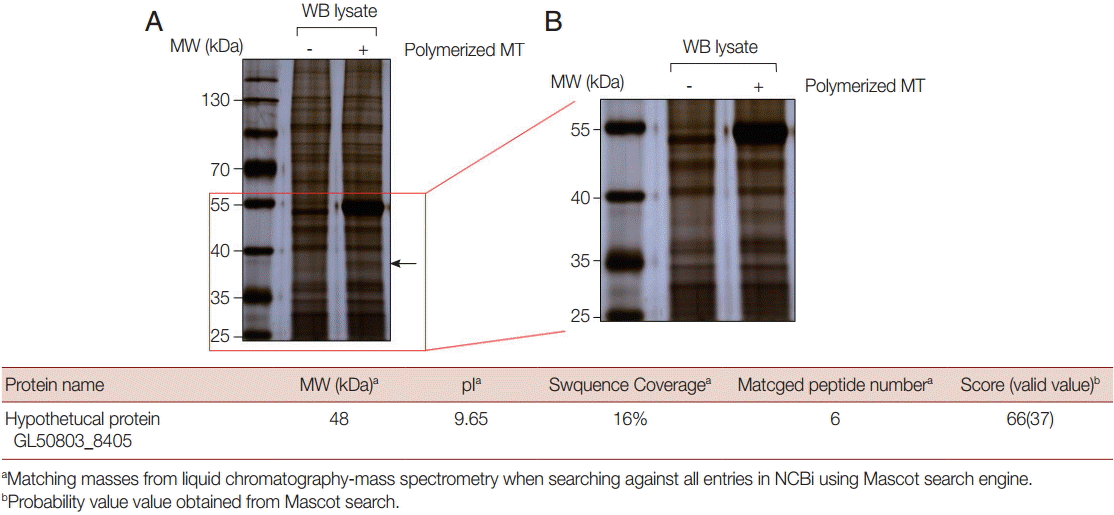
The pattern seen from proteins precipitated with MTs was almost identical to that of the control, except for 2 protein bands (Fig. 1A). The larger and more abundant of these proteins was 55 kDa in size and was believed to be the tubulin monomer used in the MT-binding assay, while the smaller and less abundant protein was thought to be an MT-binding protein derived from Giardia extracts. An extended view of the separated proteins between 55 kDa and 25 kDa revealed a protein of <40 kDa that was among the proteins precipitated with MTs, but was absent in the control proteins as indicated with an arrow (Fig. 1B).
This protein was excised and processed for Q-TOF LC MS/MS analysis (Fig. 1C). It was identified as a hypothetical protein, annotated as GL50803_8405, and named G. lamblia MT-binding protein 1, GlMBP1. The putative protein had a molecular weight of 48 kDa and a pI value of 9.65. The Q-TOF LC-MS/MS analysis indicated 6 matched peptides, 16% coverage, and a meaningful MASCOT score of 66. Interestingly, the putative size of this annotated protein was 48 kDa whereas the excised protein was smaller (<40 kDa). This result suggested the possibility that the excised protein was a degradation product of GlMBP1.
The open reading frame (ORF) encoding GlMBP1 was made of 445 amino acids. A BlastP search of the protein database of other metazoan organisms yielded only homologous protein except a homologous protein (SS50377_11087) in Spironucleus salmonicida, a protozoan pathogen in salmons. A domain search of GlMBP1, as well as the homologous protein in S. salmonicida, did not show any MT-binding domains such as calponin homology, cytoskeletal associated protein-glycine rich, and tumor overexpressed gene domains, which are conserved in mammalian and yeasts. The only domains found in these proteins were C2HC-type zinc-finger domains.
Confirmation of the MT-binding ability of GlMBP1
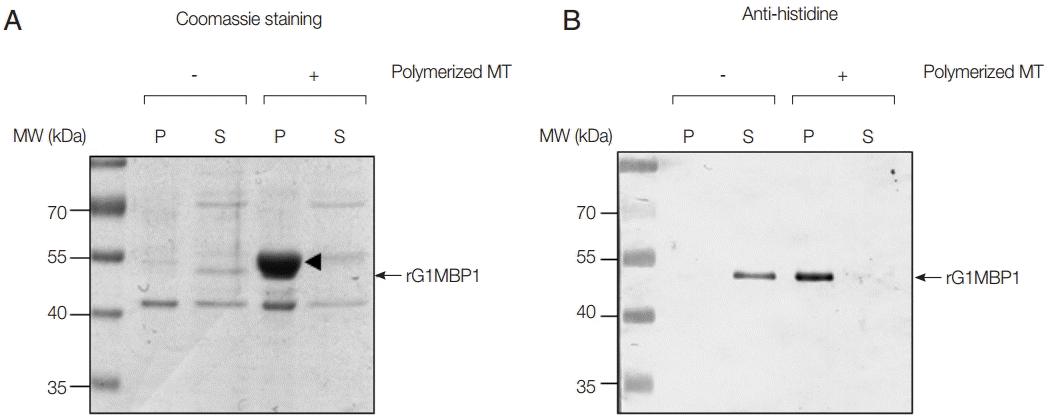
To confirm the association between GlMBP1 and MTs, an MT-binding assay was performed with recombinant GlMBP1 (rGlMBP1) and in vitro polymerized MTs. In the absence of MTs, histidine-tagged rGlMBP1 was found in the soluble fraction by Coomassie-staining and western blot analysis using anti-histidine antibodies (Fig. 2A, B, respectively). Upon incubation with polymerized MTs, rGlMBP1 was found in the pellet fraction along with tubulin monomer (Fig. 2A). Because the sizes of tubulin and rGlMBP1 were similar, it was difficult to distinguish one from the other in the SDS-PAGE gel. However, western blotting using anti-histidine antibodies clearly showed that rGlMBP1 precipitated with polymerized MTs, indicating that rGlMBP1 binds to MTs (Fig. 2B).
In vivo expression of GlMBP1 in G. lamblia
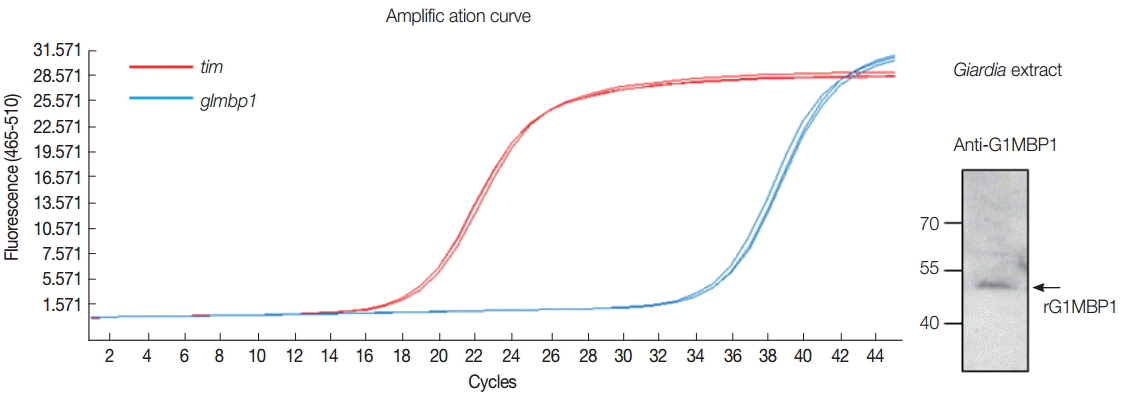
Even though GlMBP1 was identified as an MT-binding protein in G. lamblia extracts, whether this protein is expressed in vivo in G. lamblia still needed to be determined. To assess the expression of glmbp1 in Giardia, the level of glmbp1 transcripts was monitored by real-time reverse transcriptase PCR of trophozoites using primers specific to the glmbp1 gene (Fig. 3A). The level of tim transcript encoding triose 1-phosphate isomerase was used to normalize other transcripts from identical RNA samples [14]. The crossing point-PCR cycle (Cp) values were estimated as 18.8 and 35.6 for tim and glmbp1, respectively. Thus, the level of glmbp1 transcript expression was lower than that of tim, but glmbp1 transcripts were present in G. lamblia trophozoites.
In addition, the presence of GlMBP1 in Giardia trophozoites was demonstrated by western blot analysis of Giardia extracts with anti-GlMBP1 antibodies. An immunoreactive protein of 48 kDa, the expected size of GlMBP1, was apparent (Fig. 3B).
Intracellular location of GlMBP1 in Giardia trophozoites
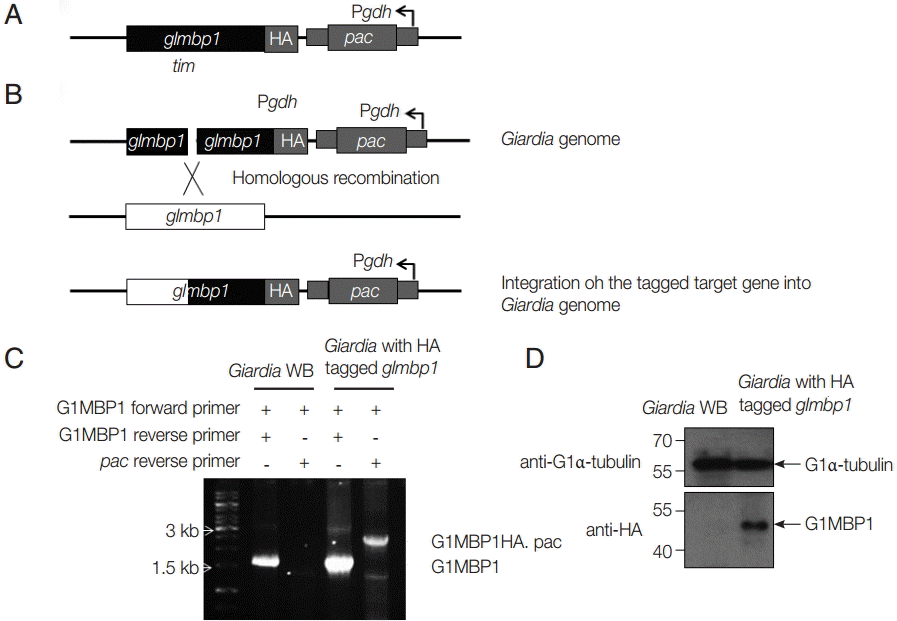
In the next experiment, we examined whether GlMBP1 was localized in the cytoskeletal structures of G. lamblia. First, the glmbp1 gene tagged with HA epitopes was integrated by electroporation of linear glmbp1-HA DNA into the genomes of G. lamblia trophozoites (Fig. 4A, B) [15]. Integration of the chimeric glmbp1-HA gene into the Giardia chromosome was examined by PCR using glmbp1-specific primers and a primer specific for the vector plasmid, the pac reverse primer (Fig. 4C). A 1.6 kb glmbp1 PCR product was detected in both G. lamblia WB as well as in pGlMBP1HA.pac-transfected cells. A 2.5 kb PCR product, the expected length of glmbp1 and the integrated plasmid, was amplified only from the genomic DNA of G. lamblia transfected with pGlMBP1HA, but not from that of G. lamblia WB.
Giardia trophozoites with the integrated HA-tagged glmbp1 gene were then examined for the expression of a chimeric GlMBP1-HA by western blotting with anti-HA antibodies (Fig. 4D). An immunoreactive protein band of 48 kDa was only present in the extracts of Giardia with the integrated HA-tagged glmbp1 gene (Fig. 4D). Giardia WB extracts did not show the immunoreactive protein. These results indicated that the HA-tagged glmbp1 and pac genes were integrated into a G. lamblia chromosome, and that HA-tagged GlMBP1 was expressed in G. lamblia transfected with linear pGlMBP1HA.pac.
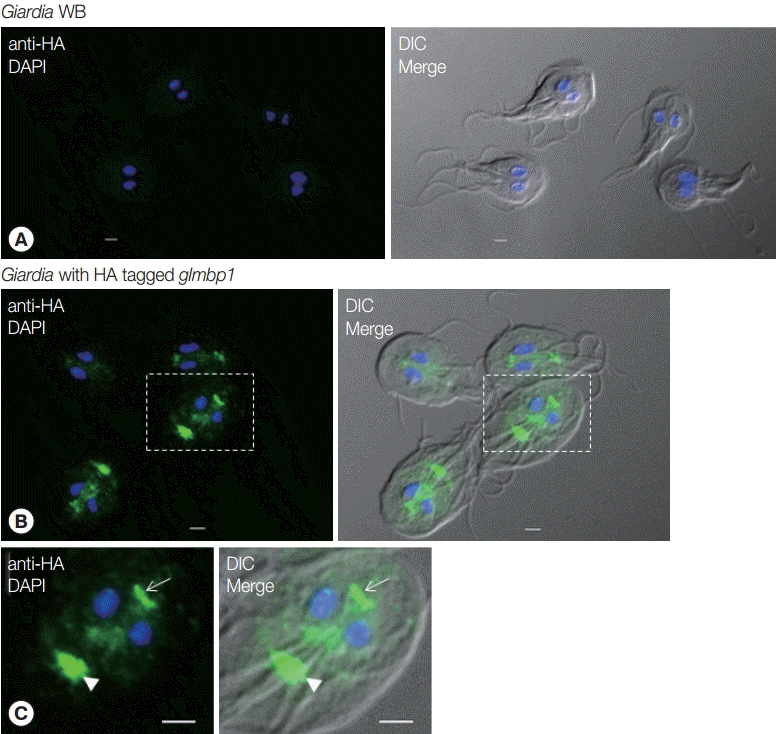
IFA was performed on G. lamblia WB and G. lamblia with the integrated glmbp1-HA gene using anti-HA antibodies (Fig. 5). G. lamblia WB trophozoites did not show any fluorescence in the IFA (Fig. 5A). In contrast, transgenic G. lamblia with HA-tagged glmbp1 showed green fluorescence at axonemes, median bodies, and basal bodies (Fig. 5B, C). This result indicated that GlMBP1 was located in cytoskeletal structures of G. lamblia trophozoites.
The cytoskeleton of G. lamblia is largely made of MTs, which includes a ventral disc, a median body, 8 basal bodies, and 4 pairs of flagella (anterior, posterior-lateral, ventral, and caudal). Each of the flagella is extended from an axoneme that is templated in a basal body. Basal bodies are conserved MT-organizing centers that nucleate structural apparatus such as flagella and cilia, and that function as spindle poles during cell division [16]. In G. lamblia, these structures were shown to be associated with MTs by electron immunocytochemistry [17] as well as IFA using anti-tubulin antibodies (Kim and Park, an unpublished result). Interestingly, γ-tubulin was found by IFA using monoclonal antibodies specific to γ-tubulin, only in the basal bodies of ventral and posterior-lateral flagella in the interphase Giardia cells. Further, this protein disappeared at early mitosis and reappeared in late-mitotic G. lamblia [18]. An extensive analysis of G. lamblia, based on in silico and proteomic methods, revealed 75 homologs of conserved basal body proteins. Thirteen of these homologs were found, by confocal microscopy, to co-localize with centrin in Giardia basal bodies [19]. Even though an association between GlMBP1 and basal bodies has not been reported, one of the MT-associated proteins was found to localize to cytoskeletal structures (axonemes, basal bodies, and median bodies) (Figs. 2, 5B).
In vitro interaction of GlMBP1 with MTs (Fig. 2) and its localization in the Giardia cytoskeleton indicates a role for GlMBP1 in cell cycle-related functions. However, the information available on GlMBP1 is too limited to allow a conclusion about its relationship with G. lamblia cell cycle. Monitoring the intracellular locations of GlMBP1 at various stages of G. lamblia will be essential to defining its involvement in cell cycle control in this organism. In addition, knockdown of glmbp1 expression will provide insight into the function of this protein in G. lamblia.
In summary, a novel binding protein was isolated while screening for MT-binding protein. Association of this protein with MTs was confirmed by in vitro MT-binding assays using rGlMBP1 and polymerized MTs. The intracellular location of this protein in G. lamblia was observed using transgenic G. lamblia in which an HA-tagged glmbp1 gene was integrated into a chromosome. IFAs using anti-HA antibodies revealed that GlMBP1 is located in cytoskeletal structures, median bodies, basal bodies, and axonemes. The physiological role of this GlMBP1-MT interaction should be defined in future investigations.

We have no conflict of interest related to this work.

This research was supported by Basic Science Research Program through the National Research Foundation of Korea (NRF) funded by the Ministry of Education (2015R1D1A1A09057595).
Fig. 1.
Identification of GlMBP1, an MT-binding protein from Giardia extracts via in vitro MT-binding assays. (A) Trophozoites of G. lamblia WB were resuspended in PBS, and lysed by sonication. The binding of Giardia lysates to polymerized MTs was assessed in vitro using a Microtubule-Binding Protein Spin-Down Assay Kit BK029 (Cytoskeleton). Twenty µmoles of MTs was incubated with 100 µg of Giardia lysates in a total volume of 50 µl at room temperature for 40 min. The reaction mixtures were then centrifuged through a 50% glycerol cushion-PEM-taxol mixture at 100,000 g at 25˚C for 40 min using an ultracentrifuge. The pellet fraction was then resolved on 8% SDS-PAGE and visualized by silver staining. A sample with the same amount of Giardia extracts was precipitated by ultracentrifugation and compared side-by-side with the extracts precipitated with MTs. (B) An extended view of the SDS-PAGE gel showing proteins between 55 kDa and 25 kDa. (C) The protein band present only in the MT fraction was excised and digested with trypsin. The trypsin-treated proteins were analyzed by quadrupole time-of-flight (Q-TOF), in addition to matrix-assisted laser desorption ionization-TOF mass spectrometry (MALDI-TOF MS). For the Q-TOF liquid chromatography-tandem MS (LC-MS/MS) data sets, tandem mass spectra were submitted to our MASCOT in-house database search engine (NCBI NR database downloaded on 31 July 2009). For protein identification, a MASCOT ion score of >37 was used as the criterion for a meaningful result.
kjp-54-4-461f1.gif
Fig. 2.
In vitro MT-binding assays using rGlMBP1. Ten µg of rGlMBP1 was incubated without or with taxol-stabilized bovine MTs (20 µM), divided into pellet (P) and soluble (S) fractions by ultracentrifugation, and then separated by 12% SDS-PAGE. (A) A SDS-PAGE gel stained with Coomassie brilliant blue. (B) Western blot using anti-histidine antibodies (1:5,000 dilution). An arrowhead (about 55 kDa) indicates MTs, whereas arrows denote rGlMTBP.
kjp-54-4-461f2.gif
Fig. 3.
In vivo expression of GlMBP1 in G. lamblia trophozoites. (A) Quantitative measurement of GlMBP1 transcripts. Total RNA was isolated from G. lamblia using TRIzol. cDNA was synthesized from 5 µg of RNA using the ImProm-IITM RT system and then analyzed with the Light Cycler 480 II Real-Time PCR System using LightCycler 490 DNA SYBR Green I Master (Roche Applied Science). Conditions for real-time PCR were as follows: pre-incubation at 95˚C for 5 min followed by 45 amplification cycles of 95˚C for 10 sec, 56˚C for 20 sec, and 72˚C for 10 sec. Real-time PCR was carried out in triplicate in a 96-well plate using the specific primers listed in Table 1. The tim gene encoding triose-1-phosphate isomerase of G. lamblia was used as an endogenous control for the reactions. (B) Western blot analysis. Ten µg of Giardia extracts was separated by 12% SDS-PAGE and transferred onto a nitrocellulose membrane. The membrane was incubated with anti-GlMBP1 antibodies (1:1,000 dilution), followed by secondary antibodies (1:1,000 dilution).
kjp-54-4-461f3.gif
Fig. 4.
Expression of HA-tagged GlMBP1 in G. lamblia. (A) A schematic diagram of the plasmid pGlMBP1HA.pac. This plasmid contains the in-frame N-terminal end of the glmbp1 gene with 3 HA epitopes and the puromycin N-acetyltransferase gene (pac) cassette as a selective marker expressed from the glutamate dehydrogenase gene (gdh) promoter, Pgdh. (B) A strategy to integrate pGlMBP1HA.pac into a Giardia chromosome. Closed boxes show the plasmid sequences, and open boxes indicate Giardia chromosomal sequences. HA-tagging sequences and the pac cassette are indicated by gray boxes. (C) Genomic PCR analysis. PCR was performed using the GlMBP-F and GlMBP-HA-R or pac down primers on genomic DNA from G. lamblia WB cells or pGlMBP1HA.pac-transfected cells. (D) Western blot analysis. Ten µg of Giardia extracts (G. lamblia WB cells or pGlMBP1HA.pac-transfected cells) was separated by 12% SDS-PAGE and transferred to nitrocellulose membranes. The membrane was incubated with anti-HA antibodies (1:1,000 dilution), and then secondary antibodies (1:1,000 dilution).
kjp-54-4-461f4.gif
Fig. 5.
Localization of GlMBP1 in G. lamblia trophozoites. G. lamblia cells expressing HA-tagged GlMBP1 were fixed with chilled 100% methanol, and then permeabilized with PBS/0.5% Triton X-100. The cells were reacted with mouse anti-HA antibodies (1:50 dilution) and then incubated with AlexaFluor 488-conugated anti-mouse IgG (1:200). The cells were mounted on slides with VECTASHIELD Antifade Mounting Medium with 4ʹ,6-diamidino-2-phenylindole, and then observed with an Axiovert 200 fluorescence microscope (Carl Ziess). Differential interference contrast (DIC) images showed cell morphology. (A) IFA on G. lamblia WB using anti-HA antibodies. The bars indicate 2 µm. (B, C) IFA on G. lamblia with integrated HA-tagged glmbp1 using anti-HA antibodies. The bars indicate 2 µm. Arrowheads indicate median bodies, while arrows show basal bodies.
kjp-54-4-461f5.gif
Table 1.
Strains, primers, and plasmids used in this study
Table 1.
Strains/primers/plasmids Relevant characteristicsa Source or reference
G. lamblia
ATCC 30957 Clinical isolate ATCC
E. coli
DH5a supE44 DlacU169 (F80 lacZ DM15) hsdR17 recA1 endA1 gyrA96 thi-1 relA1 Invitrogen
BL21 (DE3) F’, ompT, hsdSB(rB-mB-) gal, dcm (DE3) Invitrogen
Primers
8405F GCGAATTCGATGTCGATGGACGTTCCTA (EcoRI)
8405R AGTTTAGCGGCCGCGCGCTTTGAGCCACACTCCA (NotI)
GlMBP-F CGATCCATGGCCGGCTCTTGTCCAACTGCT (NcoI)
GlMBP-HA-R GTTACGCGGCCGCTTAAGCGTAATCTGGAACATCG
TATGGGTAAGCGTAATCTGGAACATCGTATGGGTAA
GCGTAATCTGGAACATCGTATGGGTAGCGCTTTGAGCCACACTCCA (NcoI)
pac down CGCGAATTCTCAGGCACCGGGCTT
RT-tim_F CGAAAGTGGTTTGCGGAGAAG
RT-tim_R CTATGTACGGGTCTTCGTAAGA
RT-GlMBP-F GATGAAGTAGATAAGGCGGCA
RT-GlMBP-R GAGCCACACTCCATACAGAAT
Plasmids
pET21b Expression vector for a histidine-tagged protein Novagen
pETGlMBP1 pET21b, 1,338 bp encoding GlBMP1 (GiardiaDB; GL50803_8405) This study
pGFP.pac Shuttle vector, AmpR, pac gene Singer et al. [13]
pGlMBP1HA.pac pGFP.pac, 1,538 bp encoding GlMBP1 from its own promoter This study

aUnderlined bases indicate a restriction enzyme site.

  • 1. Elmendorf HG, Dawson SC, McCaffery JM. The cytoskeleton of Giardia lamblia. Int J Parasitol 2003;33:3-28.
  • 2. Desai A, Mitchison TJ. Microtubule polymerization dynamics. Annu Rev Cell Dev Biol 1997;13:83-117.
  • 3. Akhmanova A, Steinmetz MO. Tracking the ends: a dynamic protein network controls the fate of microtubule tips. Nat Rev Mol Cell Biol 2008;9:309-322.
  • 4. Dawson SC, Sagolia MS, Mancuso JJ, Woessner DJ, House SA, Friz-Laylin L, Cande WZ. Kinesin-13 regulates flagellar, interphase, mitotic microtubule dynamics in Giardia intestinalis. Eukaryot Cell 2007;6:2354-2364.
  • 5. Kim J, Nagami S, Lee KH, Park SJ. Characterization of microtubule-binding and dimerization activity of Giardia lamblia endbinding 1 protein. PLoS One 2014;9:e97850.
  • 6. Kim J, Sim S, Kim J, Song K, Yong TS, Park SJ. Giardia lamblia EB1 is a functional homolog of yeast Bim1p that binds to microtubules. Parasitol Int 2008;57:465-471.
  • 7. Holberton DV, Ward AP. Isolation of the cytoskeleton from Giardia. Tubulin and a low-molecular-weight protein associated with microribbon structures. J Cell Sci 1981;47:39-166.
  • 8. Lourenço D, Andrade Ida S, Terra LL, Guimarães PR, Zingali RB, de Souza W. Proteomic analysis of the ventral disc of Giardia lamblia. BMC Res Notes 2012;5:41.
  • 9. Hagen KD, Hirakawa MP, House SA, Schwartz CL, Pham JK, Cipriano MJ, De La Torre MJ, Sek AC, Du G, Forsythe BM, Dawson SC. Novel structural components of the ventral disc and lateral crest in Giardia intestinalis. PLoS Negl Trop Dis 2011;5:e1442.
  • 10. Woessner DJ, Dawson SC. The Giardia median body protein is a ventral disc protein that is critical for maintaining a domed disc conformation during attachment. Eukaryot Cell 2012;11:292-301.
  • 11. Keister DB. Axenic culture of Giardia lamblia in TYI-S-33 medium supplemented with bile. Trans R Soc Trop Med Hyg 1983;77:487-488.
  • 12. Harlow E, Lane D. Immunizations. In Antibodies: A Laboratory Manual, Immunization. New York, USA. Cold Spring Harbor Laboratory; 1988, pp 53-63.
  • 13. Singer SM, Yee J, Nash TE. Episomal and integrated maintenance of foreign DNA in Giardia lamblia. Mol Biochem Parasitol 1998;92:59-69.
  • 14. Kim J, Bae S, Sung M, Lee K, Park SJ. Comparative proteomic analysis of trophozoites versus cysts of Giardia lamblia. Parasitol Res 2009;104:475-479.
  • 15. Gourguechon S, Cande WZ. Rapid tagging and integration of genes in Giardia intestinalis. Eukaryot Cell 2011;10:142-145.
  • 16. Debec A, Sullivan W, Bettencourt-Diaz M. Centrioles: active players or passengers during mitosis? Cell Mol Life Sci 2010;67:21173-2194.
  • 17. Crossley R, Marshall J, Cark JT, Holberton DV. Immunocytochemical differentiation of microtubules in the cytoskeleton of Giardia lamblia using monoclonal antibodies to γ-tubulin and polyclonal antibodies to associated low molecular weight proteins. J Cell Sci 1986;80:233-252.
  • 18. Nohynkova E, Draber P, Reischig J, Kulda J. Localization of gamma-tubuin in interphase and mitotic cells of a unicellular eukaryote, Giardia intestinalis. Eur J Cell Biol 2000;79:438-445.
  • 19. Lauwaet T, Smith AJ, Reiner DS, Romijn EP, Wong CCL, Davids BJ, Shah SA, Yates JR, Gillin FD. Mining the Giardia genome and proteome for conserved and unique basal body proteins. Int J Parasitol 2011;41:1079-1092.


Download Citation

Download a citation file in RIS format that can be imported by all major citation management software, including EndNote, ProCite, RefWorks, and Reference Manager.

Format:

Include:

Identification of a Novel Microtubule-Binding Protein in Giardia lamblia
Korean J Parasitol. 2016;54(4):461-469.   Published online August 31, 2016
Download Citation

Download a citation file in RIS format that can be imported by all major citation management software, including EndNote, ProCite, RefWorks, and Reference Manager.

Format:
Include:
Identification of a Novel Microtubule-Binding Protein in Giardia lamblia
Korean J Parasitol. 2016;54(4):461-469.   Published online August 31, 2016
Close

Figure

  • 0
  • 1
  • 2
  • 3
  • 4
Identification of a Novel Microtubule-Binding Protein in Giardia lamblia
Image Image Image Image Image
Fig. 1. Identification of GlMBP1, an MT-binding protein from Giardia extracts via in vitro MT-binding assays. (A) Trophozoites of G. lamblia WB were resuspended in PBS, and lysed by sonication. The binding of Giardia lysates to polymerized MTs was assessed in vitro using a Microtubule-Binding Protein Spin-Down Assay Kit BK029 (Cytoskeleton). Twenty µmoles of MTs was incubated with 100 µg of Giardia lysates in a total volume of 50 µl at room temperature for 40 min. The reaction mixtures were then centrifuged through a 50% glycerol cushion-PEM-taxol mixture at 100,000 g at 25˚C for 40 min using an ultracentrifuge. The pellet fraction was then resolved on 8% SDS-PAGE and visualized by silver staining. A sample with the same amount of Giardia extracts was precipitated by ultracentrifugation and compared side-by-side with the extracts precipitated with MTs. (B) An extended view of the SDS-PAGE gel showing proteins between 55 kDa and 25 kDa. (C) The protein band present only in the MT fraction was excised and digested with trypsin. The trypsin-treated proteins were analyzed by quadrupole time-of-flight (Q-TOF), in addition to matrix-assisted laser desorption ionization-TOF mass spectrometry (MALDI-TOF MS). For the Q-TOF liquid chromatography-tandem MS (LC-MS/MS) data sets, tandem mass spectra were submitted to our MASCOT in-house database search engine (NCBI NR database downloaded on 31 July 2009). For protein identification, a MASCOT ion score of >37 was used as the criterion for a meaningful result.
Fig. 2. In vitro MT-binding assays using rGlMBP1. Ten µg of rGlMBP1 was incubated without or with taxol-stabilized bovine MTs (20 µM), divided into pellet (P) and soluble (S) fractions by ultracentrifugation, and then separated by 12% SDS-PAGE. (A) A SDS-PAGE gel stained with Coomassie brilliant blue. (B) Western blot using anti-histidine antibodies (1:5,000 dilution). An arrowhead (about 55 kDa) indicates MTs, whereas arrows denote rGlMTBP.
Fig. 3. In vivo expression of GlMBP1 in G. lamblia trophozoites. (A) Quantitative measurement of GlMBP1 transcripts. Total RNA was isolated from G. lamblia using TRIzol. cDNA was synthesized from 5 µg of RNA using the ImProm-IITM RT system and then analyzed with the Light Cycler 480 II Real-Time PCR System using LightCycler 490 DNA SYBR Green I Master (Roche Applied Science). Conditions for real-time PCR were as follows: pre-incubation at 95˚C for 5 min followed by 45 amplification cycles of 95˚C for 10 sec, 56˚C for 20 sec, and 72˚C for 10 sec. Real-time PCR was carried out in triplicate in a 96-well plate using the specific primers listed in Table 1. The tim gene encoding triose-1-phosphate isomerase of G. lamblia was used as an endogenous control for the reactions. (B) Western blot analysis. Ten µg of Giardia extracts was separated by 12% SDS-PAGE and transferred onto a nitrocellulose membrane. The membrane was incubated with anti-GlMBP1 antibodies (1:1,000 dilution), followed by secondary antibodies (1:1,000 dilution).
Fig. 4. Expression of HA-tagged GlMBP1 in G. lamblia. (A) A schematic diagram of the plasmid pGlMBP1HA.pac. This plasmid contains the in-frame N-terminal end of the glmbp1 gene with 3 HA epitopes and the puromycin N-acetyltransferase gene (pac) cassette as a selective marker expressed from the glutamate dehydrogenase gene (gdh) promoter, Pgdh. (B) A strategy to integrate pGlMBP1HA.pac into a Giardia chromosome. Closed boxes show the plasmid sequences, and open boxes indicate Giardia chromosomal sequences. HA-tagging sequences and the pac cassette are indicated by gray boxes. (C) Genomic PCR analysis. PCR was performed using the GlMBP-F and GlMBP-HA-R or pac down primers on genomic DNA from G. lamblia WB cells or pGlMBP1HA.pac-transfected cells. (D) Western blot analysis. Ten µg of Giardia extracts (G. lamblia WB cells or pGlMBP1HA.pac-transfected cells) was separated by 12% SDS-PAGE and transferred to nitrocellulose membranes. The membrane was incubated with anti-HA antibodies (1:1,000 dilution), and then secondary antibodies (1:1,000 dilution).
Fig. 5. Localization of GlMBP1 in G. lamblia trophozoites. G. lamblia cells expressing HA-tagged GlMBP1 were fixed with chilled 100% methanol, and then permeabilized with PBS/0.5% Triton X-100. The cells were reacted with mouse anti-HA antibodies (1:50 dilution) and then incubated with AlexaFluor 488-conugated anti-mouse IgG (1:200). The cells were mounted on slides with VECTASHIELD Antifade Mounting Medium with 4ʹ,6-diamidino-2-phenylindole, and then observed with an Axiovert 200 fluorescence microscope (Carl Ziess). Differential interference contrast (DIC) images showed cell morphology. (A) IFA on G. lamblia WB using anti-HA antibodies. The bars indicate 2 µm. (B, C) IFA on G. lamblia with integrated HA-tagged glmbp1 using anti-HA antibodies. The bars indicate 2 µm. Arrowheads indicate median bodies, while arrows show basal bodies.
Identification of a Novel Microtubule-Binding Protein in Giardia lamblia
Strains/primers/plasmids Relevant characteristicsa Source or reference
G. lamblia
ATCC 30957 Clinical isolate ATCC
E. coli
DH5a supE44 DlacU169 (F80 lacZ DM15) hsdR17 recA1 endA1 gyrA96 thi-1 relA1 Invitrogen
BL21 (DE3) F’, ompT, hsdSB(rB-mB-) gal, dcm (DE3) Invitrogen
Primers
8405F GCGAATTCGATGTCGATGGACGTTCCTA (EcoRI)
8405R AGTTTAGCGGCCGCGCGCTTTGAGCCACACTCCA (NotI)
GlMBP-F CGATCCATGGCCGGCTCTTGTCCAACTGCT (NcoI)
GlMBP-HA-R GTTACGCGGCCGCTTAAGCGTAATCTGGAACATCG
TATGGGTAAGCGTAATCTGGAACATCGTATGGGTAA
GCGTAATCTGGAACATCGTATGGGTAGCGCTTTGAGCCACACTCCA (NcoI)
pac down CGCGAATTCTCAGGCACCGGGCTT
RT-tim_F CGAAAGTGGTTTGCGGAGAAG
RT-tim_R CTATGTACGGGTCTTCGTAAGA
RT-GlMBP-F GATGAAGTAGATAAGGCGGCA
RT-GlMBP-R GAGCCACACTCCATACAGAAT
Plasmids
pET21b Expression vector for a histidine-tagged protein Novagen
pETGlMBP1 pET21b, 1,338 bp encoding GlBMP1 (GiardiaDB; GL50803_8405) This study
pGFP.pac Shuttle vector, AmpR, pac gene Singer et al. [13]
pGlMBP1HA.pac pGFP.pac, 1,538 bp encoding GlMBP1 from its own promoter This study
Table 1. Strains, primers, and plasmids used in this study

Underlined bases indicate a restriction enzyme site.