Abstract
Coxiella burnetii, the causative agent of Q fever, is a zoonotic pathogen for which epidemiological data are limited in Mongolia. This study investigated the presence of C. burnetii in ticks collected across Mongolia from forest, pasture, and livestock-associated environments. A total of 7,511 ticks were collected from 42 Soums across 12 provinces and 2 districts of Ulaanbaatar between May and June 2018. Molecular detection of Coxiella-related organisms was performed using 46 DNA samples, comprising 28 individual-tick samples and 18 pooled-tick samples representing 489 ticks, by nested PCR targeting IS1111 and the 16S rRNA gene. Twenty DNA samples (2 individual ticks and 18 pools) were PCR-positive. Sequencing and phylogenetic analysis revealed that 9 Hyalomma asiaticum tick pools contained 16S rRNA sequences of C. burnetii, whereas 11 Dermacentor nuttalli samples (2 individual ticks and 9 pools) contained 16S rRNA sequences of a Coxiellaceae bacterium. Two individual D. nuttalli ticks yielded IS1111 sequences closely related to C. burnetii, whereas the corresponding 16S rRNA sequences clustered with a Coxiellaceae bacterium, highlighting discordance between the 2 molecular targets. The C. burnetii sequences detected in H. asiaticum were closely related to clade A strains reported from the United States, Japan, Greenland, and Korea, whereas sequences detected in D. nuttalli clustered with Coxiella endosymbiont sequences. This study provides molecular evidence for the presence of C. burnetii in H. asiaticum tick pools in Mongolia and demonstrates that Mongolian ticks harbor genetically diverse Coxiella-related bacteria, highlighting the need for further investigation of their epidemiological significance.
-
Key words: Coxiella burnetii, Q fever, Coxiellaceae bacterium, Hyalomma asiaticum, Dermacentor nuttalli, Mongolia
Q fever, caused by the intracellular bacterium
Coxiella burnetii, is a globally important zoonotic disease affecting both humans and animals [
1]. This disease is primarily associated with contact with infected domestic animals, particularly cattle, sheep, and goats, which are recognized as the principal reservoirs of human infection [
1,
2]. Although ticks are known to play an important role in maintaining
C. burnetii within animal and environmental reservoirs, human infection mainly occurs through the inhalation of aerosols contaminated by secretions, excreta, or birth products from infected animals rather than from tick bites [
2,
3]. Therefore, a comprehensive understanding of the ecology, genetic diversity, and transmission routes of
C. burnetii remains essential for the effective prevention and control of Q fever.
The family Coxiellaceae includes the pathogen
C. burnetii as well as
Coxiella-like endosymbionts (CLEs) that reside intracellularly in many hard ticks. These CLEs are generally non-pathogenic but contribute nutrients essential for tick survival and reproduction [
4,
5]. Phylogenetic analyses, particularly those based on 16S rRNA gene sequences, have grouped
Coxiella and
Coxiella-related bacteria into several clades, commonly designated A–D. Clade A is composed of various isolates of
C. burnetii, the pathogen responsible for Q fever in humans. Clades B–D are largely composed of CLEs associated with different tick genera, highlighting the evolutionary diversity and ecological specialization within the genus
Coxiella [
3-
5]. Because pathogenic
C. burnetii and non-pathogenic CLEs are phylogenetically closely related, accurate molecular differentiation is essential for the molecular characterization of
Coxiella-related organisms detected in ticks [
3,
4].
Mongolia’s rich nomadic and pastoral culture involves frequent, close contact with livestock in landscapes with abundant ticks. In addition, increasing human activity in natural and pastoral areas may increase the likelihood of exposure to ticks and tick-borne microorganisms [
6,
7]. Recent metagenomic and molecular surveillance studies have detected
C. burnetii and other Coxiellaceae bacteria in Mongolian ticks, particularly
Hyalomma asiaticum and
Dermacentor nuttalli, revealing the ecological complexity of tick-associated
Coxiella-related organisms and underscoring the need for continued genomic surveillance [
8,
9].
Although human seroepidemiological studies in Mongolia have suggested associations between Q fever exposure and factors such as age, occupation, and place of residence, region-specific data on tick-associated
Coxiella-related organisms remain limited [
6,
7]. Despite the known importance of ticks as potential vectors for
C. burnetii, available surveys examining the prevalence of
C. burnetii in ticks from different Mongolian regions remain scarce, and the role of local tick species in pathogen transmission is not yet fully characterized. Although
Coxiella-related organisms have previously been detected in Mongolian ticks [
8,
9], comprehensive molecular characterization of tick-associated
Coxiella-related organisms across geographically diverse regions of Mongolia remains limited. Therefore, this study investigated the presence of
C. burnetii and other Coxiellaceae bacteria in ticks collected from diverse areas in Mongolia, encompassing livestock, forests, and pastures. These findings provide molecular evidence for the distribution of
Coxiella-related organisms in Mongolian ticks and contribute to a better understanding of the regional ecology of Q fever.
A total of 7,511 ticks were collected from forest, pasture, and livestock-associated environments in multiple regions of Mongolia from May to June 2018 (
Supplementary Table S1). The collection sites included 42 Soums across 12 provinces and 2 districts of Ulaanbaatar, the capital city of Mongolia. A Soum is the second-level administrative division of Mongolia, comparable to a county or district. Species-level identification was performed for the overall tick collection. The geographic distribution and species composition of the collected ticks are presented in
Table 1, and detailed Soum-level collection information is provided in
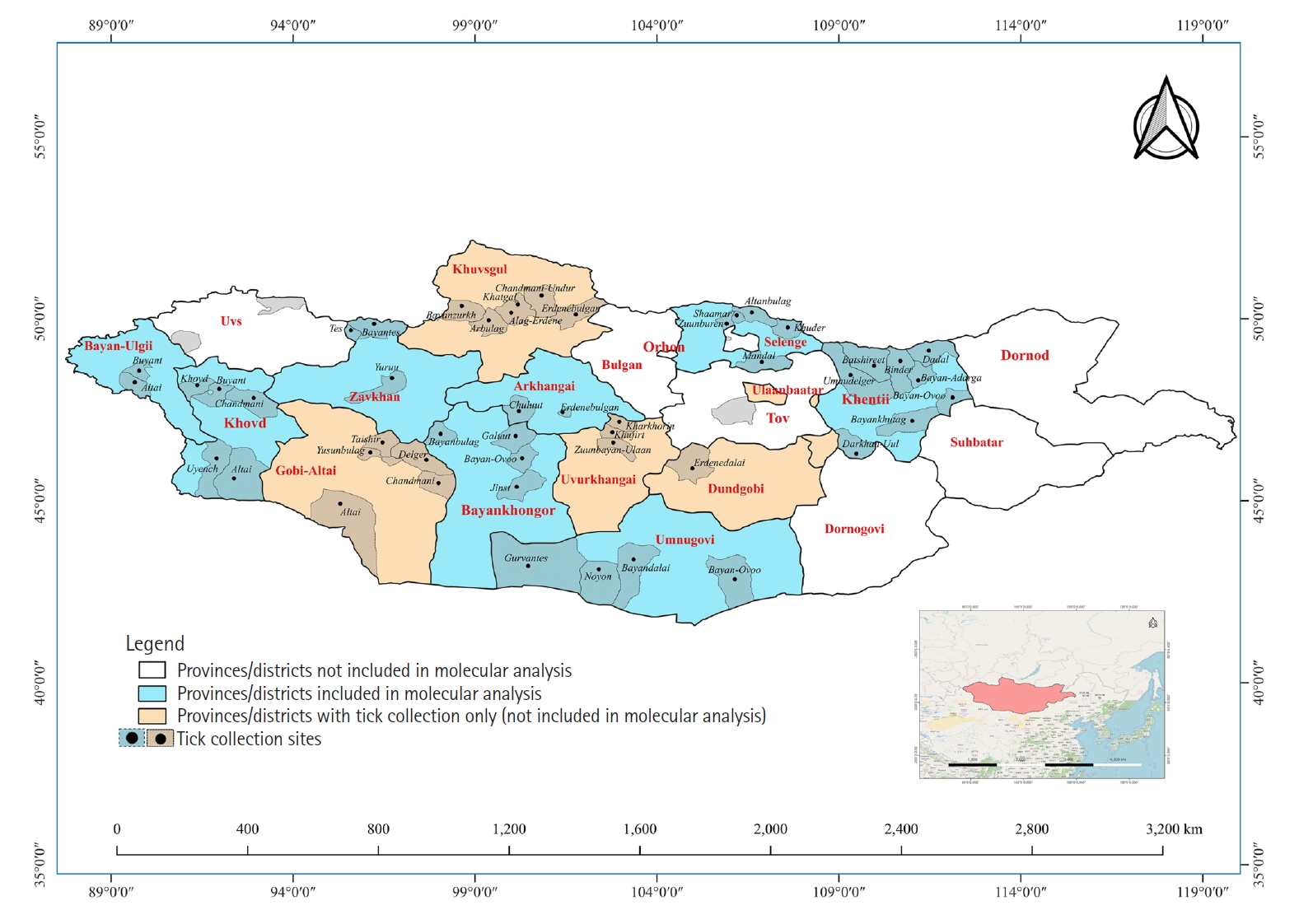
Supplementary Table S1. For molecular analysis, the Mongolian collaborating institute provided 489 adult ticks from the total collection of 7,511 ticks; these included 337 ticks collected by flagging in forest and pasture habitats and 152 ticks removed from livestock at 22 sites in 8 provinces (Selenge, Arkhangai, Bayan-Ulgii, Bayankhongor, Khentii, Khovd, Umnugovi, and Zavkhan) (
Fig. 1).
Ticks were transported to the laboratory of the National Center for Zoonotic Diseases, Mongolia. The collected ticks were morphologically identified under a microscope using standard taxonomic keys as previously described [
10-
12]. After species identification, the ticks were washed with 70% ethanol, followed by rinsing with sterile distilled water, and then dried on sterile filter paper prior to individual or pooled processing. The ticks were stored by species at -70°C in 1.5-ml tubes until DNA extraction.
A total of 489 adult ticks were processed as 46 samples, consisting of 28 individual-tick samples and 18 pooled-tick samples, according to tick species, collection site, and habitat type (
Table 2;
Supplementary Table S2). Individual testing was conducted when only a few ticks of a given species were available from a collection site, whereas pooled testing was applied to ticks of the same species collected from the same Soum and habitat or livestock source. The number of ticks per pool ranged from 5 to 40. The ticks were first frozen in liquid nitrogen and then homogenized with a sterile mortar and pestle. The homogenized material was transferred to a 1.5-ml microcentrifuge tube containing 0.5 ml of sterile phosphate-buffered saline. The resulting homogenates were used for genomic DNA extraction using a PureLink Genomic DNA Kit (catalog No. K1820-02, Invitrogen and Life Technologies), and extraction was performed according to the manufacturer’s instructions.
A total of 46 genomic DNA samples, including 28 individual-tick samples and 18 pooled-tick samples, were used in nested PCR assays for the detection of
Coxiella-related organisms. Two separate PCR reactions were performed, 1 targeting the
IS1111 repetitive element and the other targeting the 16S rRNA gene (
Table 3) [
13]. Both assays were conducted as nested PCRs. For the
IS1111 assay, the IS1111F1/IS1111R1 primers were used for the first round, followed by IS1111F2/IS1111R2 for the nested round. For the 16S rRNA nested PCR assay, the first-round PCR was performed using the 16S1st-F0/16S1st-R0 primer pair, followed by nested PCR using the Cox16SF2/Cox16SR2 primer pair. The forward primer Cox16SF2 was newly designed in this study based on the previously reported Cox16SF3 primer [
13] to optimize nested PCR amplification.
PCR amplification was performed using AccuPower PCR PreMix (Bioneer) or AmpliTaq Gold 360 Master Mix (Applied Biosystems) according to the manufacturers’ instructions [
14,
15]. All amplifications were performed in an AB thermal cycler (Applied Biosystems).
C. burnetii genomic DNA and distilled water were included in each run as positive and negative controls, respectively, to monitor assay performance and contamination. The amplified products were analyzed by electrophoresis on 1.5% agarose gels and visualized by ethidium bromide staining.
PCR-positive products were purified using QIAquick PCR Purification Kits (Qiagen) and subjected to bidirectional sequencing with the respective amplification primers at Macrogen. Sequence chromatograms were first inspected for quality, trimmed, and assembled into consensus sequences using Lasergene version 6 (DNASTAR). The resulting sequences were then compared with reference sequences in the GenBank database using the BLASTN program provided by the National Center for Biotechnology Information, and species-level identification was determined based on nucleotide similarity, query coverage, and alignment score. After removal of primer-binding regions, sequences were aligned using Lasergene version 8 (DNASTAR), and additional multiple sequence alignment was performed using ClustalX version 2.0 (Conway Institute, University College Dublin) with default parameters. Phylogenetic analysis was conducted using the neighbor-joining method based on genetic distances, and phylogenetic trees were constructed in the Tree Explorer program (DNASTAR). The robustness of the inferred trees was assessed by bootstrap analysis with 1,000 replicates using the Kimura 2-parameter model.
The institutional animal care and use committee approval was not required for the tick collection procedures and subsequent molecular analyses under the applicable institutional requirements. Permission was obtained from landowners for collections conducted on private property. The field studies did not involve endangered or protected species.
Of the 7,511 ticks collected, 7,510 (99.99%) were identified to the species level.
D. nuttalli was the predominant species (6,914/7,510; 92.1%), followed by
Ixodes persulcatus (316/7,510; 4.2%) and
H. asiaticum (280/7,510; 3.7%); 1 tick remained unidentified.
Dermacentor nuttalli was detected across all surveyed geographic areas, whereas
H. asiaticum and
I. persulcatus were detected only in Umnugovi and Selenge, respectively (
Table 1).
A total of 489 ticks provided for molecular analysis were morphologically identified as
D. nuttalli (286/489, 58.5%),
H. asiaticum (200/489, 40.9%), and
I. persulcatus (3/489, 0.6%) (
Table 2;
Supplementary Table S2). For the detection of
Coxiella-related organisms, nested PCR assays targeting the
IS1111 insertion sequence and the 16S rRNA gene were performed using 46 genomic DNA samples, consisting of 28 individual-tick samples (28 ticks) and 18 pooled-tick samples (461 ticks). Of the 28 individual-tick samples, 2 were positive in both nested PCR assays, whereas all 18 pooled-tick samples were also positive in both assays (
Table 2;
Supplementary Table S2).
A total of 20 PCR-positive DNA samples (2 individual-tick samples and 18 pooled-tick samples) were subjected to sequencing analysis. Analysis of the 16S rRNA amplicons identified
C. burnetii in 9
H. asiaticum tick pools (2018-MGL tick-5-10 to tick-5-18), whereas a Coxiellaceae bacterium was identified in 11
D. nuttalli samples, including 2 individual ticks (2018-MGL tick-4 and tick-5) and 9 tick pools (2018-MGL tick-5-1 to tick-5-9). Based on the 16S rRNA sequences,
C. burnetii was detected exclusively in
H. asiaticum pooled samples, whereas a Coxiellaceae bacterium was detected exclusively in
D. nuttalli samples (
Table 2;
Supplementary Table S2).
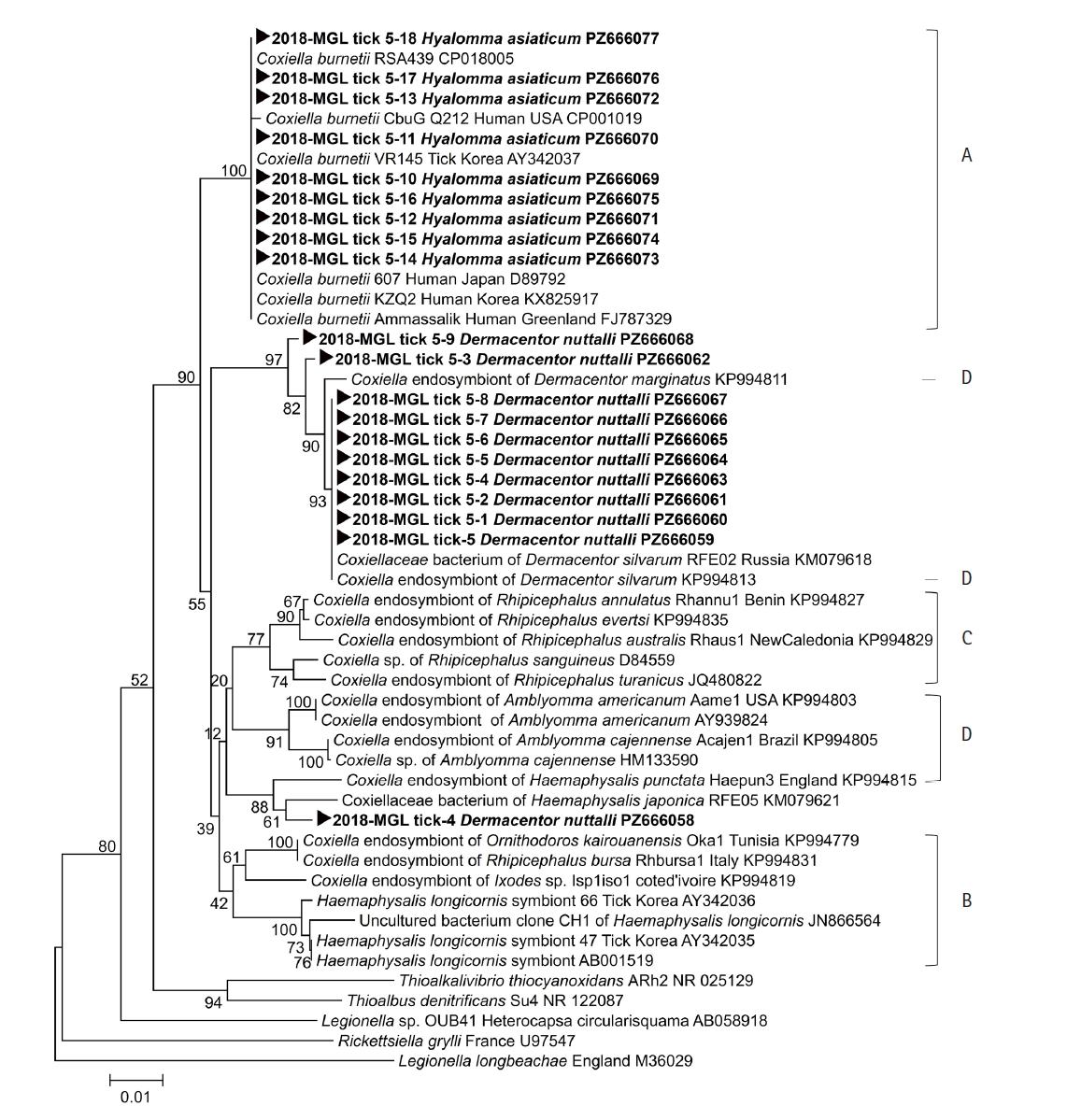
A phylogenetic tree was constructed based on the 16S rRNA partial sequences obtained from
C. burnetii-positive and Coxiellaceae bacterium-positive tick samples together with reference sequences retrieved from GenBank (
Fig. 2). In the phylogenetic tree, the 16S rRNA sequences obtained from
C. burnetii-positive
H. asiaticum tick pools clustered with previously reported
C. burnetii sequences derived from humans and tick sources. The 9
C. burnetii sequences detected in
H. asiaticum pools were closely related to clade A
C. burnetii strains from the United States, Japan, Greenland, and Korea, indicating close genetic relatedness. In addition, the 16S rRNA sequences obtained from 9
C. burnetii-positive
H. asiaticum tick pools showed 99.2%–100% sequence identity with the 16S rRNA sequences of
C. burnetii strain RSA439 detected in
D. andersoni in the United States.
The 16S rRNA sequences obtained from Coxiellaceae bacterium-positive D. nuttalli samples clustered separately from clade A C. burnetii in the phylogenetic tree. Most D. nuttalli-derived sequences formed a cluster with Coxiella endosymbiont–associated sequences previously reported from Dermacentor marginatus and Dermacentor silvarum, consistent with their close genetic relatedness. In particular, the 16S rRNA sequences obtained from 10 Coxiellaceae bacterium-positive D. nuttalli samples showed 97.7%–100% sequence identity to the 16S rRNA sequence of Coxiellaceae bacterium strain RFE02 previously identified in a D. silvarum tick in Russia. In contrast, the sequence from 1 individual D. nuttalli tick (2018-MGL tick-4) was positioned separately from the main Dermacentor-associated cluster and showed 98.4% sequence identity to the 16S rRNA sequence of Coxiellaceae bacterium strain RFE05 previously detected in Haemaphysalis japonica in Russia.
Sequencing analysis of the 20
IS1111-positive PCR products yielded interpretable sequences from only the 2 individual
D. nuttalli samples (2018-MGL tick-4 and 2018-MGL tick-5), both of which were closely related to
C. burnetii reference sequences. Sequence data could not be reliably obtained from the remaining 18 pooled-tick amplicons because the chromatograms showed multiple peaks, suggesting mixed templates in pooled samples. The 2 individual
D. nuttalli samples yielded
IS1111 sequences closely related to
C. burnetii, whereas their corresponding 16S rRNA sequences clustered with a Coxiellaceae bacterium, indicating discordance between the
IS1111 and 16S rRNA assays. The
IS1111 sequence obtained from 2018-MGL tick-4 showed 99.7% sequence identity to the
IS1111 sequence of
C. burnetii isolate XJ-15 detected in
H. asiaticum in China, whereas the
IS1111 sequence from 2018-MGL tick-5 showed 99.6% sequence identity to that of
C. burnetii isolate RSA439 detected in
D. andersoni in the United States. Consistent with these findings, phylogenetic analysis based on the partial
IS1111 sequences showed that both samples clustered with representative
C. burnetii reference strains (
Supplementary Fig. S1).
Overall, molecular analyses revealed the presence of genetically diverse Coxiella-related bacteria in ticks collected in Mongolia, including C. burnetii and Coxiellaceae-associated sequences. C. burnetii was identified only in H. asiaticum tick pools by 16S rRNA sequencing, whereas Coxiellaceae bacteria were detected only in D. nuttalli samples. In addition, 2 individual D. nuttalli ticks yielded IS1111 sequences closely related to C. burnetii, whereas their corresponding 16S rRNA sequences clustered with Coxiellaceae bacterium sequences. These findings highlight the importance of using complementary molecular markers for the accurate characterization of Coxiella-related organisms in ticks. Accordingly, multi-target molecular confirmation is essential because different molecular targets may yield discordant results, potentially leading to misidentification.
The detection of C. burnetii using IS1111 PCR is common due to the multiple IS1111 copies in its genome. However, IS1111 PCR may lack specificity, as it cannot distinguish between C. burnetii and Coxiella endosymbionts, making it unsuitable for identifying Coxiellaceae bacteria. In our study, 2 individual D. nuttalli ticks yielded IS1111 sequences closely related to C. burnetii, whereas their corresponding 16S rRNA sequences were assigned to a Coxiellaceae bacterium, suggesting discordance between the 2 molecular targets and raising the possibility of mixed Coxiella-related templates within the same sample, differences in target specificity, or preferential amplification of different templates depending on the marker used. This finding is consistent with previous reports that the presence of IS1111 in both C. burnetii and Coxiella endosymbionts may lead to diagnostic challenges. The discrepancies between IS1111 and 16S rRNA results, particularly the difficulties in sequencing IS1111 PCR products from large tick pools, underscore the technical challenges associated with the molecular characterization of Coxiella-related organisms in pooled tick samples. The use of relatively large pooled samples likely increased the likelihood of mixed Coxiella-related templates within individual PCR products, thereby reducing the resolution of IS1111 sequencing. In addition, large tick pools may have increased the amount of background tick-derived material and potential PCR inhibitors, which could have further complicated the generation and interpretation of clean IS1111 sequencing chromatograms from pooled samples. In contrast, 16S rRNA sequencing remained interpretable in the pooled samples, suggesting that the sequencing interference was more evident for IS1111 than for 16S rRNA under the conditions used in this study.
Together, these observations support the use of multi-target molecular confirmation to improve the accurate characterization of
Coxiella-related organisms and to reduce the risk of misidentification [
4]. Furthermore, the
IS1111-positive results obtained from
D. nuttalli raise questions about the true identity of these organisms. Given the potential for
IS1111 to amplify sequences from CLEs, further studies are needed to clarify whether these findings represent true
C. burnetii detection or the presence of closely related bacteria.
The role of ticks in the transmission of
C. burnetii remains controversial, as Q fever is primarily spread through aerosols rather than tick bites [
15]. However, the detection of
C. burnetii-related DNA in
H. asiaticum tick pools and in 2 individual
D. nuttalli ticks suggests that these tick species may contribute to the environmental maintenance of
Coxiella-related organisms in Mongolia, rather than serving as confirmed vectors of human infection. This is consistent with previous reports of
C. burnetii detection in various tick species, including
Dermacentor andersonii and
Haemaphysalis humerosa in the United States, as well as
Ixodes ricinus,
D. reticulatus,
D. marginatus,
Haemaphysalis concinna, and
Haemaphysalis inermis in Slovakia [
2,
13,
15]. Notably, a study by Körner et al. [
16] indicated that ticks, such as
I. ricinus, could potentially transmit Q fever through inhalation of feces containing viable
C. burnetii. Nevertheless, these observations should not be interpreted as evidence of bacterial viability, vector competence, or direct epidemiological risk to humans in the present study. These findings underscore the need for continued surveillance of
Coxiella-related organisms in Mongolian ticks and support public health efforts to improve awareness of tick-borne pathogens and tick-bite prevention, particularly in regions with frequent human–livestock–tick interactions.
A previous review summarized that
D. nuttalli,
H. asiaticum, and
I. persulcatus are among the major tick species of medical and veterinary importance in Mongolia and has highlighted the need for continued surveillance of tick-borne pathogens throughout the country [
17]. In the complete surveillance collection,
D. nuttalli was the predominant species and was detected across all surveyed geographic areas, whereas
H. asiaticum and
I. persulcatus were detected only in Umnugovi and Selenge, respectively (
Table 1). These findings provide descriptive ecological context for the present collection; however, they should not be interpreted as nationwide estimates of tick-species distribution or abundance.
In addition, previous molecular studies using metagenomic and next-generation sequencing approaches have reported
Coxiella-related organisms and other tick-borne microorganisms in Mongolian ticks [
8,
9]. The present findings are consistent with these reports by confirming the presence of
Coxiella-related organisms in Mongolian ticks, particularly
H. asiaticum and
D. nuttalli. Importantly, our study further characterized these organisms using complementary
IS1111 and 16S rRNA analyses. The 16S rRNA analysis enabled differentiation between sequences assigned to
C. burnetii and those assigned to a
Coxiellaceae bacterium, while comparison with
IS1111 results revealed discordance between the 2 molecular targets in individual
D. nuttalli samples. Although direct comparisons with previous nationwide surveys are limited because the present study was based on molecular analysis of a selected subset of ticks, these findings expand the available molecular data on
Coxiella-related bacteria in Mongolian ticks and support continued molecular surveillance in Mongolia.
Phylogenetic analysis showed that C. burnetii sequences detected in H. asiaticum tick pools were closely related to clade A strains reported from the United States, Japan, Greenland, and Korea, suggesting genetic similarity rather than a direct epidemiological link. These sequences shared 99.2%–100% sequence identity with C. burnetii strain RSA439 from the United States. In contrast, the sequences identified as a Coxiellaceae bacterium in D. nuttalli were more closely associated with tick endosymbiont lineages than with pathogenic clade A C. burnetii. Most of these sequences clustered with Coxiella endosymbiont-associated sequences previously reported from D. marginatus and D. silvarum, supporting their close relationship to Coxiella endosymbionts identified in Russia.
Coxiellaceae bacteria, which include both
Coxiella and related genera, often exist as non-pathogenic endosymbionts within ticks, contributing to nutrient synthesis for their hosts [
5]. While closely related to
C. burnetii, these
Coxiella endosymbionts lack the virulence genes present in
C. burnetii [
3,
18,
19]. Taken together, these findings suggest that Mongolian ticks harbor genetically diverse
Coxiella-related bacteria, including both pathogenic
C. burnetii and endosymbiont-like Coxiellaceae bacteria.
Although direct transmission of
Coxiella-related organisms from tick bites is not well-documented, the successful isolation of
C. burnetii in Vero cell cultures from tick samples indicates that further investigation of the potential role of ticks in transmission is warranted [
20]. However, our data do not allow direct inference of transmission to humans. Moreover, detection of bacterial DNA alone does not demonstrate bacterial viability, vector competence, or epidemiological risk. Further investigation is warranted to clarify the interactions between ticks and humans, particularly focusing on the ecological role of
H. asiaticum in the maintenance of
C. burnetii. In addition, because all positive
H. asiaticum samples were analyzed as pooled ticks, the individual infection status and prevalence could not be determined.
Although species-level identification data were available for 7,510 of the 7,511 collected ticks (
Table 1;
Supplementary Table S1), this study was based on molecular analysis of a subset of 489 adult ticks provided from the complete collection rather than the entire collection. Therefore, the findings should not be interpreted as estimates of nationwide prevalence, vector density, or the geographic distribution of
Coxiella-related organisms in Mongolia. Moreover, the molecular subset and the uneven geographic sampling do not allow statistically representative comparisons across collection sites or ecological habitats. Detailed developmental-stage and collection-environment records were not available for all ticks in the archived field-collection dataset; therefore, these variables could not be retrospectively summarized for the complete surveillance collection. Because the analyzed ticks were collected in 2018, the present findings reflect the molecular characteristics of tick populations at the time of sampling and may not fully represent the current epidemiological situation in Mongolia. Future studies should incorporate systematic and geographically balanced nationwide sampling using recently collected tick specimens, together with individual-tick testing, multi-target molecular confirmation, and comprehensive molecular characterization to better define the current epidemiology, distribution, and genetic diversity of
Coxiella-related organisms in Mongolia.
In conclusion, this study provides molecular evidence for the presence of C. burnetii in H. asiaticum tick pools in Mongolia and indicates that Mongolian ticks harbor genetically diverse Coxiella-related bacteria. These findings highlight the need for further investigation of the epidemiological significance of Coxiella-related bacteria in Mongolia. In addition, the detection of C. burnetii-related DNA in H. asiaticum pools and Coxiellaceae-associated sequences in D. nuttalli highlights the importance of multi-target molecular confirmation for more accurate characterization of Coxiella-related organisms in ticks.
Notes
-
Data availability
Data and materials are available upon request to the corresponding author.
-
Author contributions
Conceptualization: Kim DM. Data curation: Kim CM, Kh T. Formal analysis: Kim CM, Kh T, Yun NR. Funding acquisition: Kim DM. Investigation: LP MJ, Lee YM, D G, B N, J B, N T. Methodology: Kim CM, Kh T, LP MJ, Lee YM, D G, B N, J B, N T. Project administration: Kim DM. Resources: Kh T, LP MJ, Lee YM, D G, B N, J B, N T. Supervision: Kim DM, Yun NR. Writing – original draft: Kim CM, Kh T, Kim DM. Writing – review & editing: Kim CM, Kh T, Kim DM.
-
Conflict of interest
The authors have no conflicts of interest to declare.
-
Funding
This research was supported by the National Institute of Health (NIH) research project (project No. 2024-ER2103-02) and the Korea-US Collaborative Research Project, funded by the Ministry of Science, ICT and Future Planning and the Ministry of Health and Welfare of Korea (RS-2024-00467046) to DMK.
Supplementary information
Fig. 1.Geographic distribution of tick collection sites and administrative areas included in the molecular analysis in Mongolia. Ticks were collected from 42 Soums across 12 provinces and 2 districts of Ulaanbaatar, Mongolia, between May and June 2018. Administrative areas included in the molecular analysis are shown in blue, areas with tick collection only are shown in beige, and areas not included in the molecular analysis are shown in white. Black dots indicate tick collection sites, and provincial boundaries and provincial centers are shown on the map. The map was generated using QGIS version 3.44.12.
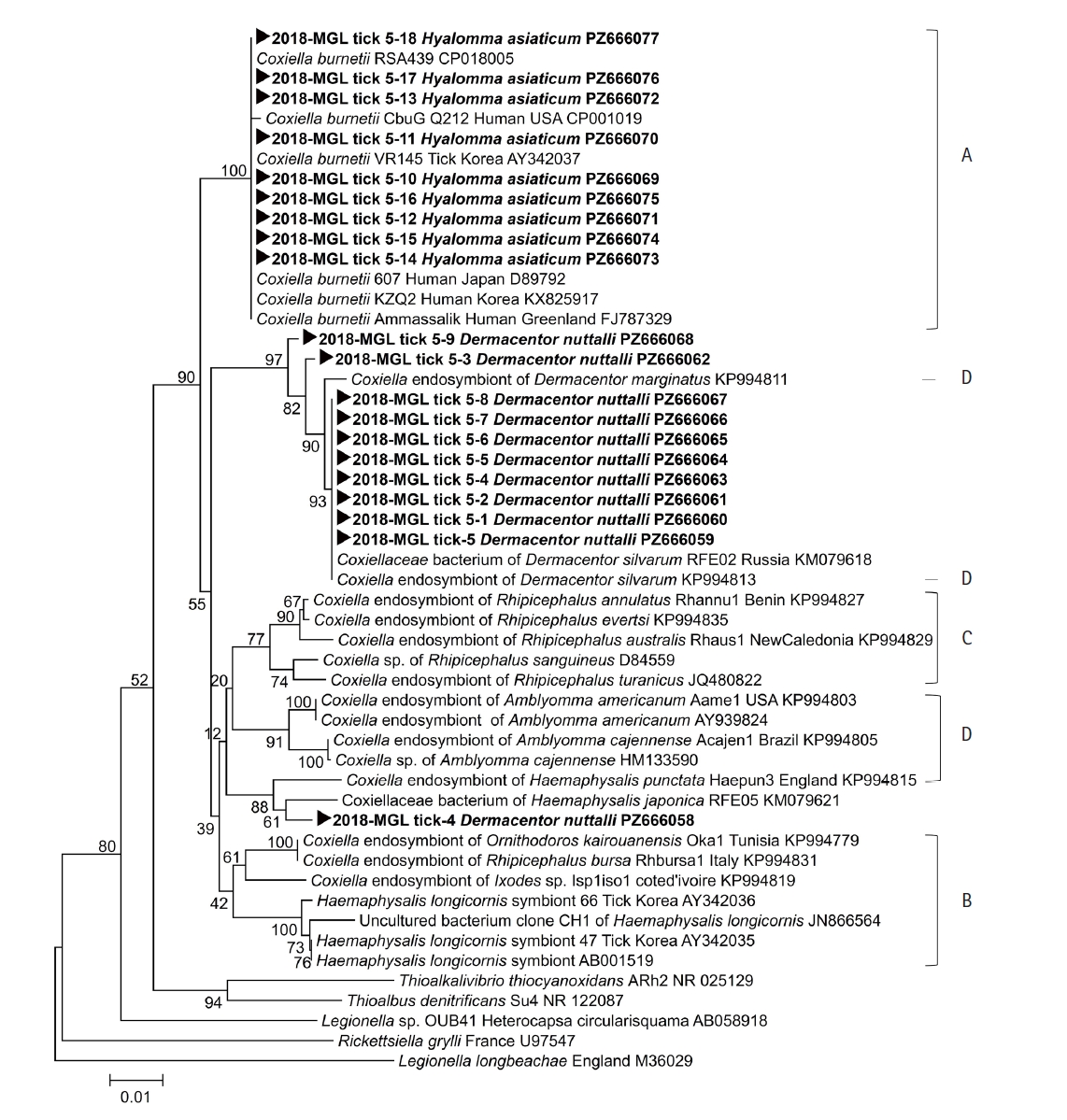
Fig. 2.Phylogenetic tree based on partial 16S rRNA gene sequences (570 bp) obtained from tick samples in this study and reference sequences retrieved from GenBank. The tree includes 16S rRNA sequences obtained from Hyalomma asiaticum and Dermacentor nuttalli samples. Sequences from H. asiaticum clustered with clade A Coxiella burnetii reference strains, whereas most sequences from D. nuttalli clustered with Coxiellaceae endosymbiont-associated lineages. Coxiella clades (A–D) are indicated on the right. Sequences generated in this study are shown in bold and indicated by triangles (▶). Reference sequence labels, including "Coxiella endosymbiont," "Coxiella sp.," and "Coxiellaceae bacterium," are presented according to their corresponding GenBank annotations. Bootstrap values are shown at the nodes. The scale bar represents 0.01 nucleotide substitutions per site. GenBank accession numbers for both the reference sequences and the sequences generated in this study are shown in the tree.
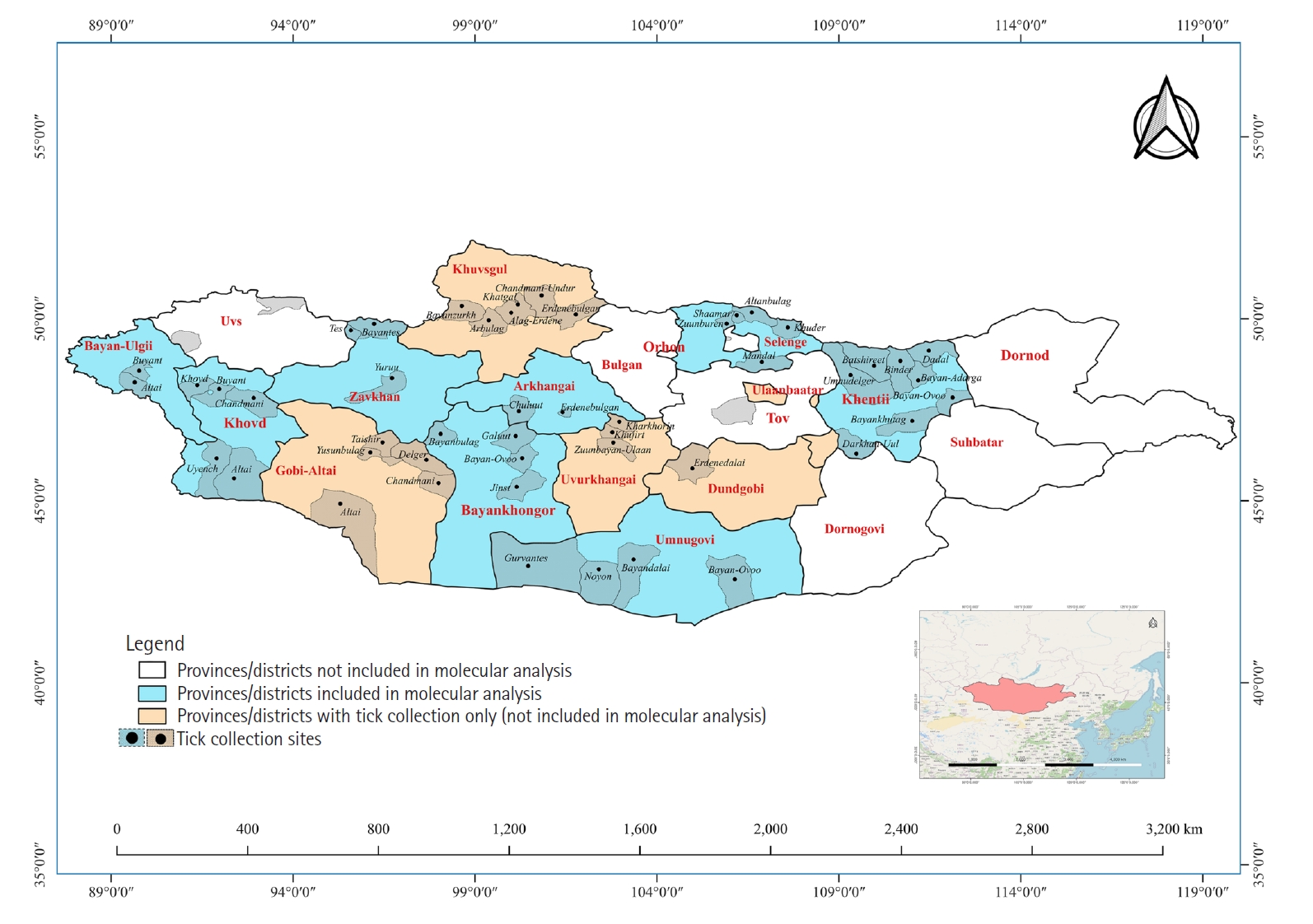
Table 1.Geographic distribution of tick species in the overall surveillance collection from Mongolia
Table 1.
|
Province/area |
Tick species |
Total No. of ticks |
|
Dermacentor nuttalli
|
Hyalomma asiaticum
|
Ixodes persulcatus
|
Unidentified |
|
Arkhangai |
68 |
0 |
0 |
0 |
68 |
|
Bayan-Ulgii |
263 |
0 |
0 |
0 |
263 |
|
Bayankhongor |
244 |
0 |
0 |
0 |
244 |
|
Dundgobi |
89 |
0 |
0 |
0 |
89 |
|
Zavkhan |
190 |
0 |
0 |
0 |
190 |
|
Uvurkhangai |
21 |
0 |
0 |
0 |
21 |
|
Selenge |
11 |
0 |
316 |
1 |
328 |
|
Umnugovi |
768 |
280 |
0 |
0 |
1,048 |
|
Khovd |
129 |
0 |
0 |
0 |
129 |
|
Khentii |
651 |
0 |
0 |
0 |
651 |
|
Khuvsgul |
3,447 |
0 |
0 |
0 |
3,447 |
|
Gobi-Altai |
633 |
0 |
0 |
0 |
633 |
|
Ulaanbaatar |
400 |
0 |
0 |
0 |
400 |
|
Total |
6,914 |
280 |
316 |
1 |
7,511 |
|
Percentage among identified ticks (%)a
|
92.1 |
3.7 |
4.2 |
- |
- |
Table 2.Summary of molecular detection and identification of Coxiella-related organisms in ticks collected from Mongolia
Table 2.
|
Province |
Tick species |
Sample IDs |
Sample composition (ticks/sample)a
|
Nested PCR result |
|
IS1111
|
16S rRNA |
|
Selenge |
Ixodes persulcatus
|
2018-MGL tick-1–tick-3 |
Individual |
(−) |
(−) |
|
Arkhangai |
D. nuttalli
|
2018-MGL tick-4–tick-7 |
Individual |
2018-MGL tick-4, tick-5 (+) (Coxiella burnetii) |
2018-MGL tick-4, tick-5 (+) (Coxiellaceae bacterium) |
|
Bayan-Ulgii |
D. nuttalli
|
2018-MGL tick-8–tick-12 |
Individual |
(−) |
(−) |
|
Bayankhongor |
D. nuttalli
|
2018-MGL tick-13–tick-16 |
Individual |
(−) |
(−) |
|
Khentii |
D. nuttalli
|
2018-MGL tick-17–tick-21 |
Individual |
(−) |
(−) |
|
Khovd |
D. nuttalli
|
2018-MGL tick-22–tick-25 |
Individual |
(−) |
(−) |
|
Zavkhan |
D. nuttalli
|
2018-MGL tick-26–tick-28 |
Individual |
(−) |
(−) |
|
Umnugovi |
D. nuttalli
|
2018-MGL tick-5-1–tick-5-9 |
9 Pools (14–40 ticks/pool) |
9/9 (+)b
|
9/9 (+) (Coxiellaceae bacterium) |
|
Hyalomma asiaticum
|
2018-MGL tick-5-10–tick-5-18 |
9 Pools (5–38 ticks/pool) |
9/9 (+)b
|
9/9 (+) (Coxiella burnetii) |
|
Total |
|
|
46 Samples/489 ticks |
20 (+) |
20 (+) |
Table 3.Oligonucleotide primers and PCR conditions used for nested amplification of IS1111 and the 16S rRNA gene
Table 3.
|
Species |
Target genea
|
PCR round |
Primer |
Sequence (5′–3′) |
Annealing (°C) |
Product (bp) |
Reference |
|
Coxiella burnetii
|
IS1111
|
First PCR |
IS1111F1 |
TACTGGGTGTTGATATTGC |
52 |
485 |
[13] |
|
IS1111R1 |
CCGTTTCATCCGCGGTG |
|
Nested PCR |
IS1111F2 |
GTAAAGTGATCTACACGA |
56 |
296b
|
[13] |
|
IS1111R2 |
TTAACAGCGCTTGAACGT |
|
16S rRNA |
First PCR |
16S1st-F0 |
AAGAGTTTGATTCTGGCTCAG |
56 |
1,440 |
[13] |
|
16S1st-R0 |
AGGTTAGCCTACCCGCTTC |
|
Nested PCR |
Cox16SF2 |
TGAGAACTAGCTGTTGGRRAGT |
56 |
624–627 |
This study |
|
Cox16SR2 |
GCCTACCCGCTTCTGGTACAATT |
[13] |
References
- 1. Tissot-Dupont H, Raoult D. Q fever. Infect Dis Clin North Am 2008;22:505-14. ix. https://doi.org/10.1016/j.idc.2008.03.002
- 2. Celina SS, Cerný J. Coxiella burnetii in ticks, livestock, pets and wildlife: a mini-review. Front Vet Sci 2022;9:1068129. https://doi.org/10.3389/fvets.2022.1068129
- 3. Brenner AE, Muñoz-Leal S, Sachan M, Labruna MB, Raghavan R. Coxiella burnetii and related tick endosymbionts evolved from pathogenic ancestors. Genome Biol Evol 2021;13:evab108. https://doi.org/10.1093/gbe/evab108
- 4. Duron O. The IS1111 insertion sequence used for detection of Coxiella burnetii is widespread in Coxiella-like endosymbionts of ticks. FEMS Microbiol Lett 2015;362:fnv132. https://doi.org/10.1093/femsle/fnv132
- 5. Hussain S, Perveen N, Hussain A, et al. The symbiotic continuum within ticks: opportunities for disease control. Front Microbiol 2022;13:854803. https://doi.org/10.3389/fmicb.2022.854803
- 6. Boldbaatar B, Jiang RR, von Fricken ME, et al. Distribution and molecular characteristics of rickettsiae found in ticks across Central Mongolia. Parasit Vectors 2017;10:61. https://doi.org/10.1186/s13071-017-1981-3
- 7. Sophia P, Battsetseg G, Kass PH, Foley JE. Detection and epidemiology of tick-borne pathogens in free-ranging livestock in Mongolia. J Clin Exp Pathol 2012;S3:006. https://doi.org/10.4172/2161-0681.S3-006
- 8. Matulis GA, Sakolvaree J, Boldbaatar B, et al. Applying next-generation sequencing to detect tick-pathogens in Dermacentor nuttalli, Ixodes persulcatus, and Hyalomma asiaticum collected from Mongolia. Ticks Tick Borne Dis 2023;14:102203. https://doi.org/10.1016/j.ttbdis.2023.102203
- 9. Ergunay K, Boldbaatar B, Bourke BP, et al. Metagenomic nanopore sequencing of tickborne pathogens, Mongolia. Emerg Infect Dis 2024;30:105-10. https://doi.org/10.3201/eid3014.240128
- 10. Yamaguti N, Tipton VJ, Keegan HL, Toshioka S. Ticks of Japan, Korea, and the Ryukyu islands. Brigh Young Univ Sci Bull Biol Ser 1971;15:1.
- 11. Walker AR. Arthropods of humans and domestic animals: a guide to preliminary identification. Springer; 1994.
- 12. Madder M, Horak I, Stoltsz H. Ticks: tick identification. University of Pretoria; 2014.
- 13. Kim CW, Kim DM, Kim CM, Yun NR, Chatterjee S. Coxiella burnetii infection in a patient with tick bite. J Infect Dev Ctries 2023;17:1173-8. https://doi.org/10.3855/jidc.16872
- 14. Körner S, Makert GR, Ulbert S, Pfeffer M, Mertens-Scholz K. The prevalence of Coxiella burnetii in hard ticks in Europe and their role in Q fever transmission revisited: a systematic review. Front Vet Sci 2021;8:655715. https://doi.org/10.3389/fvets.2021.655715
- 15. Špitalská E, Sparagano O, Stanko M, et al. Diversity of Coxiella-like and Francisella-like endosymbionts, and Rickettsia spp., Coxiella burnetii as pathogens in the tick populations of Slovakia, Central Europe. Ticks Tick Borne Dis 2018;9:1207-11. https://doi.org/10.1016/j.ttbdis.2018.05.002
- 16. Körner S, Makert GR, Mertens-Scholz K, et al. Uptake and fecal excretion of Coxiella burnetii by Ixodes ricinus and Dermacentor marginatus ticks. Parasit Vectors 2020;13:75. https://doi.org/10.1186/s13071-020-3956-z
- 17. Černý J, Buyannemekh B, Needham T, Gankhuyag G, Oyuntsetseg D. Hard ticks and tick-borne pathogens in Mongolia: a review. Ticks Tick Borne Dis 2019;10:101268. https://doi.org/10.1016/j.ttbdis.2019.101268
- 18. Seo MG, Lee SH, Ouh IO, et al. Molecular detection and genotyping of Coxiella-like endosymbionts in ticks that infest horses in South Korea. PLoS One 2016;11:e0165784. https://doi.org/10.1371/journal.pone.0165784
- 19. Seo MG, Ouh IO, Lee SH, Kwak D. Detection and genotyping of Coxiella burnetii in pigs, South Korea, 2014-2015. Emerg Infect Dis 2016;22:2192-5. https://doi.org/10.3201/eid2212.161236
- 20. Pacheco RC, Echaide IE, Alves RN, et al. Coxiella burnetii in ticks, Argentina. Emerg Infect Dis 2013;19:344-6. https://doi.org/10.3201/eid1902.120362


 , Tungalag Kh2,†