Abstract
Acarapis mites, including Acarapis woodi, Acarapis externus, and Acarapis dorsalis, are parasites of bees which can cause severe damage to the bee industry by destroying colonies and decreasing honey production. All 3 species are prevalent throughout many countries including UK, USA, Iran, Turkey, China, and Japan. Based on previous reports of Acarapis mites occurring in northeast Asia, including China and Japan, we investigated a survey of Acarapis mite infestations in honey bees in Korean apiaries. A total of 99 colonies of Apis mellifera were sampled from 5 provinces. The head and thorax of 20 bees from each colony were removed for DNA extraction. PCR assays were performed with 3 primer sets, including T, A, and K primers. Results indicated that 42.4% (42/99) of samples were Acarapis-positive by PCR assay which were sequenced to identify species. Each sequence showed 92.6-99.3% homology with reference sequences. Based on the homology, the number of colonies infected with A. dorsalis was 32 which showed the highest infection rate among the 3 species, while the number of colonies infected with A. externus and A. woodi was 9 and 1, respectively. However, none of the Acarapis mites were morphologically detected. This result could be explained that all apiaries in the survey used acaricides against bee mites such as Varroa destructor and Tropilaelaps clareae which also affect against Acarapis mites. Based on this study, it is highly probable that Acarapis mites as well as Varroa and Tropilaelaps could be prevalent in Korean apiaries.
-
Key words: Acarapis mite, molecular prevalence, Apis mellifera (bee)
INTRODUCTION
Acarapis mites are parasites of bees which can cause severe damage to the bee industry by decreasing honey production, destroying colonies in both managed and feral honey bees and decreasing pollination [
1]. Currently there are 3 species of
Acarapis mites:
A. woodi,
A. externus, and
A. dorsalis [
2]. These mites are known to parasitize specific locations on bees.
A. externus is mainly found on the external surface of the head and thorax of bees.
A. dorsalis, on the other hand, is mainly found on the thorax especially in a groove between the mesoscutum and mesoscutellum of bees. Unlike these 2 species,
A. woodi is an internal parasite that lives in the abdominal and thoracic air sacs of bees [
3]. All stages of the mite live within the tracheae, except during a brief period when adult females disperse to search for new hosts [
3].
Each
Acarapis mite shows different pathogenicity according to its habitat. Although
A. externus has been reported to cause wing loss or malfunction, the 2 species of external mites,
A. externus and
A. dorsalis, generally do little damages [
1]. Unlike the other 2 ectoparasitic mites,
A. woodi causes blockage of thoracic tracheae, reducing the diffusion of oxygen to the flight muscles and to the brain, and serve as a vector of other pathogens such as bacteria and viruses [
3]. Moreover, heavy infestation of the mite causes a shortened lifespan of bees, a diminished brood [
4], smaller bee populations, looser winter clusters, increased honey consumption, lower honey yields, and ultimate colony demise [
3].
All 3 species of the genus
Acarapis are distributed throughout many countries.
A. dorsalis has been reported on
Apis mellifera from Europe, Canada, USA, New Zealand, Australia, Papua New Guinea, and Hawaii. The world distribution of
A. externus is the similar to that of
A. dorsalis, but
A. externus is collected more frequently and more abundant than
A. dorsalis [
2].
A. woodi has been reported in many European countries, including Scotland, France, Spain, and Greece, after its first report in 1919. The mite then spread to the American continent, first to Argentina, Colombia, Mexico, and USA. Outside the European and American continents, it was reported in Iran, Turkey, China, and Japan [
2,
5-
7]. Because Korea is located between China and Japan,
Acarapis mites are expected to be present in Korea. However, the presence of
A. woodi in Korea has not yet been reported.
In Korea, many studies on parasitic bee mites have been reported, including the infestation status and control methods on
Varroa jacobsoni and
Tropilaelaps clareae [
8]. However, there have not yet been studies on their occurrence. If an outbreak of the mites suddenly happened, this present situation could cause bee colony devastation and
Acarapis mite-mediated diseases on the Korean apicultural industry. We used a PCR detection method specific to
Acarapis mites and surveyed the prevalence of
Acarapis mites.
MATERIALS AND METHODS
Sample collection
A total of 99
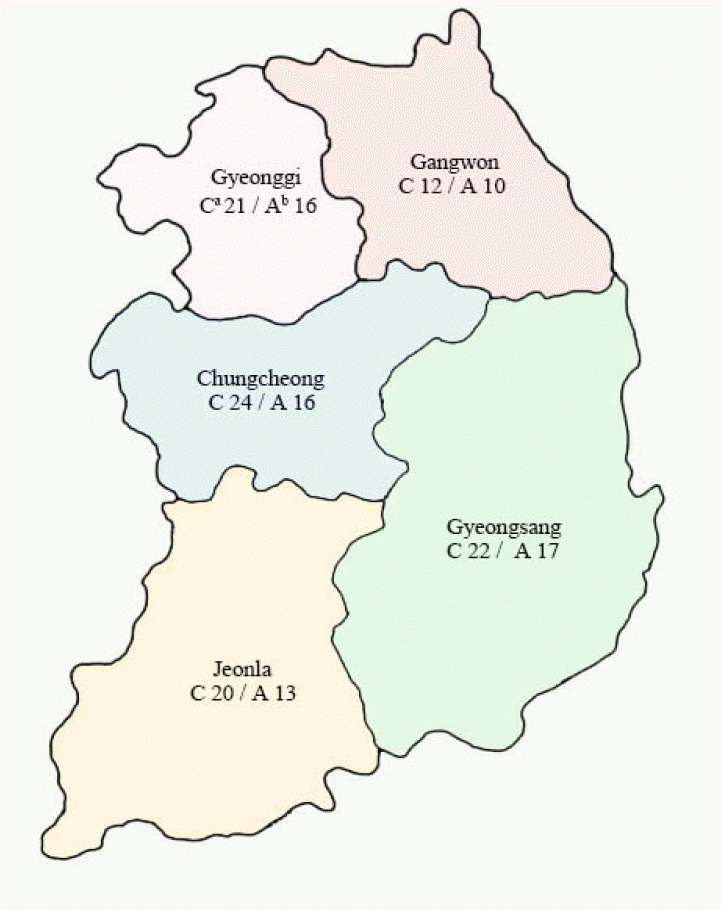
Apis mellifera colonies were sampled from 72 apiaries in 5 provinces (Gyeonggi, Gangwon, Chungcheong, Gyeongsang, and Jeolla) in Korea (
Fig. 1). Fifty to 100 adult bees were collected and pooled from 1-2 colonies in each apiary between August and December 2013. The honey bee samples were collected from brood nests inside the hives for managed colonies and at the hive entrances for feral colonies, respectively [
5]. After collecting the bees, the samples were stored at -20˚C for PCR detection.
The head and thorax of 20 adult bees randomly chosen from each hive were used for DNA extraction using DNeasy Blood & Tissue kit (Qiagen, Hilden, Germany) following the manufacturer’s instructions. Total DNA was eluted in 30 µl of elution buffer and used for PCR with LeGene Hot Start PCR Mix w/Sky Blue Dye (LeGene Biosciences, San Diego, California, USA). Two primer sets, including
Acarapis (A) primer and Kojima (K) primer set, were used to identify
Acarapis mite (
Table 1) which were capable of amplifying mitochondrial cytochrome
c oxidase subunit I (
COI) DNA fragments of
Acarapis mites [
5,
9,
10]. These primers do not amplify honey bee
COI DNA fragments; thus, total DNA isolated from bees was used as a template for PCR. As a positive control for PCR to verify the quality of DNA extraction, a honey bee genomic DNA fragment encoding a part of a honey bee Hymenoptera-specific transient receptor potential A channel (AmHsTRPA) was amplified by AmHsTRPA (T) primer set [
10]. The thermal cycling conditions were as follows: 1 cycle of initial denaturation at 94˚C for 2 min, 35 cycles of denaturation at 94˚C for 30 sec, annealing at 55˚C for 30 sec, and extension at 72˚C for 30 sec. The PCR product was analyzed by 2% agarose gel electrophoresis. A negative control lacking template DNA was performed for each PCR reaction. Since A and K primer sets equally amplify
COI genes of 3 species of
Acarapis mites (
A. woodi,
A. dorsalis, and
A. externus), the amplified products with T and A primer sets or T and K primer sets were sequenced and aligned with the sequences deposited in GenBank to determine the parasitized mite species. The nucleotide sequences were identified by the Basic Local Alignment Search Tool (BLAST) at the National Center for Biotechnology Information (NCBI). Multiple nucleotide alignment was carried out using the published SBV sequences as references by BioEdit version 7.0.9.0 (
Table 2). The phylogenetic tree was constructed by Mega 6.06.1 software [
11] using the neighbor-joining (NJ) method [
6].
To confirm the presence of
Acarapis mites, a total of 20 bees per each colony were examined with a modified dissection method developed by Lorenzen and Gary [
12]. The external surface, including the head, thorax and a groove between the mesoscutum and mesoscutellum of each bee, was examined to find out
A. externus and
A. dorsalis. To examine
A. woodi, each bee was pinned through the thorax into bee wax culture dish and placed under a dissecting microscope. The head and the first pair of legs were removed off using a scalpel or razor blade. The ring of prothoracic sclerite (collar) was also removed using fine forceps to fully expose both left and right sides of the trachea. The exposed trachea of 2 right and left sides was examined with 20× magnification to find out tracheal color change, the body of
A. woodi and foreign substance. If the presence of
A. woodi or foreign substance was confirmed, the trachea was detached and placed on a glass slide and examined under an optical microscope to diagnosis
A. woodi.
RESULTS
Prevalence of Acarapis mite infestations
A total of 99 colonies from 72 apiaries in 5 provinces (Gyeonggi, Gangwon, Chungcheong, Gyeongsang, and Jeolla) were examined (
Fig. 1). All of the 99 colonies were T primer set positive. Among these, 36, 2, and 4 colonies were positive for A, K, and both A and K primer sets, respectively (
Table 2). The infection rate of
Acarapis mites in Gangwon, Gyeonggi, Chungcheong, Gyeongsang, and Jeolla were 25.0%, 9.5%, 25.0%, 95.5%, and 50.0%, respectively (
Table 2). Gyeongsang had the highest infection rate, followed by Jeolla, Chungcheong, and Gyeonggi. Gangwon had the lowest infection rate among the 5 provinces. Between the primer sets, the A primer set was more sensitive than the K primer set (
Table 2).
To confirm the above PCR assay results, all 42
Acarapis-positive colonies were sequenced and aligned. Each sequence showed 92.6-99.3% homology with reference sequences available in GenBank (
Table 3). Species identification of each colony was determined if the sequence between the unknown sample and the reference showed 98-100% homology. Based on these criteria, the number of colonies infected with
A. dorsalis was 32 samples which showed the highest infection rate among the 3 species, while the number of colonies infected with
A. externus and
A. woodi was 9 and 1, respectively. The DNA sequences of PCR-amplified CO1 fragments infested by
A. dorsalis A. externus, and
A. woodi were deposited to a DDBJ database as the no. LC006085, LC006083, and LC006084, respectively. Although
A. externus and
A. dorsalis were distributed throughout all 5 provinces,
A. woodi was only detected from an apiary in Mungyung City, Gyeongsang (Gyeongsangbuk-do Province) (
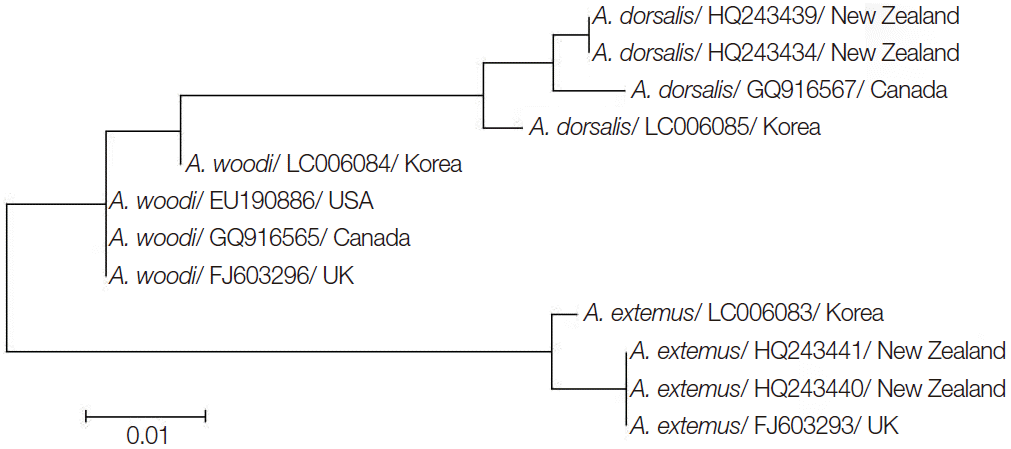
Table 4). The phylogenetic analysis between Korean isolates in this study and other references was performed (
Fig. 2). Each Korean isolate
Acarapis species was placed on a separate branch and closely related to the same
Acarapis species.
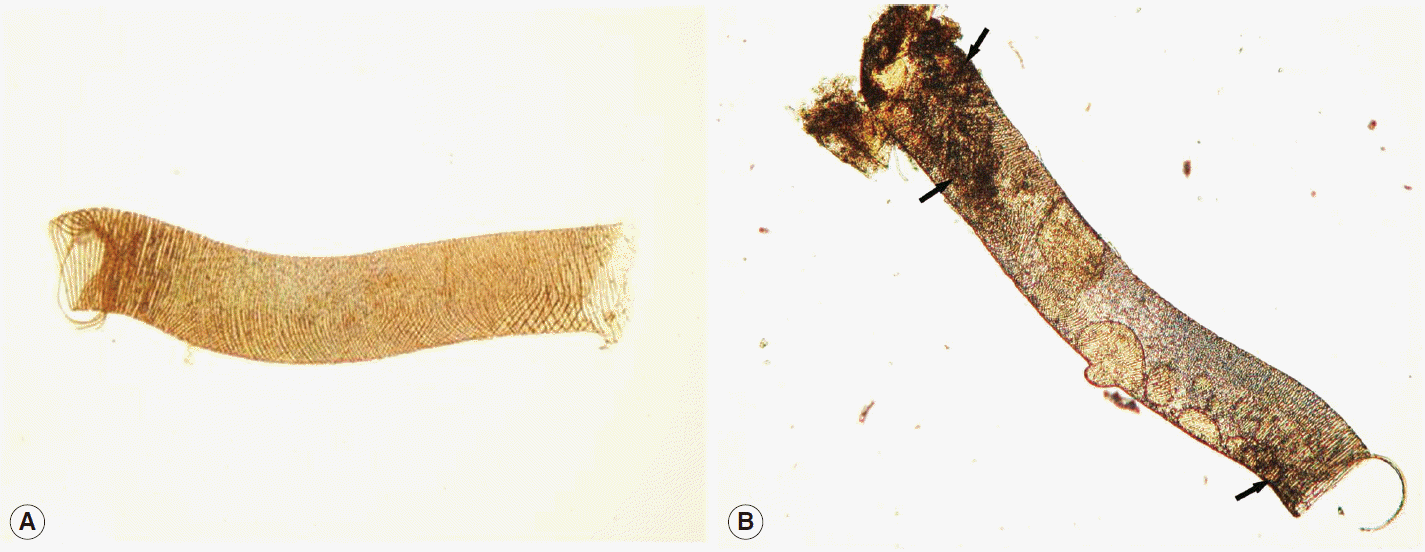
In microscopic examinations, a total of 20 bees per each colony were dissected, but no diagnosable mite body was detected. However, foreign bodies which assumed the mite and some debris were discovered from the
A. woodi-positive bee colony (
Fig. 3).
DISCUSSION
In this study, the prevalence of
Acarapis mites was surveyed by PCR and subsequent sequencing. Molecular analysis of bee DNA extracts using PCR and alignment indicate that all 3 species of
Acarapis mites are present in Korea and 32.3% (32/99) colonies were infected with
A. dorsalis, 9.1% (9/99) with
A. externus, and 1.0% (1/99) with
A. woodi from 99 colonies in Korea. Although we molecularly identified
Acarapis mites, the
Acarapis mites were not found in microscopic examinations. This result could be explained by the fact that all apiaries in the survey used in-house type acaricides against bee mites such as
Varroa destructor and
Tropilaelaps clareae which also affected against
Acarapis spp. Reports also indicate that most apiaries of Korea regularly use insecticides for acarine control [
13,
14]. Therefore, only dead bodies of the mites or debris might have remained and been detected by PCR assay (
Fig. 3).
While
A. dorsalis and
A. externus were detected in all 5 provinces,
A. woodi was found only in 1 apiary farm, and the infection rate was very low. Species-specific seasonal fluctuation could explain this phenomenon. In
A. dorsalis and
A. externus, the incidence of these mites decreased in fall, increases in spring, and is highest during May and September in temperate regions [
15,
16]. On the other hand, the prevalence of
A. woodi Table 3. increased greatly from November to February and declined in late spring [
17]. We collected most of the bee samples during August and October. Consequently, the population of
A. woodi might be too low for detection. In future studies, the bee samples should be collected during fall and winter seasons and examined to confirm the seasonal fluctuation of
Acarapis mites in Korea.
In general, the most common diagnostic method for
Acarapis mite infestation is morphological identification. Further, the molecular prevalence of
Acarapis mites has been conducted only in a few countries [
14]. However, the morphological identification is generally time-consuming and requires detailed and sustained attention by the screener. On the other hand, molecular methods facilitate rapid and sensitive detection of
Acarapis spp. in many honey bee samples for epidemiologic surveys [
10]. Therefore, we adopted 2 different genusspecific primers, including K and A primer sets. Our results indicated that the A primer set was more sensitive than the K primer set. However, both A and K primer sets require sequencing of amplicons to identify the species of the mite. Therefore, there is a need to design a primer which can amplify species-specific
COI DNA fragments in future studies.
Notes
-
We have no conflict of interest related to this work.
This study was supported by the Animal and Plant Quarantine Agency (grant no. Z-1543081-2013-13-01), Korean Ministry of Agriculture and Forestry, Republic of Korea.
Fig. 1.Distribution of apiaries visited during the survey. aC indicates the number of collected colonies and bA is the number of visited apiaries in each province.

Fig. 2.Phylogenetic tree of the nucleotide of mitochondrial cytochrome c oxidase subunit I (COI) DNA fragments from Korean isolates of Acarapis mites and other refer ences of Acarapis mites.

Fig. 3.Light microscopic view of a bee trachea. (A) Clean trachea from healthy bee. (B) Trachea from Acarapis woodi positive bee by sequence analysis. Foreign bodies which assumed the mite and some debris were discovered (arrow).

Table 1.Primer sets for Acarapis mite detection
Table 1.
|
Name for primer sets |
Sequence (5’ to 3’)a
|
Length (bp) |
References |
|
Kojima (K)b
|
F- CAGTAGGGCTAGATATCGATACCCGAGCTT |
247 |
Kojima et al. [5] |
|
R- TGAGCTACAACATAATATCTGTCATGAAGA |
|
|
|
Acarapis (A)c
|
F- CGGGCCCGAGCTTATTTTACTGCTG |
162 |
Garrido-Bailón et al. [9] |
|
R- GCGCCTGTCAATCCACCTACAGAAA |
|
|
|
AmHsTRPA (T)d
|
F– CACGACATTCAAGGTTTAAGAAATCACG |
426 |
Kojima et al. [5] |
|
R- TCAGTTATTCTTTTCCTTTGCCAGATTT |
|
|
Table 2.PCR assay result for the bee colonies
Table 2.
|
Province |
No. of tested colonies |
Number of positive colonies (%)a
|
|
A primer set |
K primer set |
A and K primer sets |
Total |
|
Gangwon |
12 |
3 (25.0) |
0 (0) |
0 (0) |
3 (25.0) |
|
Gyeonggi |
21 |
1 (4.8) |
1 (4.8) |
0 (0) |
2 (9.5) |
|
Chungcheong |
24 |
5 (20.8) |
0 (0) |
1 (4.2) |
6 (25.0) |
|
Gyeongsang |
22 |
19 (86.4) |
1 (4.5) |
1 (4.5) |
21 (95.5) |
|
Jeonla |
20 |
8 (40.0) |
0 (0) |
2 (10.0) |
10 (50.0) |
|
Total |
99 |
36 (36.4) |
2 (2.0) |
4 (4.0) |
42 (42.4) |
Table 3.Sequence relationships of the nucleotide of mitochondrial cytochrome c oxidase subunit I (COI) DNA fragments from Korean isolates of Acarapis mites
Table 3.
|
Species |
|
|
Nucleotide sequence identity (%)
|
|
Country |
|
A. dorsalis
|
A. dorsalis
|
A. dorsalis
|
A. externus
|
A. externus
|
A.externus
|
A. woodi
|
A. woodi
|
A. woodi
|
A. woodi
|
A. dorsalis
|
A. externus
|
|
Accession# |
New Zealand |
Canada |
New Zealand |
New Zealand |
New Zealand |
United Kingdom |
Canada |
United Kingdom |
USA |
Korea |
Korea |
Korea |
|
|
HQ243439 |
GQ916567 |
HQ243434 |
HQ243441 |
HQ243440 |
FJ603293 |
GQ916565 |
FJ603296 |
EU190886 |
LC006084 |
LC006085 |
LC006083 |
|
A. dorsalis
|
New Zealand |
HQ243439 |
100 |
|
|
|
|
|
|
|
|
|
|
|
|
A. dorsalis
|
Canada |
GQ916567 |
99.3 |
100 |
|
|
|
|
|
|
|
|
|
|
|
A. dorsalis
|
New Zealand |
HQ243434 |
100 |
99.3 |
100 |
|
|
|
|
|
|
|
|
|
|
A. externus
|
New Zealand |
HQ243441 |
93.2 |
93.8 |
93.2 |
100 |
|
|
|
|
|
|
|
|
|
A. externus
|
New Zealand |
HQ243440 |
93.2 |
93.8 |
93.2 |
100 |
100 |
|
|
|
|
|
|
|
|
A. externus
|
United Kingdom |
FJ603293 |
93.2 |
93.8 |
93.2 |
100 |
100 |
100 |
|
|
|
|
|
|
|
A. woodi
|
Canada |
GQ916565 |
96.3 |
95.7 |
96.3 |
94.4 |
94.4 |
94.4 |
100 |
|
|
|
|
|
|
A. woodi
|
United Kingdom |
FJ603296 |
96.3 |
95.7 |
96.3 |
94.4 |
94.4 |
94.4 |
100 |
100 |
|
|
|
|
|
A. woodi
|
USA |
EU190886 |
96.3 |
95.7 |
96.3 |
94.4 |
94.4 |
94.4 |
100 |
100 |
100 |
|
|
|
|
A. woodi
|
Korea |
LC006084 |
96.9 |
96.3 |
96.9 |
93.8 |
93.8 |
93.8 |
99.3 |
99.3 |
99.3 |
100 |
|
|
|
A. dorsalis
|
Korea |
LC006085 |
99.3 |
98.7 |
99.3 |
92.6 |
92.6 |
92.6 |
96.9 |
96.9 |
96.9 |
97.5 |
100 |
|
|
A. externus
|
Korea |
LC006083 |
92.6 |
93.2 |
92.6 |
99.3 |
99.3 |
99.3 |
95 |
95 |
95 |
94.4 |
93.2 |
100 |
Table 4.Regional occurrence of Acarapis spp. in Apis mellifera from Korea
Table 4.
|
Province |
No. of tested colonies |
No. of positive colonies (%a)
|
|
A. dorsalis
|
A. externus
|
A. woodi
|
Total |
|
Gangwon |
12 |
2 (16.7) |
1 (8.4) |
0 (0) |
3 (25.0) |
|
Gyeonggi |
21 |
2 (9.5) |
0 (0) |
0 (0) |
2 (9.5) |
|
Chungcheong |
24 |
6 (25.0) |
0 (0) |
0 (0) |
6 (25.0) |
|
Gyeongsang |
22 |
14 (63.6) |
6 (27.3) |
1 (4.5) |
21 (86.3) |
|
Jeonla |
20 |
8 (40.0) |
2 (10.0) |
0 (0) |
10 (50.0) |
|
Total |
99 |
32 (32.3) |
9 (9.1) |
1 (1.0) |
42 (42.4) |
References
- 1. Jong DD, Morse RA, Eickwort GC. Mite pests of honey bees. Annu Rev Entomol 1982;27:229-252.
- 2. Delfinado-Baker M, Baker EW. Notes on honey bee mites of the genus Acarapis Hirst (Acari: Tarsonemidae). Int J Acarol 1982;8:211-226.
- 3. Sammataro D, Gerson U, Needham G. Parasitic mites of honey bees: life history, implications, and impact. Annu Rev Entomol 2000;45:519-548.
- 4. Eischen FA, Cardoso-Tamez D, Wilson WT, Dietz A. Honey production of honey bee colonies infested with Acarapis woodi (Rennie). Apidologie 1989;20:1-8.
- 5. Kojima Y, Toki T, Morimoto T, Yoshiyama M, Kimura K, Kadowaki T. Infestation of Japanese native honey bees by tracheal mite and virus from non-native European honey bees in Japan. Microb Ecol 2011;62:895-906.
- 6. Çakmak I, Aydın L, Gulegen E, Wells H. Varroa (Varroa destructor) and tracheal mite (Acarapis woodi) incidence in the Republic of Turkey. J Apicult Res 2003;42:57-60.
- 7. Yang B, Peng G, Li T, Kadowaki T. Molecular and phylogenetic characterization of honey bee viruses, Nosema microsporidia, protozoan parasites, and parasitic mites in China. Ecol Evol 2013;3:298-311.
- 8. Jung JK, Lee MY, Mah YI. Infestation of Varroa jacobsoni and Tropilaelaps clareae in some apiaries during spring and fall seasons, 1999~2000 in South Korea. Korean J Apicult 2000;15:141-145.
- 9. Garrido-Bailón E, Bartolomé C, Prieto L, Botías C, Martínez-Salvador A, Meana A, Martín-Hernández R, Higes M. The prevalence of Acarapis woodi in Spanish honey bee (Apis mellifera) colonies. Exp Parasitol 2012;132:530-536.
- 10. Kojima Y, Yoshiyama M, Kimura K, Kadowaki T. PCR-based detection of a tracheal mite of the honey bee Acarapis woodi. J Invertebr Pathol 2011;108:135-137.
- 11. Clinch PG, Faulke J. Toxicitv to the external mite Acarapis externus Morgenthaler of pesticides fed in sugar syrup to infested honev bees. New Zeal J Exp Agr 1977;5:185-187.
- 12. Lorenzen K, Gary NE. Modified dissection technique for diagnosis of tracheal mites (Acari: Tarsonemidae) in honey bees (Hymenoptera: Apidae). J Econ Entomol 1986;79:1401-1403.
- 13. Choi YS, Lee ML, Lee MY, Lee KG. Occurrence of seven honeybee viruses and research of disease occurrence in Korean apiaries. Korean J Apicult 2008;23:153-159.
- 14. Sammataro D, De Guzman L, George S, Ochoa R, Otis GW. Standard methods for tracheal mite research. J Apicultl Res 2013;52.
- 15. Shaw FR, Fischang WJ, Balboni ER, Eversole JW. External mites on honey bees in the US. Glean Bee Cult 1961;89:402. 447.
- 16. Eckert JE. Acarapis mites of the honey bee, Apis mellifera Linnaeus. J Insect Pathol 1961;3:409-425.
- 17. Otis GW, Bath JB, Randall DL, Grant GM. Studies of the honey bee tracheal mite (Acarapis woodi) (Acari: Tarsonemidae) during winter. Can J Zool 1988;66:2122-2127.